
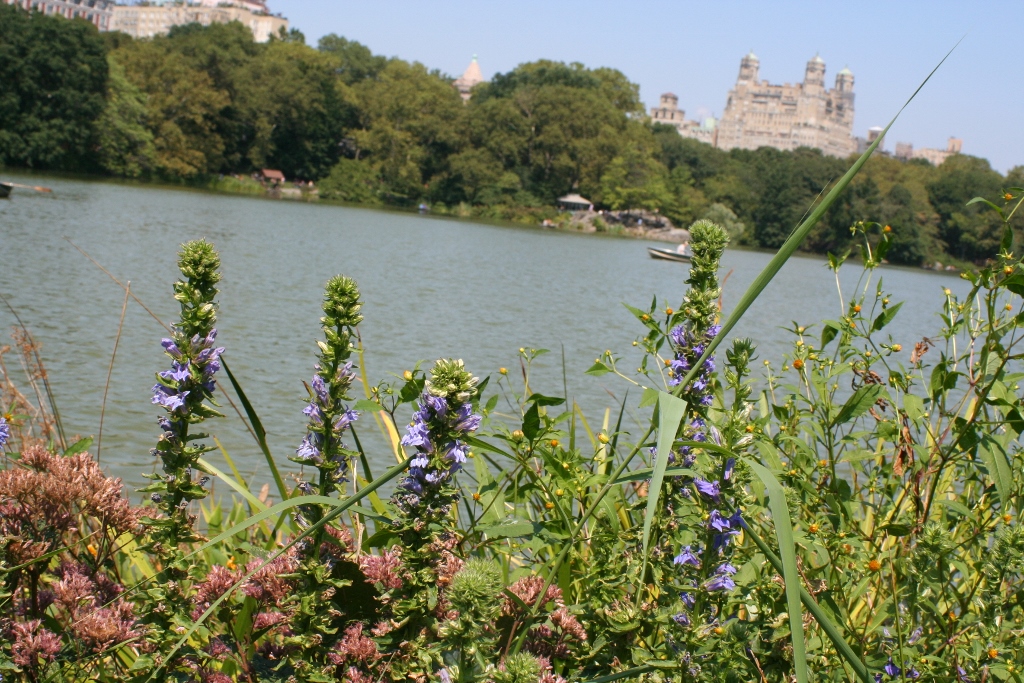
Buildings in the background
provide a reminder
that Central Park
is urban.
Purple flowers in the foreground
provide a reminder
that Central Park
is a park.
Central Park
Manhattan, New York
1 September 2012
Buildings in the background
provide a reminder
that Central Park
is urban.
Purple flowers in the foreground
provide a reminder
that Central Park
is a park.
Central Park
Manhattan, New York
1 September 2012
 I planned to spend today visiting Battery Park, then riding the Staten Island Ferry so I could take some photos using the new telescopic lens I have on “extended loan” from one of my sons.
I got up and found myself moving a bit slowly. Going back to sleep certainly seemed an option.
Determined to force my hand, I posted my plans on Facebook. Once public, there would be no going back.
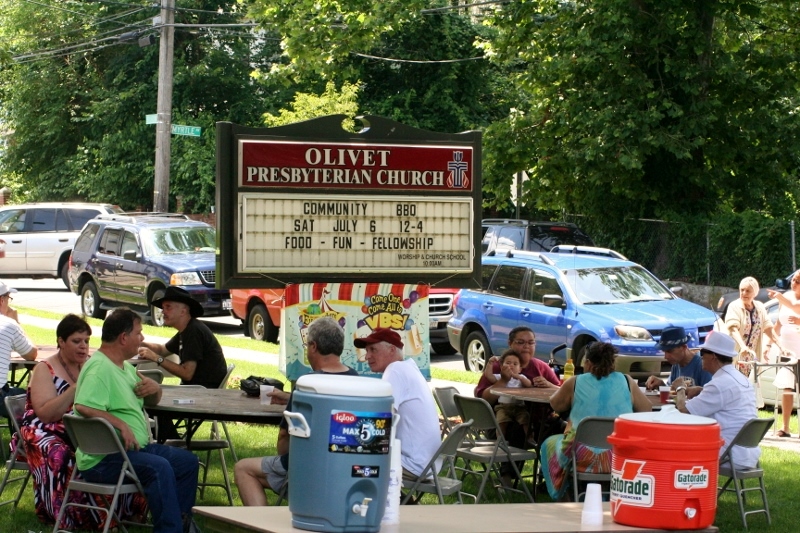
Shortly after I posted, my colleague and friend, the Rev. Melodee Bottari, pastor of Olivet Presbyterian Church invited me to a BBQ at the church.
It sounded good to me. I went and had a great time that included a tour of the church. I saw where the church provides housing for homeless women and the room where volunteers working with Presbyterian Disaster Assistance on recovery from Hurricane Sandy will stay.
The BBQ took place on the church lawn and included an invitation to register for the Vacation Bible School.
Good folks. Good food. Good ministry. A good visit.
See you along the Trail.
Words matter.
That’s the message of a recent post by my friend Grace Ji-Sun Kim. She reflects on Bill Maher’s observations about Paula Deen. As one who makes his living using words, Maher reportedly said, “It’s just a word, it’s a wrong word, she’s wrong to use it, but do we always have to make people go away?”
Grace joins a number of people, that apparently include Maher’s guest at the time of his statement, who remind us of the power of words.
As children, we grow up with the schoolyard phrase: “Sticks and stones will break my bones, but words may never hurt me.” Children say this because they know, too well, that words may hurt them.
Agreed.
If we look back in our lives, we will realize that there were certain words that people said to us that have stuck with us for a long time.
Agreed.
In both cases, my agreement arises from practical, personal experience as well as observation and reflection.
Words have power. Power to degrade. Power to inspire. Power to touch and move. Power to abase and wound.
Totalitarian regimes have long recognized the power of words. When the military junta seized power Chile, they arrested, tortured, and killed Victor Jara. His crime? He used the words of his songs to support the government of Salvador Allende.
As Grace writes:
Words influence our thoughts and our ideas. Words shape how we see the world, by causing us to stress certain things and ignore other things.
Once we realize the power of words, we recognize that we can actually start to embrace one another through words.
Our words should be used for moving us and making us into meaningful people who seek to encourage and motivate others. Once we realize the importance and power of our words, we can become more careful with what we say because we know that what we say matters.
Thanks Grace for your reminder about the power of words. May I choose mine carefully, lovingly, and justly.
See you along the Trail.
P.S. In the pile of books I hope to read soon is The Grace of Sophia by Grace Ji-Sun Kim. I look forward to the read.
Filed under Current Events, Friends
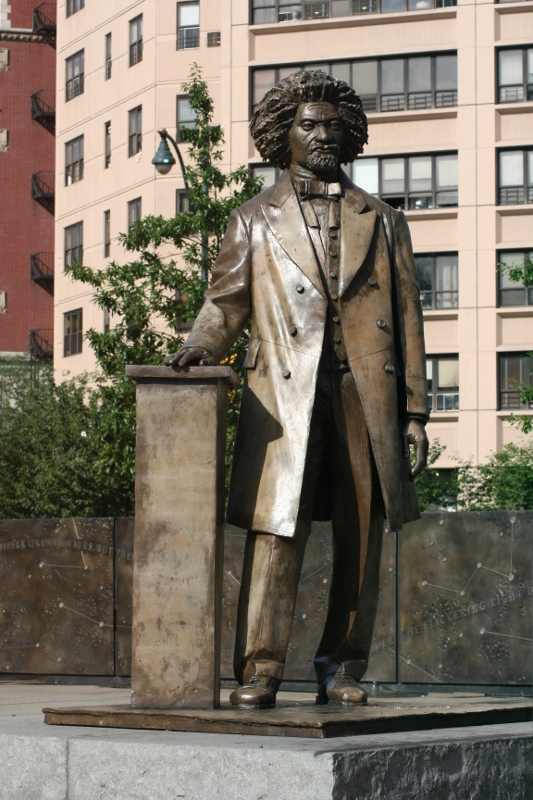 Whose holiday is the Fourth of July?
We like to think of this day as a day of celebration for all the citizens of the United States of America. But as Frederick Douglass proclaimed over 150 years ago, for many people – people living in this country – the Fourth of July serves as a painful reminder and a mockery.
When he spoke, the issue was slavery. Millions lived in the chains of chattel slavery. Those chains have fallen, thanks in large part, to Frederick Douglass and other African-Americans who resisted enslavement.
But many still do not enjoy fully the vision of freedom. Racism persists. A number of states greeted the recent Supreme Court decision on the Voting Rights Act by moving ahead with Voter ID laws, some of which have been rejected under the voting rights act. Immigrants face challenges as they seek to make a new life. Supreme Court decisions have made it possible for our LGBTQ brothers and sisters to marry – in certain states. An economic gulf looms between the rich and many people who struggle to find ends, let alone to make them meet. Men, women, and children are trafficked for labor and for sex. Slavery has morphed; it has not disappeared. For many, the promises of freedom and the United States remain unrealized. For all of us, the words of Frederick Douglass ring true.
Frederick Douglass was born in a slave cabin in Maryland. The date and year remain unknown even to Douglass. The condition of enslavement resulted in such a lack of knowledge for many. Douglass endured the violation and horrors of slavery. And he resisted. His first attempt to escape failed. Then he tried again and, in early September 1838, disguised as a sailor, he escaped to freedom – precarious freedom, but freedom none the less.
During a visit to the African Burial Ground National Monument in Manhattan, Tricia and I opted to take a tour that focused on slavery, resistance, and abolition efforts in New York. We learned that Douglass made his first stop in New York City. He did not stay because of the city’s support for slavery. In New York, Douglass married Anna Murray. They went to New Bedford, Massachusetts to live.
Douglass became a leader in the abolitionist movement. A talented speaker, he would spend about six months each year travelling and speaking. Douglass attended the Seneca Falls Convention and became a supporter of women’s rights including the right to vote. This connection led Anna and Frederick to move their family to Rochester, New York, perhaps to be near Susan B. Anthony.
On July 5, 1852, in Rochester, Douglass spoke at an event commemorating the signing of the Declaration of Independence: the Fourth of July, U.S. Independence Day. Perhaps they anticipated his words and tone. Most likely they did not. Douglass reminded his audience that, “This Fourth of July is yours, not mine. You may rejoice, I must mourn.” He went on to note:
What, to the American slave, is your 4th of July? I answer; a day that reveals to him, more than all other days in the year, the gross injustice and cruelty to which he is the constant victim. To him, your celebration is a sham; your boasted liberty, an unholy license; your national greatness, swelling vanity; your sound of rejoicing are empty and heartless; your denunciation of tyrants brass fronted impudence; your shout of liberty and equality, hollow mockery; your prayers and hymns, your sermons and thanks-givings, with all your religious parade and solemnity, are to him, mere bombast, fraud, deception, impiety, and hypocrisy — a thin veil to cover up crimes which would disgrace a nation of savages. There is not a nation on the earth guilty of practices more shocking and bloody than are the people of the United States, at this very hour.
Douglass did not end there, however. He observed that, despite his experience and the painful realities, “I do not despair of this country.” He closed with a poem of hope written by William Lloyd Garrison that begins:
God speed the year of jubilee
The wide world o’er!
The poem ends with an affirmation remaining engaged in the struggle for liberty, freedom, and justice – of working to make the promise of the Fourth of July real for all.
Frederick Douglass devoted himself to that struggle.
May I do the same.
See you along the Trail.
Filed under Antiracism, Current Events, Human Rights, National Park, Photo
Through early morning mists they march
across the fields of green,
fields red-stained by their life blood
when they were young.
No long range kills,
no smart bombs then;
just frightened, courageous
too-young men
who,
for cause
country
comrades,
engaged each other
face to face
and
hand to hand,
performing acts of
unspeakable horror,
incredible valor,
absolute futility
until the arms of Mars
did embrace and claim them.
23 August 2002
The Shire, Louisville
Filed under National Park, Poem
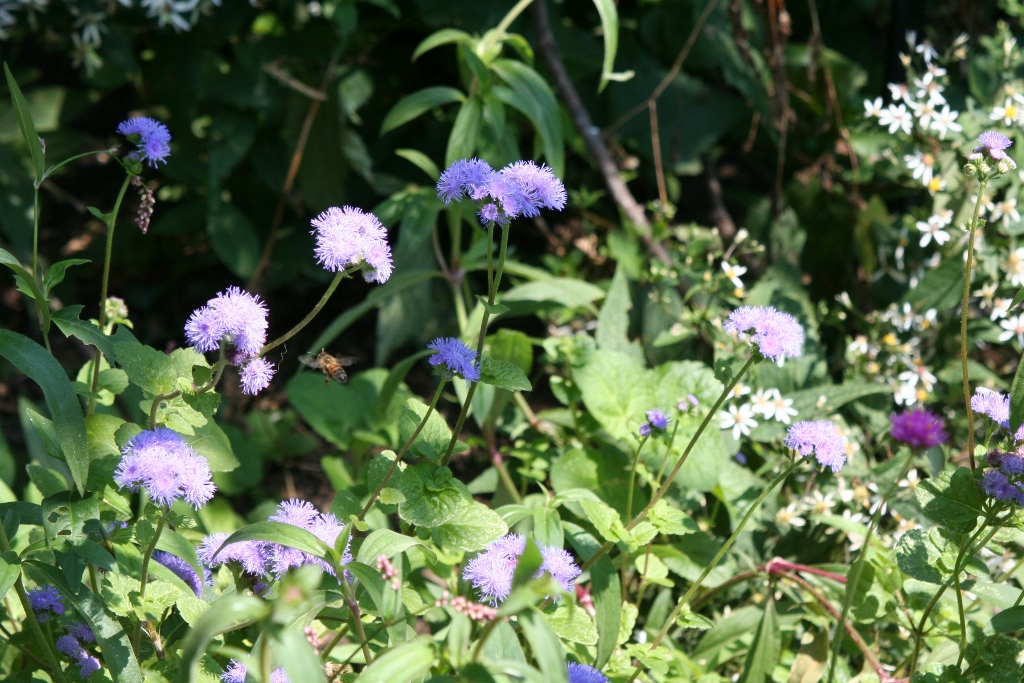
In sunlight
and
in shadow
purple flowers
grace the park.
Central Park
Manhattan, New York
1 September 2012
 Help address sexual violence in the Democratic Republic of Congo.
Sign up now to participate in CongoSwim on August 25. Organized by the Congo Team of the Lafayette-Orinda Presbyterian Church in California, CongoSwim provides an opportunity to raise awareness about the humanitarian crisis in the Democratic Republic of Congo, particularly in terms of sexual violence against women and girls. August 25 is an Orange Day – a day to witness and work for an end to violence against women and girls.
CongoSwim participants are encouraged to raise funds for Congolese grassroots groups receiving grants from Global Fund for Women and Friends of the Congo. A portion of the funds raised will also benefit the USA Swimming Foundation’s Make a Splash initiative, to prevent children from drowning in the US.
Swimming is not the only way to participate. I am going to pray and walk on August 25 to support this effort. When you donate, you could do so in my name.
See you along the Trail.
Filed under Current Events
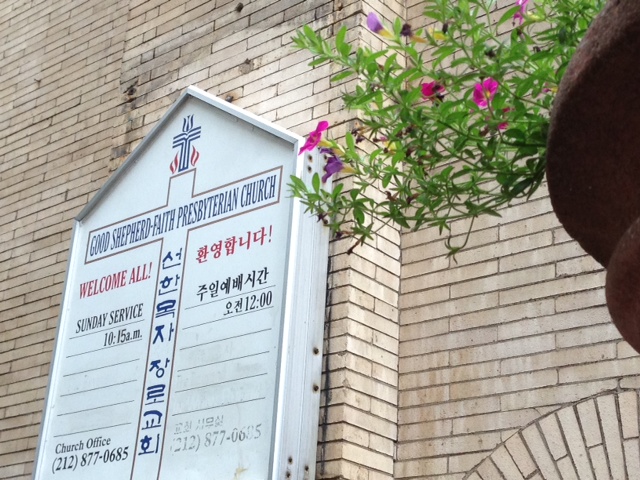
In varied hues,
purple flowers greeted worshipers to
Good Shepherd-Faith Presbyterian Church
this morning.
Manhattan, New York
30 June 2013
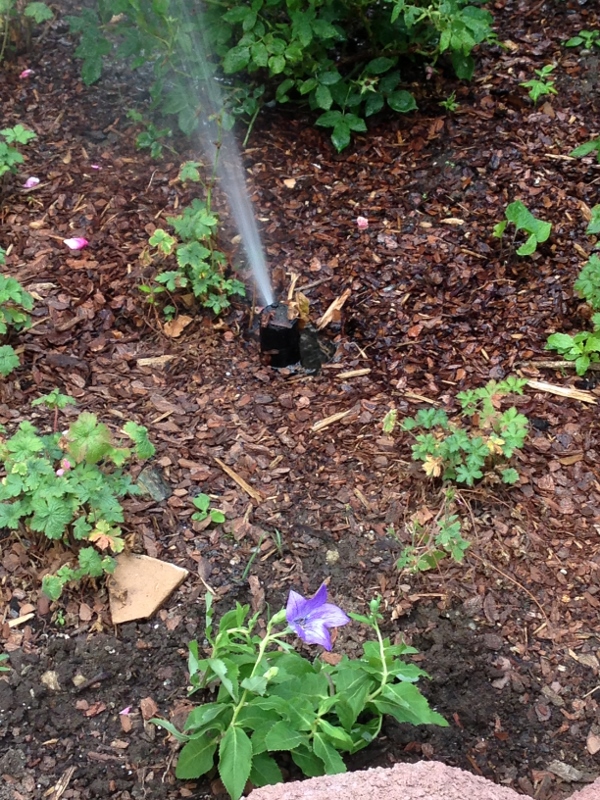
A purple flower stands guard
as the garden receives
its morning drink.
Shire near the Hudson
29 June 2013

