Hebrews 12:1-3 I Believe in the Communion of Saints August 7, 2022 First Presbyterian Church of Whitestone The Rev. W. Mark Koenig
The movie Amistad aired a day or two ago.
It tells the story of a rebellion by a group of Africans on the Spanish ship La Amistad in 1839. The Africans, of the Mende people, had been illegally taken into slavery near Sierra Leone by Portuguese. They were taken to Cuba where they were sold to the Spaniards commanding La Amistad.
As the ship sailed to another port, some of the Mende people escaped their shackles and killed most of the crew. They tried to force surviving crew members to sail them back to Africa, but they were tricked. Eventually the ship was seized by the forerunner of the U.S. Coast Guard.
Trials followed. The issue pivoted on whether the Mende were free people being enslaved or not. To trade in human beings was illegal at the time. Enslavement was allowed. People born enslaved remained enslaved. People already enslaved could be sold to others for further enslavement. But the small step of banning the trade of free people had been taken. Were the Mende people on La Amistad free when they had been taken? A court decided they were, and the people should be released.
The U.S. government, fearful of starting a civil war, appealed. The court again ruled in favor of the Mende.
The U.S. government, fearful of starting a civil war, appealed again. To the Supreme Court.
At this point, former President John Quincy Adams became involved. He was serving in the House of Representatives at the time. The abolitionists and lawyers representing the Mende people had approached him earlier and he had declined. Now, he said yes.
I do not know if it happened this way in real life, but there is a scene in the movie where President Adams is speaking to Cinque, the leader of the rebellion. It happens shortly before the final arguments with the Supreme Court. Cinque is nervous. Adams seeks to reassure him. “You are not alone,” Adams says. He refers to himself and the other attorneys and the abolitionists supporting the Mende people.
Cinque draws himself up to his full height. Speaking through a translator, he says, “I know. My ancestors will be with me. I have summoned them.”
I had seen Amistad before. A couple times. But somehow I had missed this Communion of Saints moment.
I believe in the Communion of Saints.
In the wooden pews of the Neville Island Presbyterian Church, l breathed in the aroma of pipe tobacco that permanently permeated my father’s clothes and joined my family and the congregation in affirming, “I believe in the Communion of Saints.”
I did not understand what that meant. I could have been no more that eight or nine years old. With no understanding, I affirmed the words. I believed.
Understanding has grown somewhat over the years. Belief has deepened profoundly.
Here is the basics of what I understand.
In the Reformed tradition, we do not believe that saints are holy people. People somehow better than the rest of us. People to set apart and place on pedestals.
Saints are everyone of us. Ordinary people. Believers who seek to follow Jesus as well as we are able. Believers of every time and every place.
Look around you at the people gathered here this morning – whether in person or on Zoom. You are seeing Saints.
When you have a chance, look in a mirror. You are seeing a Saint.
When you think of family, friends, acquaintances in other places, you are thinking of Saints.
When we celebrated Bill’s life yesterday, we celebrated a Saint.
When we call to mind those who have gone before us into death, our ancestors to use Cinque’s term, we call to mind Saints.
The Communion of Saints surrounds us at all times. We may not always be aware of it, but we live and move and have our being within the Communion of Saints.
From time to time, the reality of the Communion of Saints breaks into my head and heart and spirit with overwhelming power and grace. Usually when I least expect it, the understanding that in Christ, by the Holy Spirit, we are bound together in God’s love flows over me.
When we share a meal together. When friends and strangers help us with our daily lives. When we know that no matter how far apart Whitestone and Louisville may be, we are tied to one another in the love of Jesus Christ.
At times such as these, the Communion of Saints, some living and some in God’s nearer presence, began to swirl around me.
It happened yesterday as we celebrated Bill’s life. I don’t know about you, but as I gave God thanks for Bill, so many people whose lives had touched Bill’s were present. Maybe, like Mary, they had gone before Bill in death. Maybe like Malinee and Lisa, they had other responsibilities. But they were all with us in the Communion of Saints.
Three things that I believe we should do because we are part of the Communion of Saints.
Give thanks to one another when we can.
The Rev. Dr. Gayraud Wilmore was a giant in the world of theological education in the Presbyterian Church. I never met him. But I read his books. And many of the people I quote on a regular basis in my sermons studied with him.
This year’s General Assembly gave Dr. Wilmore with an award for Excellence in Theological Education. Wonderful things were said. Important milestones celebrated. It was a touching moment.
Except that Dr. Wilmore has been dead for two years.
On the one hand, it is never to late to say or do the right thing. On the other hand, there is blessing in letting people know what they mean to us when they can hear our words. I thank each of you and all of you for being part of my Communion of Saints. I am grateful to God for you.
Remember.
As my friend and mentor, the Rev. Dr. Otis Turner says, “The Communion of Saints consists of people everyone knows, people known to only a few of us, and people whose names we have never heard but are written in God’s book of life.” In almost every area of the church’s life and ministry, we are part of a long line of witnesses linking us to the past and moving into a future we can only imagine, knowing our imagination will fall short of what God has in store.
Remain open to what God is doing.
The Communion of Saints reminds us that God’s people are an evolving people. Learning. Growing. Being changed by the Holy Spirit. Again and again, drawn out of ourselves to something more faithful … more just … more peaceful … more loving. Drawn by a God who did new things and who is not finished with us yet. We are part of an evolving people. It is who the followers of Jesus have been. It is what the followers of Jesus have done. It is who Jesus calls us to be. It is how the Holy Spirit gifts us to be. We recall the past. We make our way in the present. We look forward to what God is doing in us and in our community.
I believe in the Communion of Saints.
For all the saints and what they teach us. Thanks be to God.
The Rev. Dr. James Reese died on June 17 at age 98; he served over 70 years as a Minister of Word and Sacrament in the Presbyterian Church (U.S.A.); he lived his life in ministry.
For the Rev. Dr. James Foster Reese (presente!): for his life and love for his faith and kindness for his courage and witness for his persistent challenge to white supremacy for his insistent commitment to justice for his consistent service to Jesus, revealed in so many ways but particularly as he ‘refused to leave the table’ where decisions were made even when he felt pushed to the margins and ignored, thanks be to God. For his wife, Neola, his family, his friends, his colleagues in ministry, his mentees, and all who knew and loved him, we ask your comfort, God. Keep his memory present and alive as an inspiration and example to us all. We pray in the name of Jesus who the Rev. Dr. Reese followed. Amen.
I met Michael Granzen and Karen Hernandez-Granzen when I was in New York As our paths crossed, we became friends and allies in championing the cause for social justice. Although the distance between us is greater now, we remain friends. I am always interested and impressed to see their ministry. That is why I look forward to reading their new book Breaking Through A Plate Glass Window. Check it out.
Again, God, we pray for peace. Dona nobis pacem. Still, God, we pray for peace. Dona nobis pacem. For the people of Ukraine, we pray. Dona nobis pacem. For the people of Russia, we pray. Dona nobis pacem. For the people of Europe, we pray. Dona nobis pacem. For the people of the world, we pray. Dona nobis pacem. For peace rooted in justice, we pray. Dona nobis pacem. Again, God, we pray for peace. Dona nobis pacem. Still, God, we pray for peace. Dona nobis pacem.
A sermon on Luke 1:39-55 Dickey Memorial Presbyterian Church 19 December 2021
From 2010 through 2016, I served as the director of the Presbyterian Ministry at the United Nations.
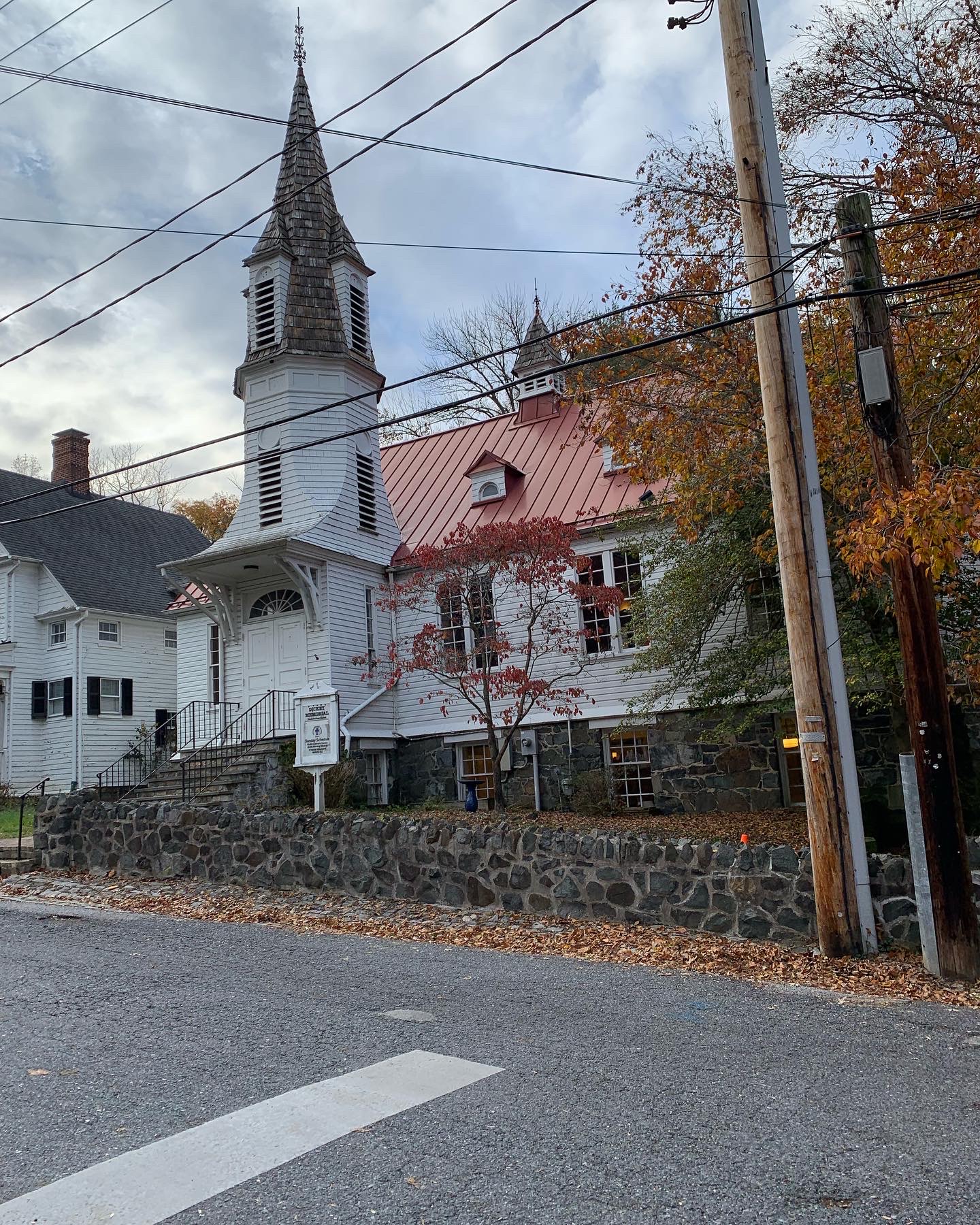
Dickey Memorial Presbyterian Church
Memories of precious people, painful international events, and amazing happenings swirl in my heart and mind.
Among my favorite memory is the moment I have come to call the good night ritual. .
Each night, I shut off my computer, turned out the light, and left the office. I walked down the hall to the elevator and pushed the call button. When the cab arrived, I pushed “1” to go downstairs. Hector would be there to see me out. Always. And always we spoke. Sometimes we talked about weather or family. Often, we talked sports. Conversations got interesting the week my Steelers beat Hector’s Jets. After some conversation, I made for the door, As I stepped across the hallway, I heard Hector’s final words: always the same words, always in the same, kind voice: “Good night, Marko. Get home safe.”
In Advent and Christmas, we think of home in many ways.
“Please Come Home for Christmas,” sings Aaron Neville.
“I’ll Be Home for Christmas,” sings Oscar Peterson.[i]
Spoiler alert. If you have forgotten the ending of A Christmas Carol; if you have never seen It’s a Wonderful Life, I invite you to plug your ears for a moment. I will let you know when the spoilers are done.
After the visits of three ghosts in A Christmas Carol, Ebenezer Scrooge sends a feast to Bob Cratchit’s home and then travels to celebrate at his nephew’s home.
After the visit of one rather ordinary angel second class, in the climactic moment of George Bailey’s renewal, he makes his way home.
I see places I have lived at different times when I hear the word “home”.
Unique sights, smells, and sounds.
Home also recalls people. Beloved people. Family. Friends. Chosen family. Different in different homes. But always people.
Home is a place. 123 Sesame St. 80 Main St., Apt. 23D
Home is people.
Elder Vilmarie Cintrón-Olivieri observes that as a poor, unwed teenager, Mary was surrounded by dangers and uncertainty – both physical and societal. When she learned of her pregnancy, Mary sought a haven, a sanctuary, home.[ii]
Home for Mary was a place. The house of her relative Elizabeth. Home was people. Zechariah was there. Silent, but there. More importantly, Elizabeth and the baby in her womb, were present.
They welcome and affirm Mary. And in a moment that Stephen Sondheim could have written, Mary breaks into a song. “My soul magnifies the Lord, and my spirit rejoices in God my Savior.” The Magnificat. A song that has been set in many ways over the centuries, including the Canticle of the Turning which we will sing shortly.
The Magnificat holds together the grittiness of life on the margins, the resilient hope of those who trust in God, and the power to image a new way of living.
My friend the Rev. Margaret Aymer suggests that we need to revise our view of Mary. Rather than gentle Mary, meek and mild, Margaret says Mary is better seen as Jesus’ radical Jewish Mama. A woman full of strength and courage and hope. An alternative vision fires her imagination. God’s vision of justice, equity, and peace. This vision, sung in Mary’s song, no doubt found its way into the lullabies she sang to Jesus and the stories she told him. It shaped him. It guided his living. His words and deeds exemplify his mama’s song.[iii]
Consider, church: the Triune God – Creator, Christ, and Holy Spirit or whatever formula you use – exists in relationship.
Made in God’s image, we are made for relationships. The late bell hooks reminds us of this when she says that healing is an act of communion. Rarely, if ever, she says, are any of us healed in isolation. Healing comes through relationships. Life comes through relationships.[iv]
We are made for each other. We are made for relationships of integrity, compassion, justice, equity, solidarity, accountability, responsibility, and love. We are made to be home to one another.
The village of Le Chambon in France provided sanctuary and home to Jews during the Second World War. Fleeing the monstrous, sinful evil of the Nazis, Jews would arrive in this Huguenot village. They made their way to the building we Presbyterians would call the manse. They knocked and were usually greeted by Magda Trocme with the words, “Welcome. Come in.” The process of creating home began. Years later, asked why their village and people became a sanctuary of home, Magda replied, “They knocked. What else could we do?”[v]
This theology – that God has made us and called us to be home for one another – was shared by those who ran the Underground Railroad. It is shared by those who welcome refugees, who support citizens returning from incarceration, and who offer sanctuary to individuals and families at risk of deportation to the violence-filled places they have fled.
Whether they are running for their lives or they are buffeted and battered by life, we will encounter people in need of refuge, haven, and sanctuary. Through Jesus Christ, God who is love, God who is our sanctuary and home, empowers us to say, “Welcome. Come in.”
Part of what allows us to create home is God’s gift of imagination. Our shared humanity allows us to imagine the pain and the fear of people in need.
More importantly, our faith allows us to imagine our relatedness to the entire human family. Each child is our child. Every person created and loved by God is a person to whom we are bound by the unbreakable cords of God’s love.
Imagination is an act of faithful subversion in a world that tells us nothing will change. Things will always be the same. There is nothing we can do about it.
Not so, says imagination. Not so. There can be, there is, another way. Imagination is the root of joy. Imagination is the source of hope. When we dare to imagine that Jesus just might be on to something when he tells us to love one another; we take the first steps toward loving one another.
At home with Elizabeth, Mary’s imagination inspired her to break into song about what God has done, what God will do, and what God is doing. Mary’s song, Rachel Held Evans reminds us, declares that God has chosen sides.[vi]
God has chosen not narcissistic rulers or leaders, but an un-wed, un-believed teenage girl for the holy task of birthing, nursing, and nurturing God.
God has chosen not the powerful, but the humble.
Not the rich, but the poor.
Not the occupying force, but people pushed to the margins.
God has made a home. That home, Jesus reveals, is among the people the world casts aside. Women. Children. The poor. Lepers. Samaritans. Tax collectors. Sinners. God’s home includes people of every sexual orientation and every gender identity, people living on the streets, people whose immigration papers do not match the government standards, people battling addiction, people dealing with mental illness, and anyone pushed aside by the culture of domination.
Any time we human creatures seek to keep some of God’s children out and we draw a line to exclude and we say, “you do not belong,” God wipes the line aside. “Hold my beer,” the Holy Spirit says, and she begins the patient, careful work of removing the line and welcoming all God’s children home.
Church, we know that does not happen quickly enough. We know people, too many precious people, are wounded in the time it takes God to erase the lines. That grieves us and God. But we also know that patiently, persistently God is at work. And God invites us to join that work.
In her defiant, prophetic, imaginative song, Mary—a dark-skinned woman who would become a refugee, a member of a religious minority in an occupied land—names this reality: God makes a home for and with those who have been driven to the margins by the powerful. And we are invited to meet God there on the margins and be welcomed home.
During Advent, we journey home.
During Advent, we work to create home.
During Advent and always, may we journey and work with the stubborn, unsentimental hope of Jesus’ radical Jewish Mama – a woman so convinced the baby inside her would change everything, she proclaimed that:
The powerful have already been humbled;
The vulnerable have already been lifted up;
The world is turning;
And it is turning toward home.
Thanks be to God. Amen.
[i] Many artists have recorded both songs. The versions by Aaron Neville and Oscar Peterson were the first to appear in my iTunes Library.
[ii] This comes from Vilmarie’s commentary on Luke 1:39-55 in the Sanctified Art Close to Home Sermon Planning Guide for this Sunday.
[iii] I found this image from the Rev. Dr. Margaret Aymer a couple years ago. I can no longer find the source.
We remember your precious children killed in New York Washington, DC, Shanksville.
We remember your precious children killed in Afghanistan Iraq and around the world.
We remember death wounded bodies wounded spirits wounded souls.
We remember acts of terror acts of valor acts of violence acts of peace.
We remember fear anger hate prejudice.
We remember kindness courage grace generosity.
We remember people coming together to reach out weep sing embrace care.
We remember songs ended songs gone songs created songs begun songs lived songs shared.
Remembering, may we take bold, faith-filled, hopeful steps to unlearn the ways of war and turn to ways that might make peace between people; to overcome fear of one another and recognize the dignity and value of every person; to seek understanding of suffering and nurture the empathy needed to work to alleviate it; and to walk the paths of love that leads to peace and justice.
Remembering Jesus, in response to your Holy Spirit, we pray. Amen.
with thanks to Shannan Vance-Ocampo, Chris Shelton, leaders of the United Church of Christ and Come from Away
Two years ago, 18-year-old Kaysera Stops Pretty Places (Crow) was murdered in Big Horn County, Montana. Since her murder, the Federal Bureau of Investigation, Big Horn County Sheriff’s Office, and the Montana Department of Justice have done nothing to undertake a criminal investigation. We will not stand for this – law enforcement must be held accountable. Kaysera’s family, in collaboration with National Indigenous Women’s Resource Center, Sovereign Bodies Institute, Rising Hearts, Elite Feats, and Bethany Yellowtail, are advocating for justice in Kaysera’s name. Help demand #JusticeforKaysera by learning more and take action through the Kaysera website. Join NIWRC’s Twitter Storm on 9/9 and the Justice for Kaysera 5K/10K Virtual Walk/Run.