Lent 7: wonder

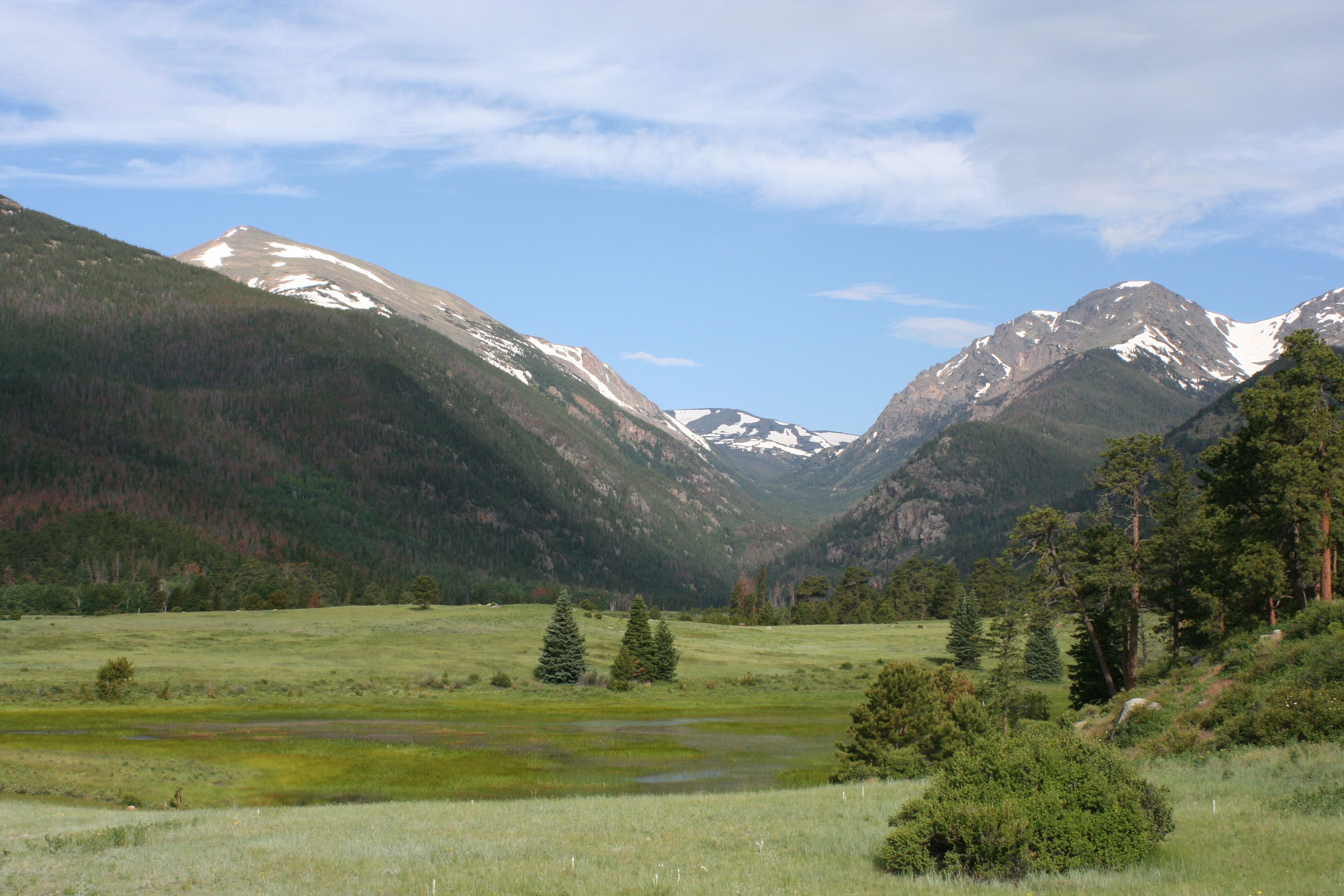
M12 Silence 8 July Rocky Mountain National Park


Rocky Mountain National Park
8 July 2011

Leave a comment

Filed under Lent, National Park, Photo

Purple flowers, Cliffs of Moher

Cliffs of Moher, April 30, 2012

Along the cliffs they stand
in silence:
watchers,
greeters,
sentries.

30 April 2012
Cliffs of Moher, Ireland

Leave a comment

Filed under Ireland, Photo, Travel

Lent 6: world

F18 World Presbyterian Ministry at the United Nations 27 November 2012


… in their hands

Presbyterian Ministry at the United Nations
Manhattan, New York
27 November 2012

Leave a comment

Filed under Lent, Photo, Presbyterian Ministry at the United Nations

Dr. Ralph J. Bunche of the UN

This originally appeared on Swords into Plowshares, the blog of the Presbyterian Ministry at the United Nations and the Presbyterian Peacemaking Program.

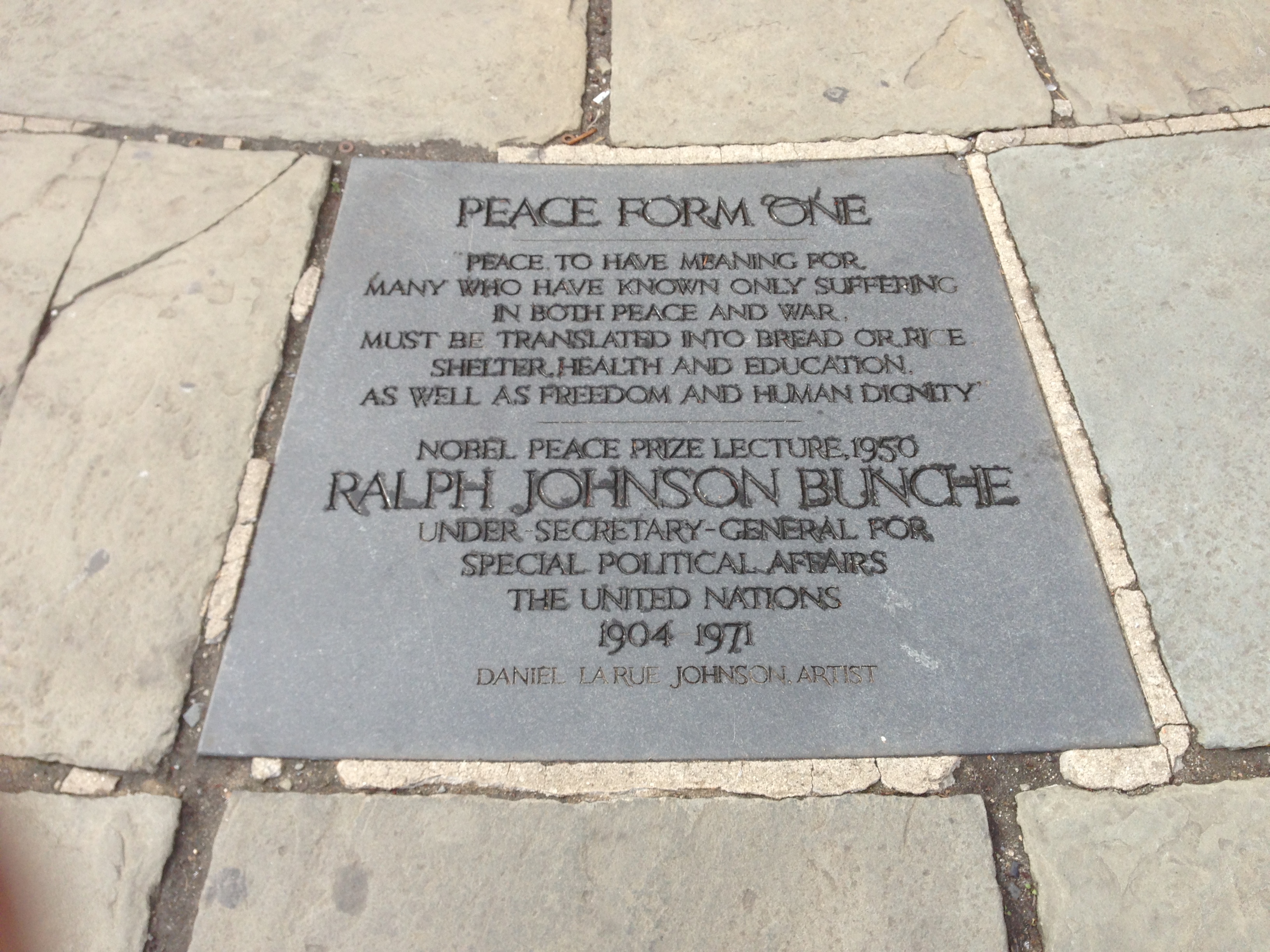
photo (8)I passed through Ralph Bunche Park at 43rd Street and First Avenue on Sunday. And it wondered me why the story of Dr. Ralph J. Bunche‘s life is not told more often.

A political scientist, academic, writer, and diplomat, Bunche took part in planning for the creation of the United Nations. He was an adviser to the U.S. delegation for the “Charter Conference” of the United Nations held in 1945. He took part in drafting the UN Charter. Along with Eleanor Roosevelt, Bunche played a key role in the creation and adoption of the Universal Declaration of Human Rights.

In 1947, Bunche served as the United Nations Special Committee on Palestine. He became the Principal Secretary of the UN Palestine Commission. He served as the Personal Representative of Secretary-General with Count Folke Bernadotte, the United Nations Mediator on Palestine. Following Bernadotte’s assassination in September 1948, Bunche became the Acting Mediator. He chaired the UN mediation efforts that led to the successful negotiation of the four armistice agreements that helped end the conflict.

For his work, Bunche became the first African-American and person of color to receive the Nobel Peace Prize. He continued to served the UN for over twenty years. His work included helping to end colonialism.

Bunche was an active and vocal supporter of the U.S. civil rights movement. He participated in the 1963 March on Washington and in the Selma to Montgomery, Alabama march, which contributed to the passage of the landmark Voting Rights Act of 1965 and federal enforcement of voting rights.

Dr. Ralph J. Bunche is one of so many people to honor – so many stories to remember – during Black History Month and always.

See you along the Trail.

3 Comments

Filed under Antiracism, Human Rights, New York, Presbyterian Ministry at the United Nations, United Nations

Lent 5, First Sunday in Lent: settle

F17 Settle Moving into Shire near the Hudson 4 October 2010


First night
Shire near the Hudson
Manhattan, New York
4 October 2010

Leave a comment

Filed under Lent, New York, Photo

Lent 4: injustice

IMG_0157


Section of a quilt
National Underground Railroad Freedom Center
Cincinnati, Ohio
February 14, 2010

Leave a comment

Filed under Lent, Photo

Why I like New York 27: tourists

As I sat waiting for the shuttle to take me from Times Square to Grand Central this morning, I watched a couple of tourists make the mad dash across the station to the train door. They entered the car, smiled and hugged each other. Joy filled their eyes as they pulled maps from their pockets and planned their day. Joy filled my heart as they reminded me how blessed I am to live in this amazing city.

See you along the Trail.

Leave a comment

Filed under New York, Travel

Lent 3: see

F15 See Elon University Seminar 17 January 2013

Elon University Seminar, Presbyterian Ministry at the United Nations, New York
16 January 2013

Leave a comment

Filed under Lent, New York, Photo, Presbyterian Ministry at the United Nations

Lent 2: return

IMG_5106

 125th Street 1,2,3 train platform
Manhattan, New York
3 September 2011

Leave a comment

Filed under Lent, New York, Photo

Can we seek another way?

An execution always raises questions of morality.

Brutal, horrific crimes that violate our sisters and brothers do so as well.

But when the state kills – on behalf of we the people who are the state – is it a matter of justice? Or revenge? Is it an act of retribution? And is that the best we can do? Do executions make us safer? Do they convey the message that violence is the most appropriate answer to violence? Do they demean us all and fuel a cycle of violence?

The pending execution of Warren Lee Hill, Jr., currently scheduled for February 19 in Georgia, raises all these questions and more.

Hill was serving time for the murder of his girl friend when he was convicted of killing another inmate and sentenced to death. There is no question of his guilt.

The question in this case, beyond those in any execution, revolve around Hill’s mental capacity. His IQ is reported to be 70. This raises the question of his mental capacity and his awareness to understand his acts.

The U.S. Supreme Court addressed the issue of capacity in the 2002 decision Atkins. v. Virginia. The American Psychological Association summarizes that decision as follows:

The Supreme Court, in a 6-3 decision, ruled that executions of mentally retarded criminals are “cruel and unusual punishments” prohibited by the Eighth Amendment. The Court cited the growing number of states prohibiting the execution of persons with mental retardation as a reflection of society’s view that offenders considered to have mental retardation are categorically less culpable than the average criminal. The Court also reasoned that it was “not persuaded that the execution of mentally retarded criminals will measurably advance the deterrent or the retributive purpose of the death penalty.”

However, Georgia has a high standard of proof for proving mental retardation: the standard of proving mental incapacitation beyond a reasonable doubt. Georgia does not believe that standard has been met in Hill’s case.

His attorney and those concerned for Hill are not seeking a pardon. They ask that he be granted clemency and incarcerated for life. The U.S. Supreme Court could prevent Hill’s execution in the next few days.

I grieve for Myra Wright and Joseph Handspike who were killed by Warren Lee Hill, Jr. and for their family and friends.  There can be no defense for Hill’s crimes.

But that is not all the story. What does it say about our society – about us – that we resort to execution in the case of an individual with the mental capacity and awareness of Hill? Can we not find another way?

See you along the Trail.

1 Comment

Filed under Capital Punishment, Current Events, Death Penalty, Human Rights