Category Archives: Human Rights

1 stayed; 1 scheduled

1 stayed

Amnesty International reports that:

A judge in Georgia has granted Warren Hill a temporary stay of execution to consider a lethal injection question. A petition is still pending before the US Supreme Court on the claim that Warren Hill has “mental retardation” and that his execution would therefore violate the US Constitution. The execution warrant does not expire until noon on 20 July.

Shortly before the execution was to be carried out on July 15, the stay was issued. The hearing is to be held on July 18. If the stay is lifted before the execution warrant expires at noon on July 20, the state could conduct the execution.

1 scheduled

John M. Quintilla, Jr. is scheduled to be executed today in Texas. The execution may have already taken place. I am having trouble finding information. Quintilla was convicted of killing Victor Billings, a former sheriff’s deputy, in a robbery turned violent. Reports are that, along with two others, Quintilla “entered an action amusement center through a partially opened back door, demanded cash from an employee and advised all other patrons to get down on the floor. An adult white male [Victor Billings] attempted to disarm Quintanilla and was fatally shot three times. A second victim, and adult white female, was also shot, but the injury was not fatal.”

My prayers for those who loved Victor Billings and Myra Wright and Joseph Handspike. There can be no defense or justification of their murders.

But the execution of those who commit such acts is not the answer. It feeds the cycle of violence. There has to be a better way.

See you along the Trail.

Leave a comment

Filed under Capital Punishment, Current Events, Death Penalty, Human Rights

Last hope to stop execution of Warren Hill

Georgia has set an execution date of 15 July for Warren Lee Hill, Jr. This is not the first time that a date has been set.

Stays have been granted on previous occasions. Questions focus on his mental capacity.

Amnesty International reports that experts who have assessed Hill now say that he has ‘mental retardation’, which would make his
execution unconstitutional. His lawyers are asking the US Supreme Court to step in.

Hill was serving time for the murder of his girl friend, Myra Wright, when he was convicted of killing Joseph Handspike, another inmate, and sentenced to death. There is no question of his guilt.

The question in this case, beyond those in any execution, revolves around Hill’s mental capacity. His IQ is reported to be 70. This raises the question of his mental capacity and his awareness to understand his acts.

The U.S. Supreme Court addressed the issue of capacity in the 2002 decision Atkins. v. VirginiaThe American Psychological Association summarizes that decision as follows:

The Supreme Court, in a 6-3 decision, ruled that executions of mentally retarded criminals are “cruel and unusual punishments” prohibited by the Eighth Amendment. The Court cited the growing number of states prohibiting the execution of persons with mental retardation as a reflection of society’s view that offenders considered to have mental retardation are categorically less culpable than the average criminal. The Court also reasoned that it was “not persuaded that the execution of mentally retarded criminals will measurably advance the deterrent or the retributive purpose of the death penalty.”

However, Georgia has a high standard of proof for proving mental retardation: the standard of proving mental incapacitation beyond a reasonable doubt. Georgia does not believe that standard has been met in Hill’s case.

Amnesty International notes that Hill’s lawyers are asking the US Supreme Court to stop the execution. Several US law professors have filed a brief arguing that this is a case in which the Court should take this unusual step of exercising the Court’s power to consider “original habeas petitions” (in exceptional circumstances to take a case brought directly to it rather than on appeal from a lower court).

Amnesty International asks that those concerned about this case write immediately – before 15 July – to the Attorney General of Georgia. Letters should:

  • Note that  all seven experts who have assessed Warren Hill now agree that he has mental retardation, which would render his execution unconstitutional; and
  • ask the Attorney General to concede this and to support the petition for Supreme Court intervention.

The Honorable Sam Olens, Attorney General of Georgia
40 Capitol Square, SW
Atlanta, GA 30334, USA
Fax: +1 404 657 8733
Email: AGOlens@law.ga.gov
Salutation: Dear Attorney General

Copies of the letter should go to:
Governor Nathan Deal
Georgia State Capitol
Atlanta, GA 30334, USA
Fax: +1 404 657 7332
Email: http://gov.georgia.gov/webform/contact-governor-domestic-form

I grieve for Myra Wright and Joseph Handspike and for their family and friends.  There can be no defense for Hill’s crimes.

But that is not all the story. What does it say about our society – about us – that we resort to execution in the case of an individual with the mental capacity and awareness of Hill? Can we not find another way?

See you along the Trail.


Leave a comment

Filed under Capital Punishment, Current Events, Death Penalty, Human Rights

Making the Fourth of July a day for us all

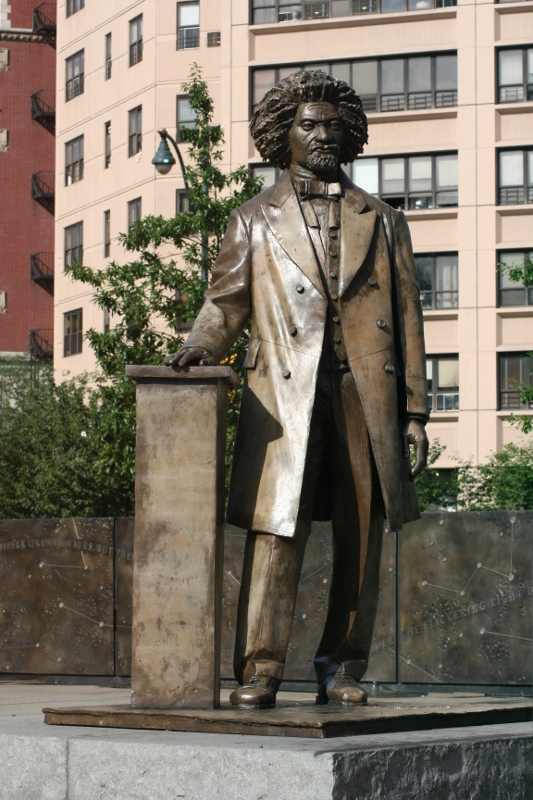
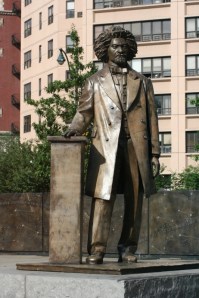
IMG_2530 (533x800)Whose holiday is the Fourth of July?

We like to think of this day as a day of celebration for all the citizens of the United States of America. But as Frederick Douglass proclaimed over 150 years ago, for many people – people living in this country – the Fourth of July serves as a painful reminder and a mockery.

When he spoke, the issue was slavery. Millions lived in the chains of chattel slavery. Those chains have fallen, thanks in large part, to Frederick Douglass and other African-Americans who resisted enslavement.

But many still do not enjoy fully  the vision of freedom. Racism persists. A number of states greeted the recent Supreme Court decision on the Voting Rights Act by moving ahead with Voter ID laws, some of which have been rejected under the voting rights act. Immigrants face challenges as they seek to make a new life. Supreme Court decisions have made it possible for our LGBTQ brothers and sisters to marry – in certain states. An economic gulf looms between the rich and many people who struggle to find ends, let alone to make them meet. Men, women, and children are trafficked for labor and for sex. Slavery has morphed; it has not disappeared. For many, the promises of freedom and the United States remain unrealized. For all of us, the words of Frederick Douglass ring true.

Frederick Douglass was born in a slave cabin in Maryland. The date and year remain unknown even to Douglass. The condition of enslavement resulted in such a lack of knowledge for many. Douglass endured the violation and horrors of slavery. And he resisted. His first attempt to escape failed. Then he tried again and, in early September 1838, disguised as a sailor, he escaped to freedom – precarious freedom, but freedom none the less.

During a visit to the African Burial Ground National Monument in Manhattan, Tricia and I opted to take a tour that focused on slavery, resistance, and abolition efforts in New York. We learned that Douglass made his first stop in New York City. He did not stay because of the city’s support for slavery. In New York, Douglass married Anna Murray. They went to New Bedford, Massachusetts to live.

Douglass became a leader in the abolitionist movement. A talented speaker, he would spend about six months each year travelling and speaking. Douglass attended the Seneca Falls Convention and became a supporter of women’s rights including the right to vote. This connection led Anna and Frederick to move their family to Rochester, New York, perhaps to be near Susan B. Anthony.

On July 5, 1852, in Rochester, Douglass spoke at an event commemorating the signing of the Declaration of Independence: the Fourth of July, U.S. Independence Day.  Perhaps they anticipated his words and tone. Most likely they did not. Douglass reminded his audience that, “This Fourth of July is yours, not mine. You may rejoice, I must mourn.” He went on to note:

What, to the American slave, is your 4th of July? I answer; a day that reveals to him, more than all other days in the year, the gross injustice and cruelty to which he is the constant victim. To him, your celebration is a sham; your boasted liberty, an unholy license; your national greatness, swelling vanity; your sound of rejoicing are empty and heartless; your denunciation of tyrants brass fronted impudence; your shout of liberty and equality, hollow mockery; your prayers and hymns, your sermons and thanks-givings, with all your religious parade and solemnity, are to him, mere bombast, fraud, deception, impiety, and hypocrisy — a thin veil to cover up crimes which would disgrace a nation of savages. There is not a nation on the earth guilty of practices more shocking and bloody than are the people of the United States, at this very hour.

Douglass did not end there, however. He observed that, despite his experience and the painful realities,  “I do not despair of this country.” He closed with a  poem of hope written by William Lloyd Garrison that begins:

God speed the year of jubilee
The wide world o’er!

The poem ends with an affirmation remaining engaged in the struggle for liberty, freedom, and justice – of working to make the promise of the Fourth of July real for all.

Frederick Douglass devoted himself to that struggle.

May I do the same.

See you along the Trail.

Leave a comment

Filed under Antiracism, Current Events, Human Rights, National Park, Photo

Nelson Mandela International Day for freedom, justice and democracy

mandelaThis year it seems more important than ever to observe Nelson Mandela International Day on 18 July. Make your plans now!

Started by the Nelson Mandela Foundation and promoted by the United Nations among others, this year marks the fourth celebration of Mandela Day. The day is about individuals around the globe giving 67 minutes of their time to make a change in their community and thus, the world. Mandela Day seeks to inspire individuals to take action to help change the world for better, and in doing so build a global movement for good. Ultimately, it seeks to empower communities everywhere. The theme for this year’s observance is Take Action; Inspire Change; Make Every Day a Mandela Day.

Why 67 minutes? First, remember that you can always give more than 67 minutes. Second, the idea is to make every day a Mandela day by doing some good for others. But again, why 67 minutes? The Mandela Foundation suggests that number because:

Mr Mandela spent more than 67 years serving his community, his country and the world. The number is symbolic of how people can start to do the same – one small step at a time – and so become part of a continuous, global movement for good.

Looking for something to do? Here are some activities already planned for the day. Find 67 ways to mark the day from the Mandela Foundation. Share what you do – post a comment here or use your own social media tools. Use your imagination!

I will post when I know what I will do. Until then, here are a few resources:

Make your plans now. I look forward to observing this day with you.

See you along the Trail.

1 Comment

Filed under Current Events, Human Rights, United Nations

A call to prayer for Nelson Mandela

Nelson Mandela, child of God, lies  ill in a South African hospital. The Council for a Parliament of the World’s Religions has issued a call to prayer for Nelson Mandela.

In the words of the Council, Nelson Mandela:

helped a generation of young people find a voice for justice. He believed in the humanity of the other to the extent of engaging his own captors in conversations. He transformed an armed movement into a peaceful victory. He successfully established a process of forgiveness and reconciliation instead of revenge.

In our own fashion, each of us may pray.

As for me: I give thanks for Nelson Mandela; for his life and courage and grace and vision and witness. I pray for his comfort and strength. I pray for his family and friends who gather with him at this time. I pray for those who care for him. I pray for people who supported Mandela during the struggle for justice in South Africa and for people who draw inspiration from him to sustain ongoing efforts for justice around the world. I pray for South Africa. Nkosi sikelel’ iAfrika. God bless Nelson Mandela.

See you along the Trail.

1 Comment

Filed under Current Events, Human Rights

Holy ground

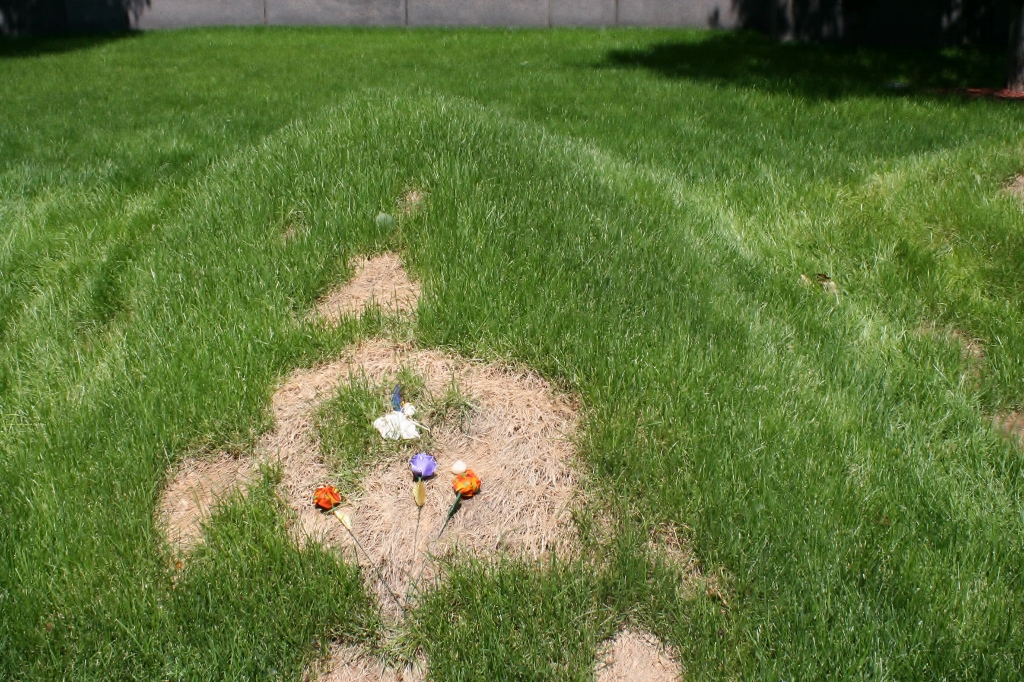
IMG_1758 (1024x665)I stood today on holy ground. Of course all ground is holy for God creates all ground and entrusts it to our care. Still some ground bears special meaning because of what happened there.

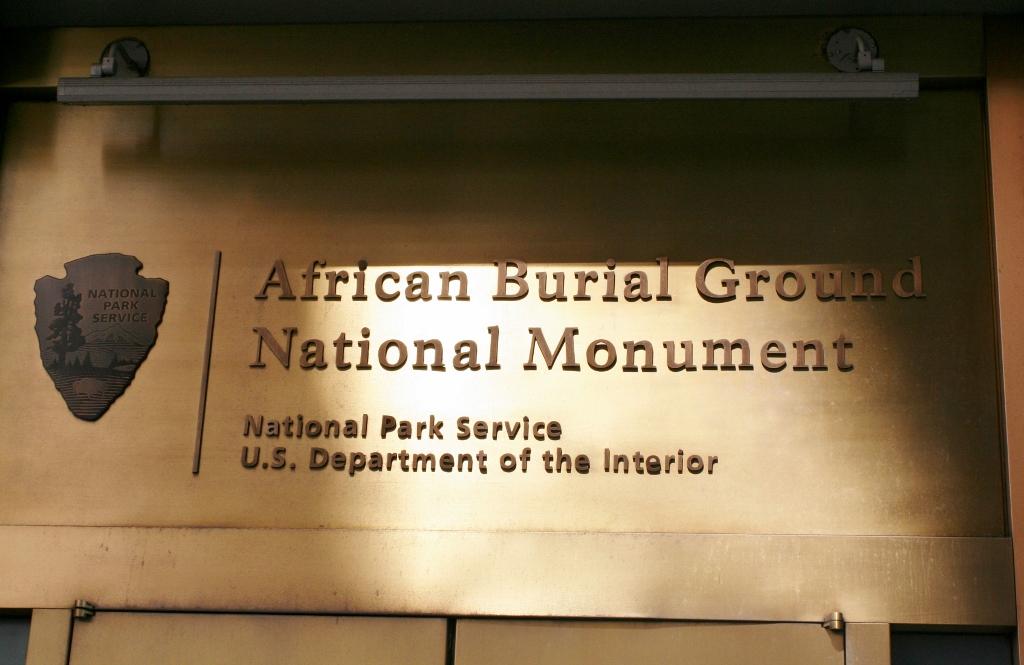
My quest to visit National Parks took Tricia and me to the African Burial Ground in Manhattan today. It is a well done park that tells a significant story.

New York’s African Burial Ground is the nation’s earliest known African and African American cemetery. Enslaved Africans played a key role in building Manhattan as they played  key roles in building this entire country. The Nation notes that:

In 1703, 42 percent of New York’s households had slaves, much more than Philadelphia and Boston combined. Among the colonies’ cities, only Charleston, South Carolina, had more.

From the late 1600s until 1794, both free and enslaved Africans were buried in a 6.6-acre burial ground in Lower Manhattan, outside the boundaries of the settlement of New Amsterdam, later known as New York. The National Park Service notes that “an estimated 15,000 men, women and children were buried here.

Africans resisted enslavement in countless ways: from rebellions to running away to educating children and more. The care they showed their loved ones was another form of resistance. Faced with the brutal dehumanization of enslavement, honoring those who died (or were killed) served to affirm the humanity and dignity of the individual and the community.

Lost to history due to landfill and development, the grounds were rediscovered in 1991 as a consequence of the planned construction of a Federal office building. The African-American community in New York led a campaign to have the remains honored and remembered. Their efforts, after some controversy and hard work, succeeded. The remains were taken to Howard University for analysis.

After the scientists finished their work, the remains were placed in new coffins and taken back to New York for reburial. The New York Historical Society reports:

The ceremonial journey stopped in five cities along the way, so that people in Washington D.C., Philadelphia, Baltimore, Wilmington, and Newark could pay their respects. Then the remains arrived by boat in New York City, at the same spot where slave ships had docked two centuries earlier. After days of rituals that included horse-drawn hearses, drummers in African kente cloth, singing, dancing, and prayers, the remains were returned to the earth in lower Manhattan.

IMG_1763 (1024x682)The community’s efforts resulted in the designation of the African Burial Ground as New York City Historic District, a National Historic Landmark and, on February 27, 2006, a National Monument.

Today, the African Burial Ground National Monument includes a visitor center with four exhibit areas, a theater where a 20-minute video tells the story of the burial ground, and a bookstore. A short walk away stand the graves and a memorial.

Holy ground.

See you along the Trail.

2 Comments

Filed under Antiracism, Human Rights, National Park, New York

WCC Assemby in Korea to Urge Pursuit of Peace, Justice

My friend Grace Ji-Sun Kim recently went to a planning meeting for the World Council of Churches Assembly that will take place in Korea in October. I wish I were going to the Assembly – I have fond memories of Korea.

gracejisunkim's avatarGrace Ji-Sun Kim

This is my latest post for Ethicsdaily.com.  It is a reflection of my recent participation at a World Council of Churches Meeting in Geneva.

Many mainline denominational churches, such as the Lutherans, Presbyterians, Episcopalians and Methodists, are struggling to survive in North America.

View original post 860 more words

Leave a comment

Filed under Current Events, Friends, Human Rights

CongoSwim – 25 August 2013

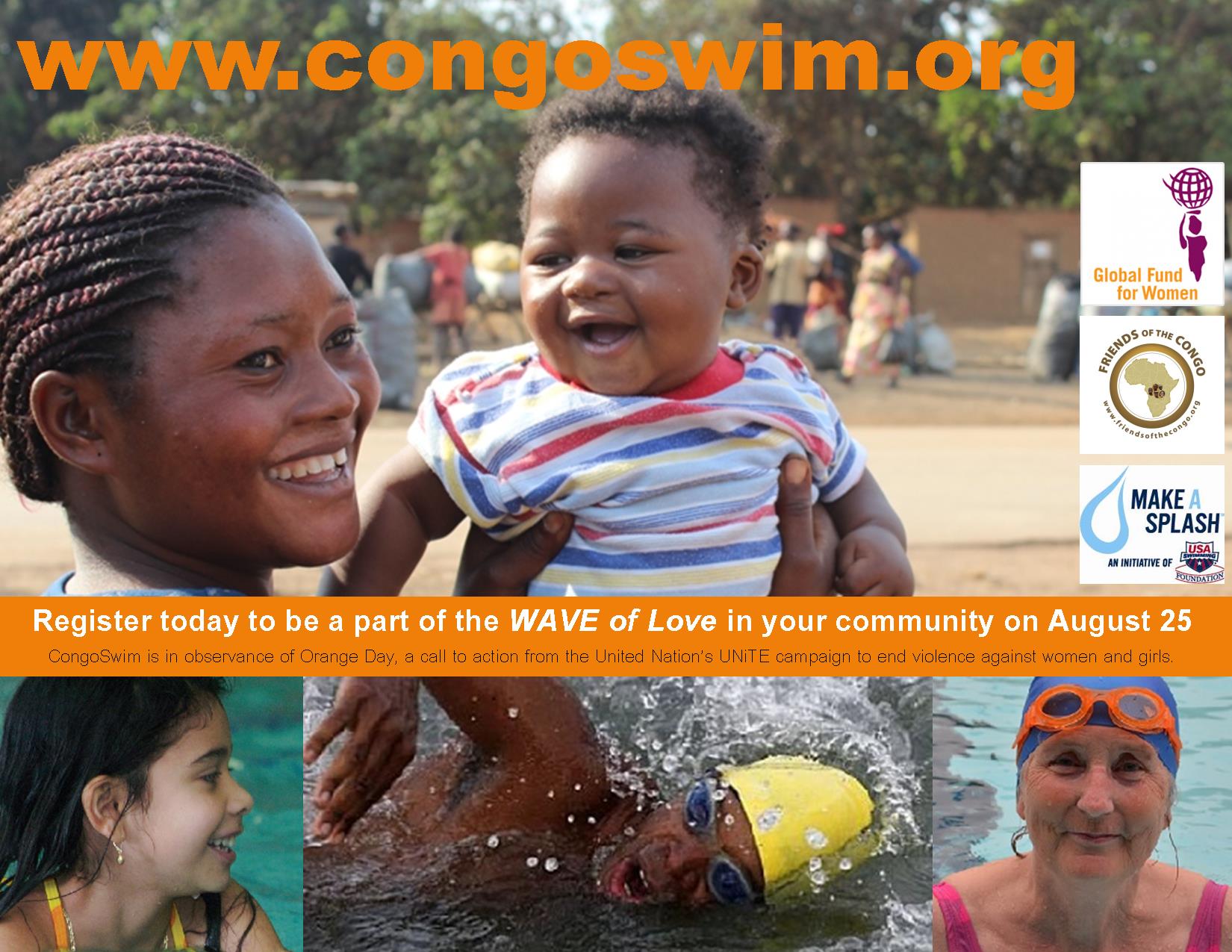
CongoSwim FLYER 8.5 x 11 JPEGYesterday I signed up to take part in the CongoSwim. Held on August 25, a UN Orange Day to witness and work to end violence against women, CongoSwim will raise awareness about violence in the Democratic Republic of Congo, particularly against women. The event will also raise funds to care for the victims of violence and to help prevent future violence.

Swimmers across the nation are joining CongoSwim 2013, a collective call to action to break the silence about the deadliest conflict in the world since World War II and the worst humanitarian crisis of our time by sending a WAVE of Love to people of the Democratic Republic of Congo.

CongoSwim 2013 will take place worldwide on August 25 when swimmers and ‘not yet swimmers’ will swim in solidarity with Congolese working for peace and stability in the heart of Africa.

Coco Ramazani is a young survivor of systematic rape in eastern Congo whose horrific story is told in Tell This to My Mother by Joseph E Mwantuali.  To mark the global event to spotlight how soldiers are ordered to rape women and children to destroy communities in the scramble for Congo’s resources, Coco will take part in a healing ceremony on the pilot boat while CongoSwim founder Keris Dahlkamp strives to swim 22 miles across Lake Tahoe, expected to take him 12-14 hours.  Rape as a weapon of war has been used around the world throughout history, yet an overwhelming silence remains.

International model Noella Coursaris Musunka, founder of The Georges Malaika School for Girls in Kalebuka, southeast Congo will host a party with the students in solidarity on August 25.  Nunu Kidane, the Director of Priority Africa Network, who was recognized as a “Champion of Change” by the White House, will be swimming in the San Francisco Bay Area. Kidane says:

“I’m coordinating a swim with members of my local YMCA because what has been happening in eastern Congo is similar to what happened in the Holocaust, protracted over many years. Little attention has been paid and few are asking why. As in the past, when the full scale of the reality is finally revealed, many will ask ‘how can this be? I did not know.’ We all need to be involved for our common and shared humanity.“

Join Charles Chapman of New York, the first African-American to swim the English Channel, along with various Girl Scout troops, college super swimmers and senior citizens who have registered unique swim actions to take place in their communities on August 25.  Families are encouraged to register their child’s swim lessons or participation on a swim team with CongoSwim. This unique and inspiring collective swim was organized by volunteers in observance of Orange Day, a call to action by the United Nations UNiTE campaign to end violence against women and girls.

There is no registration fee, but participants are encouraged to raise funds for the Congolese grassroots groups receiving grants from Global Fund for Women and Friends of the Congo.  A portion of the funds raised will also benefit the USA Swimming Foundation’s Make a Splash initiative, to prevent children from drowning in the US.  Upon registering, participants receive a Swim Pack with sample fundraising letters, facts about the Congo as well as tips for talking with children about injustice.

Why Congo?

  • In northeastern Congo, the greatest humanitarian crisis since WWII has claimed an estimated six million lives from war related causes, half being children under the age of 5.
  • Rape as a weapon of war. Hundreds of thousands, some say millions, of women and children in Congo have endured extreme and systematic sexual violence by government and militia soldiers.
  • Vital to the fight against climate change. Congo is a part of the second largest rainforest in the world.
  • An abundance of minerals, which help power our laptops, cellphones and many other products we use daily are mined in Congo
  • Public Law 109-456, the U.S. government has a law on its books that can help advance peace and democracy in the Congo. It was sponsored by President Obama when he was Senator but it has yet to be fully implemented.

The ingenuity, vision and resiliency of the people are far greater than the mineral wealth of Congo. Thousands of Congolese women and youth leaders are organizing a movement denouncing violence and bringing solutions to national and world leaders. In solidarity with this movement, CongoSwim 2013 uses swimming as a vehicle to raise consciousness and support for the worldwide movement for a peaceful, just and dignified Congo.

Watch for more about how and why I will participate later. For now, think about taking part yourself.

See you along the Trail.


1 Comment

Filed under Human Rights, United Nations

A blessed visit, a blessed day

IMG_1655 (1024x651)Near the end of my visit to the Republic of Korea, the Rev. JC Lee informed me that one of his Doctor of Ministry would come to the United States. The class itself would take place at Columbia Theological Seminary. But they would also do some sightseeing. Their Trail would bring them to New York.

I jumped at the opportunity to share a small portion of hospitality with my friend and guide who had showed me so much on my trip to his country. We began to plan and via email worked out a brief visit to the Presbyterian Ministry at the United Nations.

The visit happened yesterday – May 30. It was wonderful.

JC and nine students arrived about 10:30. Our staff greeted them warmly. Ricky, Marissa (who took two of the photos in this post), Brendan, Ryan, Sera, and I told about the work of our ministry and responded to questions.

IMG_1659 (1024x683)Pizza, traditional New York City pizza – we wanted to provide a New York dish, arrived at 11:15 or so. Over lunch, our guests shared about themselves and their ministries.

Our guests expressed interest in the Red Hands on our walls. I explained that the hands were part of the Red Hand Campaign to end the use of children as soldiers. Our Korean brothers and sister indicated a desire to participate and Red Hands were made.

After lunch, Sera and I accompanied the class on a tour of the United Nations. As we had requested, the guide conducted the tour in Korean. The group members had a marvelous, joy-filled time. We had so much fun and laughed so loud and hard with each other that our guide had to quite the group. Twice.

IMG_1739 (1024x683)Following the tour, we returned to our office where we bid each other, not good-bye, but “until the next time.” We walked our brothers and sister to the elevator amid great laughter. The class went to visit Midtown.

The elevator doors closed. With joy in our hearts, well at least with joy in my heart – I suppose I should not speak for anyone else, we went back to work.

A blessed visit. A blessed day.

See you along the Trail.


3 Comments

Filed under Friends, Human Rights, New York, Presbyterian Ministry at the United Nations

Writing down words

An interchange from the movie Indiana Jones and the Last Crusade remains with me. Indiana (Harrison Ford) and his father Professor Henry Jones (Sean Connery) seek the Holy Grail. Nazis have also joined the quest. Henry Jones has long sought the Grail, finding a map and compiling a diary. To keep them safe, Henry sent the materials to his son and colleague Marcus Brody. Learning that the Nazis have kidnapped Henry Jones, Brody set off with the map.  Indiana went to rescue his father. After a series of adventures, father and son escape. The following conversation occurs:

Professor Henry Jones: Stop, wait, stop! Stop! You’re going the wrong way. We have to get to Berlin.
Indiana Jones: Brody’s this way.
Professor Henry Jones: My diary’s in Berlin.
Indiana Jones: We don’t need the diary, dad; Marcus has the map.
Professor Henry Jones: There is more in the diary than just the map.
Indiana Jones: All right, Dad. Tell me.
Professor Henry Jones: Well, he who finds the Grail must face the final challenge.
Indiana Jones: What final challenge?
Professor Henry Jones: Three devices of lethal cunning.
Indiana Jones: Booby traps?
Professor Henry Jones: Oh, yes. But I found the clues that will safely take us through them in the Chronicles of St. Anselm.
Indiana Jones: Well, what are they? As his father sits silently, Indiana continues in an annoyed voice. Can’t you remember?
Professor Henry Jones: I wrote them down in my diary so that I wouldn’t have to remember.

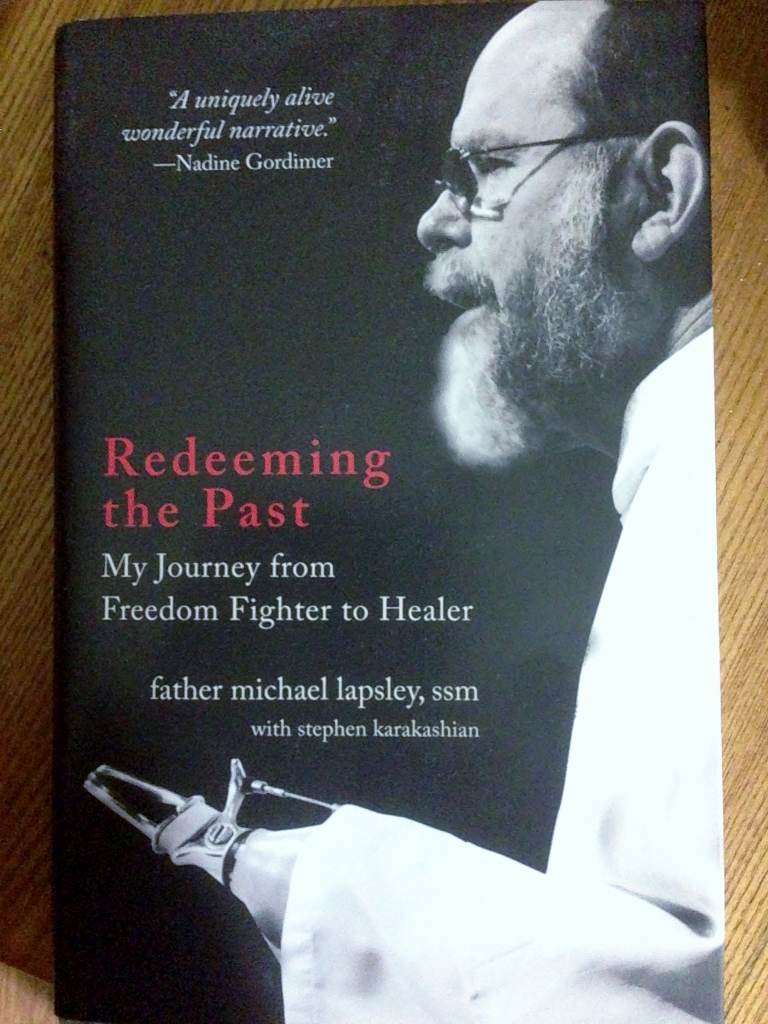
I have always found wisdom in Henry Jones’ plan. I find more as I grow older. Redeeming the Pastby Father Michael Lapsley, is one of several books I am reading.

photo (7) (768x1024)An Anglican priest, Father Lapsley took an active role in the struggle against South Africa’s apartheid. In 1990, he opened a letter bomb that nearly killed him. The blast took his hands and one of his eyes. His book tells his story of the faith journey that led him to pursue justice, the explosion, his recovery, and how Father Lapsley has drawn on his experience of trauma to help his sisters and brothers in South Africa and around the world seek healing.

Many of his words bear repeating and remembering. I write down a few:

 As we who are disabled demand a place in the sun, we are not just asking people to be nice to us; we are saying, “Actually you can’t be a real community without us.” We don’t ask for pity; we ask for justice. We say, “Don’t just include us in your community. Instead, come, let’s create one together.” That’s a very different concept.

Profound, challenging, humbling, hopeful words. Words that apply in so many situations – in any situation of privilege and oppression and exclusion. Words to ponder, to remember, and to seek to live by.

We cannot be a real community until everyone is a part and we build that community together. May it be so.

See you along the Trail.

4 Comments

Filed under Books, Human Rights, Movie