Category Archives: Presbyterian Church (U.S.A.)

Presbyterian Church (U.S.A.) photo-a-day journey

PCUSA photoAday-2I spotted this on the Facebook page of my friend Larissa Kwong Abazia.

The Presbyterian Church (U.S.A.) holds its biennial General Assembly in Detroit this June. Larissa stands (Presbyterians don’t run) for vice-moderator.

But she offers this invitation to all Presbyterians:

Calling all Presbyterians! Join in a photo-a-day journey as we prepare for the PC(USA) General Assembly. I invite you to celebrate who we are and who we want to become, no matter who you’re supporting for moderator of GA. Let’s have fun in the next forty days as we seek to serve our Church together. Pass it along! #journeytoGA #pcusa

I plan to give it a try. I invite you to join us.

See you along the Trail.

1 Comment

Filed under Photo, Presbyterian Church (U.S.A.)

Advocate for Peace in Gaza 

From the Presbyterian Office of Public Witness:

Ask Congress to Support a Lasting Ceasefire and an End to the Gaza Blockade

On March 11 three Palestinian members of Islamic Jihad were killed in southern Gaza, with their deaths reportedly attributed to an Israeli airstrike. The next day, Gaza fighters launched dozens of rockets into southern Israel, and the Israeli military conducted numerous airstrikes on Gaza.  Rockets and airstrikes continued later in the week.

The latest violence takes place following recent Palestinian civilian casualties in Gaza.  In a March 4 report, “Spike in number of Palestinian civilians killed near Gaza perimeter fence,” the Israeli human rights organization, “B’Tselem,” describes incidents of civilian deaths. Amneh Qdeih, 57 was shot and killed “when she approached Gaza’s perimeter fence. Her relatives told B’Tselem field researcher Khaled al-‘Azayzeh that Qdeih, who was mentally ill, had been at a family wedding in the town of Khuza’ah, not far from the perimeter fence in the southeastern Gaza Strip.”

Also in March, the European Union released its report, “EU Heads of Missions’ report on Gaza 2013.”  The report details deteriorating conditions for the 1.7 million Palestinian residents of Gaza.  Power outages last up to 16 hours per day. Fuel shortages result in severely compromised water and sanitation facilities and disruption to hospital services.  The water situation is particularly dire, as the report details. Due to an  “over-abstraction of water from the aquifer—the principal water source in Gaza—the groundwater level has been sinking.  This causes salty seawater to seep in, rendering 90% of the aquifer’s water unsafe for drinking without treatment.  According to a UN study, the aquifer may become unusable by 2016 and damage to it may be irreversible by 2020.”

Click here to send a message to your members of Congress today!

The Heads of Mission warn that “the human rights situation in Gaza is worrying,” The ongoing closure policy means that movement and access for Palestinian residents of Gaza is strictly limited. As a result, Palestinians in Gaza are rarely able to visit family members, study at universities, and access holy sites in the West Bank and Jerusalem. The report notes a lower number of rockets in 2013 than in previous years, but “indiscriminate firing of rockets towards Israel by extremist groups in Gaza has continued, in violation of international law.”

The recent deaths of Palestinians in Gaza and the firing of rockets into Israel, as well as the deteriorating living conditions there, demonstrate in tragic way that the blockade of Gaza is suffocating for its residents while not bringing security for Israel.  As energy and attention focus on the ongoing peace negotiations, it is also critical to address the Gaza situation.

While Israel, as the occupying power, bears primary responsibility for ending the blockade, the Palestinian Authority and the de facto leadership in Gaza also must be held accountable.  While the Egyptian government has taken measures to curtail tunnel traffic, they should also be encouraged to work with the parties to facilitate use of the Rafah crossing between Egypt and Gaza.

Click here to send a message to your members of Congress today!

In 2005 Israel and the Palestinian authority signed an agreement on movement and access contained in two documents, “Agreement on Movement and Access,” and “Agreed Principles for Rafah Crossing.”  This agreement should be immediately updated and implemented, to alleviate the suffering and collective punishment of the people of Gaza and to provide for the security of the people of southern Israel. The need is urgent for a lasting ceasefire and an opening of the monitored crossings for humanitarian assistance, transit of persons, and imports and exports for the Gaza economy. It is time for a new strategy toward Gaza – a strategy that is based on human rights, international law, and respect for the dignity, freedom, and security of all persons.

At the 219th General Assembly, the PC(USA) expressed its opposition to a blockade on Gaza which prohibits adeaquate levels of food, medicine, building supplies, and humanitarian assistance from entering Gaza. In addition, the denomination affirmed its support for the necessity of allowing “free commercial exchange in and out of Gaza.” As part of this recommendation, the General Assembly specifically called upon the U.S. government to “end any support for the blockade that interferes with the adequacy such items or such exchange.” As Presbyterians we are guided by a concern for a just and lasting peace that will reach all people in Israel-Palestine, including the citizens of Gaza.
Click here to send a message to your members of Congress today!

Leave a comment

Filed under Current Events, Presbyterian Church (U.S.A.)

Pray for South Sudan

Tomorrow – February 16 – join in prayer for our brothers and sisters in South Sudan. The Episcopal Church, the Reformed Church in America, the World Communion of Reformed Churches, and the Presbyterian Church (U.S.A.) are among those calling for prayer.

From the Presbyterian Church (U.S.A.)’s call by Gradye Parsons, Stated Clerk of the General Assembly of the Presbyterian Church (U.S.A.); Linda Bryant Valentine, Executive Director of the Presbyterian Mission Agency; and Neal D. Presa, Moderator of the 220th General Assembly (2012);

The ceasefire that went into effect in South Sudan on January 23 provides a sign of hope,” noted Parsons. “Our brothers and sisters need our prayer and support as they seek to move into a future of justice and peace.”

South Sudan achieved independence in 2011. Violence erupted in the new nation in December 2013 after a political dispute between President Salva Kiir and his former deputy, Riek Machar.

The conflict resulted in many deaths and a severe humanitarian crisis. More than half a million South Sudanese have been forced from their homes. The UN High Commissioner for Refugees reports that, as of January 31, some 770,000 people have been displaced—646,400 within the country and 123,400 outside.

The call provides a sample prayer and ideas for action:

Gracious God, we lift before you the people of South Sudan who seek to create a new future after a period of violence. Three years ago, we rejoiced with our sisters and brothers as they voted for independence and became the world’s newest nation. Over the past months, our hearts were heavy as a deep conflict threatened to destroy all for which they have strived. We mourned with those who lost loved ones in this unrest, with the children and adults who have become traumatized again and again, with those who are injured, imprisoned, and hiding, and with those driven from their homes. We give thanks for the ceasefire, but we pray for our brothers and sisters as they face the tasks of building a future together. God of reconciliation, we ask you to send your Spirit of unity and peace to guide the people and the leaders of South Sudan from violence and into the paths of peace and justice. We pray for our partners in the Presbyterian Church of South Sudan, the South Sudan Evangelical Presbyterian Church, RECONCILE, the South Sudan Council of Churches and Across; may they feel your presence with them. Strengthen them with the power of your Holy Spirit as they witness to the strong love of Christ, advocating for peace and justice in a situation that is only hopeful because we follow a resurrected Christ. In whose name we pray, Amen.

In addition to prayer, we encourage Presbyterians to:

May the people of South Sudan soon know justice and peace.

See you along the Trail

Leave a comment

Filed under Current Events, Presbyterian Church (U.S.A.), Presbyterian Ministry at the United Nations, Worship

Neighbor and Neighborhood: A dialogue of the Sikh Coalition and the PC(USA)

This one is particularly for folks in the New York City area. But there is contact information if others want to learn more.

World Interfaith Harmony Week

World Interfaith Harmony Week is observed during the first week of February.

The Sikh Coalition, Presbyterian Men in the Presbytery of New York City, the Church of the Covenant, Rutgers Presbyterian Church, West-Park Presbyterian Church, the Committee on Witness to Society and the World in the Presbytery of New York City, and the Presbyterian Mission Agency’s Office of Interfaith Relations and Presbyterian Ministry at the United Nations have come together in a unique partnership to offer three dialogue events over the weekend of February 1 and 2.

Simran Jeet Singh, Senior Religion Fellow of the Sikh Coalition, and Christine Hong, Associate for Theology: Interfaith Relations of the Theology, Worship and Education Ministry of the Presbyterian Mission Agency will lead the dialogues. Details on the three events are:

Saturday, February 1, 2014
10:00 – 11:30 AM

Fellowship Hall
Church of the Covenant
310 E. 42nd St., New York, NY
(between First and Second Avenues)
For more information, contact Greg Reid of Presbyterian Men.

Saturday, February 1, 2014
1:00 – 3:00 PM

Fellowship Hall
Rutgers Presbyterian Church
236 W. 73rd St., New York, NY
(take the 1, 2, or 3 train to 72nd St.)
For more information, contact Alice Hudson at Rutgers Presbyterian Church.

Sunday, February 2, 2014
Worship 11:00 AM
Dialogue 11:30 AM – 12:30 PM

Sanctuary
West-Park Presbyterian Church
165 W. 86th St., New York, NY
(corner of Amsterdam Avenue at 86th Street)
For more information, contact Bob Brashear at West-Park Presbyterian Church.

The dialogue will explore questions such as: What do Presbyterian Christians and Sikhs share in common? What makes our traditions unique? Does interfaith dialogue strengthen or weaken faith? How do we love neighbors of different religions in difficult times? Join us for a fishbowl style interfaith dialogue between the Sikh Coalition and the Office of Interfaith Relations of the Presbyterian Mission Agency, Presbyterian Church (U.S.A.). In this interactive learning experience you will learn about Sikhism, Presbyterians and interfaith relations, see interfaith dialogue in action, and take steps towards building relationships of neighborliness and solidarity with the Sikh American community. February 1 marks the beginning of World Interfaith Harmony Week, the first week in February each year, as designated by the United Nations General Assembly.

Would you like to host a similar event for your church or group? Contact Christine Hong at the Office of Interfaith Relations.

See you along the Trail.

Leave a comment

Filed under Current Events, New York, Presbyterian Church (U.S.A.), Presbyterian Ministry at the United Nations

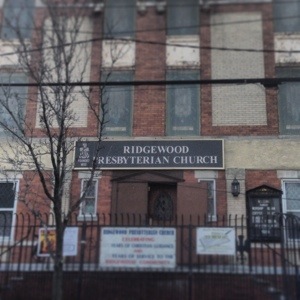
Ridgewood

20140119-093740.jpg

Preaching this morning at Ridgewood Presbyterian Church in Queens.

See you along the Trail.

Leave a comment

Filed under New York, Photo, Presbyterian Church (U.S.A.)

Advent 12: Hope

Toasting Cindy

I have resisted including explanations with my posts in the Advent-photo-a-day. This one is different. It calls for some words.

One year ago, December 12, 2012, Cindy Bolbach, moderator of the 219th General Assembly (2010) of the Presbyterian Church (U.S.A.), died.

In the sure and certain hope of the resurrection, I posted an invitation to my friends to pause wherever they were and lift a toast in thanks for the life and witness of Cindy Bolbach at 20:10 that evening. Many people participated. My son Sean joined me at a spot off Times Square where we took this photo.

The hope we celebrated one year ago holds Cindy and all of us still. Thanks be to God. Alleluia. Alleluia. Alleluia.

1 Comment

Filed under Advent, Family, Friends, Photo, Presbyterian Church (U.S.A.)

For a world in mourning

From the Presbyterian News Service:

The Rev. Neal Presa, moderator of the PC(USA)’s 220th General Assembly (2012), the Rev. Gradye Parsons, stated clerk of the General Assembly, and Linda Valentine, executive director of the Presbyterian Mission Agency, issued a call to prayer “for a world in mourning at the death of Nelson Mandela, the first black president of a free South Africa, international peacemaker, human rights activist, and Nobel Peace Prize winner.”

The full text of their call:

And I heard a voice from heaven saying, ‘Write this: Blessed are the dead who from now on die in the Lord.’ ‘Yes,’ says the Spirit, ‘they will rest from their labors, for their deeds follow them.’ (Revelation 14:13, NRSV)

Everliving God, whose countenance greets us at the birth of life, whose love accompanies us in our laboring days, and whose gracious welcome grants us the final rest at the twilight of our years, we look to you in this hour, as did your servant and our brother, Nelson Mandela.  Into your eternal comfort, gracious Lord, we commit his soul, where in your everlasting abode, in your very heart, he finds his peaceful rest.

With grateful hearts, we offer our thanks to you, Lord, for the life and witness of Nelson Mandela among us, who, like the prophets of old, showed us and the world the way of truth and life in his unwavering commitment to equality for all and to healing and reconciliation in a divided and broken world, at great cost to himself and his family.

We give you thanks, faithful God, for you accompanied Nelson in his years of imprisonment, strengthening his resolve, kindling and keeping the flame of hope in him alive that one day his beloved South Africa would see neighbor loving neighbor, not as a divided and defeated people partitioned by skin color, ideology or region, but finding common cause in their humanity as people created in your image, and therefore precious in your sight.

Loving God, who as Jesus Christ in the power of the Holy Spirit, you showed us the ways of your kingdom and what servant leadership is about, we remember your son, Nelson, as one whom you anointed to serve as a leader of South Africa and the world for a generation, whose words of wisdom, acts of courage, and humble spirit testified to the power and possibilities of your grace that knows no bounds. Through one man, you have touched the lives of so many.

In life and in death, in body and in soul, we belong to you, loving Lord. So, in this hour, unite us in prayer as we grieve with the Mandela family. Accompany them with your generous and embracing love in their hour of mourning. Turn their weeping to singing, their downcast heads to dancing, and keep alive in their hearts and in ours your vision of a better and just world, even that same dream that you placed upon Nelson’s soul, and for whose labors we trust you will offer the word, “Well done, good and faithful servant.”

In the name of your servant Son, Jesus Christ our Lord and Savior. Amen.

See you along the Trail.

1 Comment

Filed under Antiracism, Current Events, Human Rights, Presbyterian Church (U.S.A.)

SNAP/Food Stamp Challenge: Farm Bill deadline approaches

The Presbyterian Church (U.S.A.)’s Office of Public Witness invites us to write to our Members of Congress now and tell them that you support a comprehensive, fair, faithful Farm Bill.

As the year draws to a close, Congress has many must-pass items left on its plate.  Perhaps most pressing are the budget and the Farm Bill.  The House is scheduled to adjourn for the year next Friday, Dec. 13, but the Senate did not even return from Thanksgiving recess until next Monday, Dec. 6.  This leaves one week for them to wrap up the first session of the 113th Congress.

Of course, that it not to say that conversations are not ongoing.  Indeed, bicameral conference committees on both issues are in the midst of delicate and intense negotiations.  Leaving aside the question of the budget for now, for after all, Congress does have a few weeks into the New Year to come to agreement before the next manufactured fiscal crisis, the focus of the faith community has been on the Farm Bill.

Our nation’s food and farm policies, as embodied in the Farm Bill, impact people and communities from rural America to big cities to developing countries. In the Farm bill are provisions that authorize SNAP (Supplemental Nutrition Assistance Program, formerly Food Stamps), international food aid, conservation programs, initiatives that support new and minority farmers and ranchers, rural development programs, sustainable energy research, farm subsidies, crop insurance, just to name the most famous.  In all, the Farm Bill is a mixed bag of policies, some of which promote a more just food system and some that trap us in a vicious cycle of subsidized commodities and under-nutrition.  Nevertheless, the Farm Bill is must-pass, if for no other reason than that it authorizes SNAP and promotes environmentally sustainable practices on working farmlands.

Write to your Members of Congress to urge a just and comprehensive Farm Bill this year.

In the current budget climate, which incorrectly functions from an assumption of scarcity, the Farm Bill’s limited resources must be effectively targeted where need is greatest. And people are hungry –- the U.S. and around the world. Programs and policies that curb hunger and malnutrition, support vibrant agricultural economies in rural communities, and promote the sustainable use of natural resources must be prioritized.  At the same time, we should be shifting away from investment in programs that subsidize factory farms and promote major commodities as the most viable crops for food and fuel.

Earlier in the year, serious threats were made to the funding of SNAP and on Nov. 1st , SNAP benefits were cut as a 2009 funding increase ran out.  Far from there being room to cut SNAP, most SNAP beneficiaries find that their benefits run out by the third or fourth week of the month and turn to private charity to fill gap.  If anything, we need to invest more in Food Stamp benefits.  SNAP is designed as a counter-cyclical program that expands to meet needs when the economy is bad and people lose income and become eligible.  When the jobs outlook and economy improve, it contracts as participants cycle off the program.

So, Congress must reauthorize the SNAP program without the proposed cuts.  There is simply no way to achieve significant cuts without affecting benefits and nutrition education programs.  Write today to your members of Congress.

To read more about the PC(USA) Office of Public Witness’ advocacy around the Farm Bill and SNAP, visit their blog.

See you along the Trail.

1 Comment

Filed under Current Events, Food, Presbyterian Church (U.S.A.)

SNAP/Food Stamp Challenge: a friend reflects

snap_logoAmong my friends who participated in the PC(USA) SNAP/Food Stamp Challenge, Rebecca Barnes wrote some compelling reflections. Here are a few quotes to encourage you to read and ponder her material:

Reflections preparing for the SNAP/Food Stamp Challenge next week

Another worry comes to me: What if I want to offer to take food to someone sick or grieving that week? And it hits me: it is a privilege to have food to be generous with. To tell church to keep me on the list of people to call, that is a privilege. I have enough money and resources to be a helper (even as I have been one of the helped). What would it feel like if I could only ever assume the role of “the helped?” Ouch.

First day of the Food Stamp Challenge

7) I have a church that is open, that I’ve been embraced in all my life, and frequently has hot coffee, after church meals, and Sunday School snacks for kids, no questions asked… Not sure what we would do without a community (other than be hungrier, and lonelier.)

Is Your Hunger Satiated?

What could create not only compassion and empathy, but justice, for those living in poverty? What would really change those with power to change this system? Would personal experience, would stories from others, would public policy advocacy, would civil disobedience? What would it take for our nation to be outraged—and to refuse to let it happen—when Congress cuts $40 billion from SNAP benefits? When will we make sure that our insatiable hunger for justice is only satisfied with: justice for all?

Serving up Privilege

1)   The Food Stamp Challenge isn’t a game. It’s not winnable. It shouldn’t be used, by those of us with full cupboards and freezers and the possibility to go “back to normal” tomorrow, to congratulate ourselves even if we can possibly eek through the week. Being on a SNAP benefit food budget is challenging, absolutely. But the goal is not to see if I can get enough to eat this week. The Challenge is actually to advocate for the benefits available to people in our nation. The Challenge is to transform my own heart and mind enough and hope that I can then use my own power and privilege and experience to change myself. To re-invigorate my advocacy. And maybe, somehow, affect the systems of economic injustice because I will keep trying with my words, my vote, and my privilege, to get the message across: there is something really wrong with the income disparity, wage inequality, lack of access to food, and massive economic injustice in our nation and it must change.

The Advent of Hunger?

May the God we prepare to welcome on Christmas morning, a God who was born poor, be a God who convicts us of the need to act and advocate and subvert systems that prevent people from experiencing God’s love lived out in human form. May God guide us as we seek to strengthen local food economies, to create resilient communities, to empower those in need, and to demand justice in our food policies.

Food Stamps and the Environment? Note: Rebecca is the Associate for Environmental Ministries at the PC(USA)

The thing is, a ruined earth is both an “equal opportunity” destroyer for humanity and it strikes the poor, hungry, and marginalized most heavily. Think of any natural or environmental disaster.

Thanks Rebecca for your words and your witness!

See you along the Trail.

Leave a comment

Filed under Current Events, Food, Presbyterian Church (U.S.A.)

SNAP/Food Stamp Challenge: an other view

snap_logoI believe that part of the point of the SNAP/Food Stamp Challenge is to challenge our thinking and to start conversations. This happened to me as I participated in the challenge during the week of November 17. I talked to a number of people about the challenge, the SNAP program, and working to end poverty. I had Twitter exchanges including one with Meagan Dosher Hansen who reminded me of the importance of access to fresh and local food and an exchange with Leanne Masters who raised the obvious and important question of “Why aren’t the lived experiences of others enough to foster conversation?” I continue to ponder that question. I also read a number of blogs and some articles. These included material from people who participated in the challenge and people who did not; people who supported participating in the challenge and people who did not.

Sharon Astyk wrote a post that stays with me as well: Why I Won’t Do the Food Stamp Challenge. The experience of two of her former foster sons who lived on food stamps for their family’s primary source of income informs her writing. She observes:

I know for a fact that the reality of living on food stamps is rather different than making a week or a month long shift.

She notes the compound challenges that people who depend on food stamps face: such as the stamps not lasting until the end of the month and the deficit that creates as the next month begins and what food stamps do not purchase and what one has to do to obtain some of those items: “tampons, soap, shoes, toilet paper, cleaning fluid, roach killer, school supplies”.

She also highlights the privileges, advantages, and resources that those who choose to take the challenge have. I had all these and more:

  • A kitchen
  • Spices and seasonings to make food palatable (although some who take the challenge do so without using what is on hand, the reality is that we have many things on hand already)
  • A bathroom full of supplies
  • Ways to cover other expenses and emergencies
  • A very different starting point – as Ms. Astyk points I, I did not start with “a week or two of hunger, depression and misery behind [me] in which there was not food”
  • Access to free coffee at work and in meetings
  • Friends who had the resources to buy me snacks or drinks (I did decline all but one cup of coffee at a cold football game but my reality is that I have friends who can easily help me without stretching their resources and I have the means to attend a football game)

Ms Astyk rightly identifies other limits of the challenge:

Doing the food stamp diet for a week or a month won’t give you a sense of how depressing, humiliating, exhausting and frustrating it is to be poor in our society.  It won’t let you experience the ways poor diet and the grinding suffering of poverty degrade your health and your energy to keep going.    It won’t give you a sense of what it is like to live on food stamps month after month, what it is like to be ashamed of yourself and your inability to give your children and family what they need.  It won’t let you experience what it is like to feel that you can never catch up, so what’s the point of even trying?

She concludes:

Not everyone who receives food stamps starts as far back as my kids do – but the truth is for the one in four children in America who depends on food stamps for their family’s basic food security, the conversations we are having about cutting the food stamp budget, about the farm bill and about poverty don’t even begin to cover critical ground.

Doing the SNAP/Food Stamp Challenge opened me to voices and questions and conversations in new ways. I am grateful for that. But I recognize that there are many voices I need to hear, the questions still remain, and the conversations I had only opened the topics of providing food security and ending poverty. I will have to go deeper. We all will have to go deeper. May we do so. May I do so.

See you along the Trail.

Leave a comment

Filed under Current Events, Food, Presbyterian Church (U.S.A.)