
 “Like hurricanes and floods, God’s justice should uproot systems of oppression established by our political, religious, and economic prejudice. It should cleanse the world of all its racial, xenophobic, and gender-based violence. God’s justice should wash through our hearts and minds, like the waters of baptism, reforming us into new creations dedicated to fulfilling the law of love and justice for all people.”
Bertram Johnson
Lenten Reflections on the Confession of Belhar
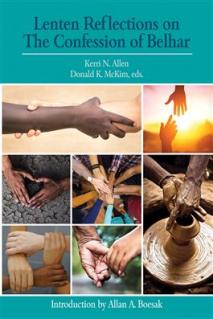
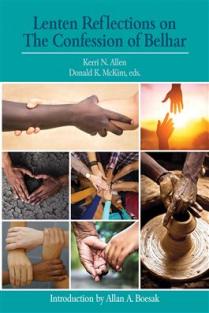
This Lenten season I am using a new resource to explore the Belhar Confession: Lenten Reflections on the Confession of Belhar, edited by Kerri N. Allen and Donald K. McKim. The Presbyterian Church (U.S.A.), in which I serve as a teaching elder (pastor), added the Confession of Belhar to our Book of Confessions in 2016. This confession came from the Dutch Reformed Mission Church during its historic struggle against apartheid in South Africa.
See you along the Trail.
 “… we usually retreat into judgement instead of mercy, and indifference instead of justice. We are happy to prescribe Micah’s prophecy to others rather than learn it and act accordingly. God created us for connectional living; and those connections cannot thrive when we stay silent in the face of evil and injustice. God wishes to teach the church to do what is good and right–and to do it now.”
 “Though we observe injustice in too many corners of the world, we, as a church, do not always give voice for those who are suffering. We excuse the injustice or blatantly or boldly ignore the injustice. This is because we forget we belong to God, not that God belongs to us. When we forget that an undefiled faith is a faith of justice, we live as if God belongs to us and God stands on our side, rather than figuring out where God stands and being there with God.”
 “Racism imprisons us. Then why must we now abide an ongoing system wherein African-Americans are killed in the streets by government sanctioned law enforcement agencies, on video, without provocation or recourse? We seem blind to our imprisonments.”
 “What does it mean to follow God in working to end structures that curtail and limit material, social, and spiritual freedom? What does it mean transform social norms, cultural values, and institutional arrangements that unjustly incarcerate people? How can we reimagine our use and consumption of resources so that every person can have what they need to thrive? How can we become co-conspirators and collaborators with others in following God in ushering in the ‘kin-dom’? How can we be open to new ways of worshiping, preaching, and teaching to proclaim with integrity the year of the Lord’s favor?”
 “I am a realist and of the conviction that our God is purposeful and transparent. Time and again when righteousness or justice was in danger, God would reveal God’s self through prophets as an attempt to reestablish what is right and to call her creation back into the fold.”
 “The Belhar pushes the church, as she confesses, to be present in the lives of others beyond formal gatherings and policy-making engagements. Belhar calls the church to come to know itself, to actually love the neighbor, and set captives free.”
 “Jesus calls us all in the church to love one another, a sign by which we are identified as Christ’s disciples. This identifying sign is so important to our witness! Let us use the precious gift of time given in this holy season to lean into Jesus’ teaching and learn more of Jesus’ love, that we may reconcile with one another, even–especially–at the table.”
 “It is easy to serve God on our own terms when our lives are free of pain, difficulties, and disruptions. Jesus is calling us to follow him now–free from possessions that bind and blind us. He is trying to turn us toward a simple, uncluttered life with nothing in the way of meeting, greeting, and loving God in those whose ‘lives matter’ too.”
 Along the Graybeard Trail