
 “The Belhar pushes the church, as she confesses, to be present in the lives of others beyond formal gatherings and policy-making engagements. Belhar calls the church to come to know itself, to actually love the neighbor, and set captives free.”
Mark Lomax
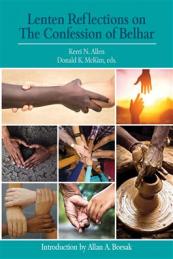
Lenten Reflections on the Confession of Belhar
God help me, help the church, love our neighbors and free captives. Guide our actions.
This Lenten season I am using a new resource to explore the Belhar Confession: Lenten Reflections on the Confession of Belhar, edited by Kerri N. Allen and Donald K. McKim. The Presbyterian Church (U.S.A.), in which I serve as a teaching elder (pastor), added the Confession of Belhar to our Book of Confessions in 2016. This confession came from the Dutch Reformed Mission Church during its historic struggle against apartheid in South Africa.
See you along the Trail.
 “Jesus calls us all in the church to love one another, a sign by which we are identified as Christ’s disciples. This identifying sign is so important to our witness! Let us use the precious gift of time given in this holy season to lean into Jesus’ teaching and learn more of Jesus’ love, that we may reconcile with one another, even–especially–at the table.”
 “It is easy to serve God on our own terms when our lives are free of pain, difficulties, and disruptions. Jesus is calling us to follow him now–free from possessions that bind and blind us. He is trying to turn us toward a simple, uncluttered life with nothing in the way of meeting, greeting, and loving God in those whose ‘lives matter’ too.”
 “God disapproves of hateful divisions that are daily shown in our collective injustices and self-centered actions.”
 “Today, as you walk this Lenten journey, pay attention to the daily news and social media. Pay attention to testimony that we human beings still engage in partiality. The hash tags #blacklivesmatter and #blackgirlmagic emerged as a protest against partiality based on race, gender, and other aspects of human incarnation. Yes, it’s still true: everybody does it, even Christians. Our worship services are still segregated, as are our social lives. But, our brother James and our South African siblings call to us: ‘Repent.’ We must hear them, and we must stand in solidarity against discrimination. To do less undermines the credibility of the gospel. To do less violates the royal law. To do less, sisters and brothers, is sin.”
 “This is ‘persistent journey’ talk, not ‘final destination/quick solution’ talk.”
 “Barbara Rossing has cautioned us not to dismiss this earth, this world, in exchange for a promised new creation because God will dwell here. The new creation will be born here.
 ed , and those made ‘other’ by our unjust habits. It also reminds us, especially during Lent, that this good news is entrusted to those of us who would be the church. It is a word we must not only speak to friendly and hostile audiences, but also enact in peace.”
 “By faith we connect the action of restoration to God’s work through Jesus. By experience, we note that one cannot restore a right relationship that never existed (that is many experiences of women, people of color, LGBT folks, youth, differently abled, immigrant, poor, differently political, and others). Now that we are beginning to recognize through the Belhar Confession that all is not, and has not been ‘right,’ how will I/you/we commit to thinking differently.
 “The Gospel says we are to care enough about the welfare of others to teach and tell them all that Christ has taught and continues to tell us. The Belhar insists that we be the church by ‘living in a new obedience which can open new possibilities of life for society and the world.’ Together the gospel and Belhar pull off the comfortable covers of quietism and push us to engage one another in the interest of attaining peace and justice together.”
 Along the Graybeard Trail