
Walking. North East, Maryland.
I Pray on Christmas – The Blind Boys of Alabama, feat. Solomon Burke
Coventry Carol – Philadelphia Brass Ensemble
Let All Mortal Flesh Keep Silence – Little Windows
Lo How a Rose E’re Blooming – Sting
Douce Nuit – Kali
Angels We Have Heard on High – Aretha Franklin
Hark! The Herald Angels Sing – Charles T. Conzens
A King Is Born – Jersey Boys
Mary, Did You Know – Natalie Cole
The Holly and the Ivy – Cumberland Gap Reunion
God Rest Ye Merry Gentlemen – David Briggs, Organ/Stephen Cleobury/Choir of King’s College, Cambridge
Away in a Manger – The Rhos Orpheus Male Choir
Joy to the World – Dolly Parton
Oh Christmas Tree – Joanne Shenandoah
Peace Child – Indigo Girls
Mary’s Boy Child – Tom Jackson
Sacred Gift – Bill Miller
Monthly Archives: December 2021
19 December 2021
18 December 2021
Walking. North East, Maryland.
International Migrants Day.
Unite 75 – Daara J Family
Immigrant – John McCutcheon
Ave Que Emigra – Gabby Moreno
The Migrant Worker – Jim Croce
Gourma – Etran Fintawa
Take Me to Cleveland – Robert Neustadt
No Geography – The Chemical Brothers
Highwomen – The Highwomen
Look in Their Eyes – David Crosby
Why We Build the Wall – Hadestown
La Jaula de Oro – Los Tigres del Norte
Alien – Gil-Scott Heron
Cages – Redbait
Bad Hombres y Mujeres – Antonio Sanchez
La Frontera – Lagartijeando, feat. Minuk
Migration – Jonny Lipford
The Dreamer – Jackson Browne
My Only Home – Unchained XL, feat. Genesis Elijah & Femi Ashiru
A Safe Place to Land – Sara Bareilles, feat. John Legend
Running – Keyon Harrold, Andrea Pizziconi & Jasson Harrold, feat. Running feat. Common & Gregory Porter
Amor Migrante – Elena & Los Fulanos
Go Tell a Bird – Maya De Vitry
Beyond the Border – Bhi Bhiman
Godspeed – Radney Foster
Where We Are – Diana Jones
Migra – Santana
Immigrant Eyes – Willie Nelson
The Immigrants – Gabby Moreno & Van Dyke Parks
I Pity the Poor Immigrant – Joan Baez
Deportees – Sweet Honey in the Rock
Immigrants (We Get the Job Done) – K’naan, Snow Tha Product, Riz MC & Residente
No Human Is Illegal – The Wakes
Filed under Antiracism, Current Events, Exercise, Human Rights, Music, playlist
Home
A sermon on Luke 1:39-55
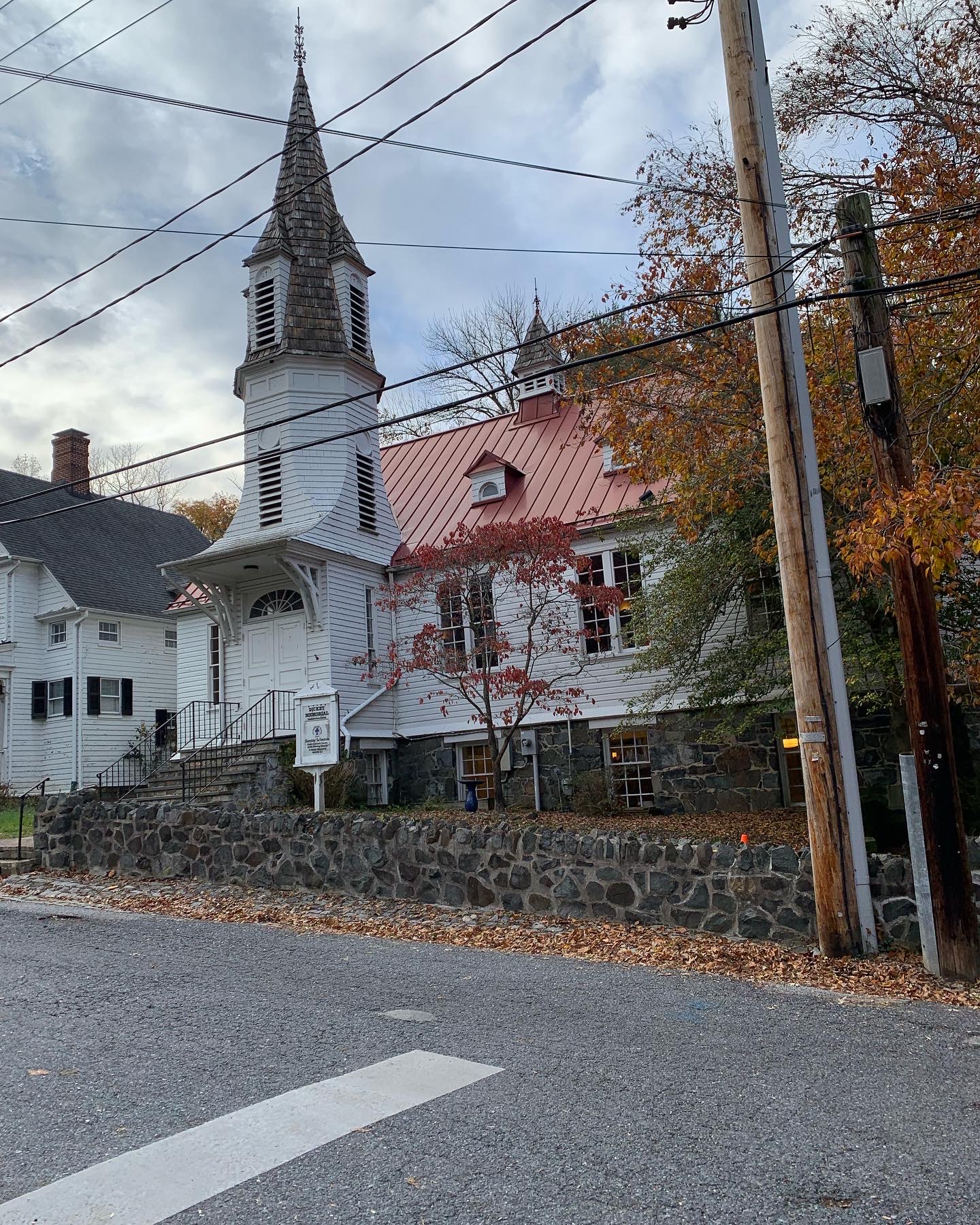
Dickey Memorial Presbyterian Church
19 December 2021
From 2010 through 2016, I served as the director of the Presbyterian Ministry at the United Nations.
Memories of precious people, painful international events, and amazing happenings swirl in my heart and mind.
Among my favorite memory is the moment I have come to call the good night ritual. .
Each night, I shut off my computer,
turned out the light,
and left the office.
I walked down the hall to the elevator
and pushed the call button.
When the cab arrived, I pushed “1” to go downstairs.
Hector would be there to see me out.
Always.
And always we spoke.
Sometimes we talked about weather or family.
Often, we talked sports. Conversations got interesting the week my Steelers beat Hector’s Jets.
After some conversation, I made for the door,
As I stepped across the hallway, I heard Hector’s final words:
always the same words,
always in the same, kind voice:
“Good night, Marko.
Get home safe.”
In Advent and Christmas, we think of home in many ways.
“Please Come Home for Christmas,” sings Aaron Neville.
“I’ll Be Home for Christmas,” sings Oscar Peterson.[i]
Spoiler alert. If you have forgotten the ending of A Christmas Carol; if you have never seen It’s a Wonderful Life, I invite you to plug your ears for a moment. I will let you know when the spoilers are done.
After the visits of three ghosts in A Christmas Carol, Ebenezer Scrooge sends a feast to Bob Cratchit’s home and then travels to celebrate at his nephew’s home.
After the visit of one rather ordinary angel second class, in the climactic moment of George Bailey’s renewal, he makes his way home.
I see places I have lived at different times when I hear the word “home”.
Unique sights, smells, and sounds.
Home also recalls people. Beloved people. Family. Friends. Chosen family. Different in different homes. But always people.
Home is a place.
123 Sesame St.
80 Main St., Apt. 23D
Home is people.
Elder Vilmarie Cintrón-Olivieri observes that as a poor, unwed teenager, Mary was surrounded by dangers and uncertainty – both physical and societal. When she learned of her pregnancy, Mary sought a haven, a sanctuary, home.[ii]
Home for Mary was a place. The house of her relative Elizabeth. Home was people. Zechariah was there. Silent, but there. More importantly, Elizabeth and the baby in her womb, were present.
They welcome and affirm Mary. And in a moment that Stephen Sondheim could have written, Mary breaks into a song. “My soul magnifies the Lord, and my spirit rejoices in God my Savior.” The Magnificat. A song that has been set in many ways over the centuries, including the Canticle of the Turning which we will sing shortly.
The Magnificat holds together the grittiness of life on the margins, the resilient hope of those who trust in God, and the power to image a new way of living.
My friend the Rev. Margaret Aymer suggests that we need to revise our view of Mary. Rather than gentle Mary, meek and mild, Margaret says Mary is better seen as Jesus’ radical Jewish Mama. A woman full of strength and courage and hope. An alternative vision fires her imagination. God’s vision of justice, equity, and peace. This vision, sung in Mary’s song, no doubt found its way into the lullabies she sang to Jesus and the stories she told him. It shaped him. It guided his living. His words and deeds exemplify his mama’s song.[iii]
Consider, church: the Triune God – Creator, Christ, and Holy Spirit or whatever formula you use – exists in relationship.
Made in God’s image, we are made for relationships. The late bell hooks reminds us of this when she says that healing is an act of communion. Rarely, if ever, she says, are any of us healed in isolation. Healing comes through relationships. Life comes through relationships.[iv]
We are made for each other. We are made for relationships of integrity, compassion, justice, equity, solidarity, accountability, responsibility, and love. We are made to be home to one another.
The village of Le Chambon in France provided sanctuary and home to Jews during the Second World War. Fleeing the monstrous, sinful evil of the Nazis, Jews would arrive in this Huguenot village. They made their way to the building we Presbyterians would call the manse. They knocked and were usually greeted by Magda Trocme with the words, “Welcome. Come in.” The process of creating home began. Years later, asked why their village and people became a sanctuary of home, Magda replied, “They knocked. What else could we do?”[v]
This theology – that God has made us and called us to be home for one another – was shared by those who ran the Underground Railroad. It is shared by those who welcome refugees, who support citizens returning from incarceration, and who offer sanctuary to individuals and families at risk of deportation to the violence-filled places they have fled.
Whether they are running for their lives or they are buffeted and battered by life, we will encounter people in need of refuge, haven, and sanctuary. Through Jesus Christ, God who is love, God who is our sanctuary and home, empowers us to say, “Welcome. Come in.”
Part of what allows us to create home is God’s gift of imagination. Our shared humanity allows us to imagine the pain and the fear of people in need.
More importantly, our faith allows us to imagine our relatedness to the entire human family. Each child is our child. Every person created and loved by God is a person to whom we are bound by the unbreakable cords of God’s love.
Imagination is an act of faithful subversion in a world that tells us nothing will change. Things will always be the same. There is nothing we can do about it.
Not so, says imagination. Not so. There can be, there is, another way. Imagination is the root of joy. Imagination is the source of hope. When we dare to imagine that Jesus just might be on to something when he tells us to love one another; we take the first steps toward loving one another.
At home with Elizabeth, Mary’s imagination inspired her to break into song about what God has done, what God will do, and what God is doing. Mary’s song, Rachel Held Evans reminds us, declares that God has chosen sides. [vi]
God has chosen not narcissistic rulers or leaders, but an un-wed, un-believed teenage girl for the holy task of birthing, nursing, and nurturing God.
God has chosen not the powerful, but the humble.
Not the rich, but the poor.
Not the occupying force, but people pushed to the margins.
God has made a home. That home, Jesus reveals, is among the people the world casts aside. Women. Children. The poor. Lepers. Samaritans. Tax collectors. Sinners. God’s home includes people of every sexual orientation and every gender identity, people living on the streets, people whose immigration papers do not match the government standards, people battling addiction, people dealing with mental illness, and anyone pushed aside by the culture of domination.
Any time we human creatures seek to keep some of God’s children out and we draw a line to exclude and we say, “you do not belong,” God wipes the line aside. “Hold my beer,” the Holy Spirit says, and she begins the patient, careful work of removing the line and welcoming all God’s children home.
Church, we know that does not happen quickly enough. We know people, too many precious people, are wounded in the time it takes God to erase the lines. That grieves us and God. But we also know that patiently, persistently God is at work. And God invites us to join that work.
In her defiant, prophetic, imaginative song, Mary—a dark-skinned woman who would become a refugee, a member of a religious minority in an occupied land—names this reality: God makes a home for and with those who have been driven to the margins by the powerful. And we are invited to meet God there on the margins and be welcomed home.
During Advent, we journey home.
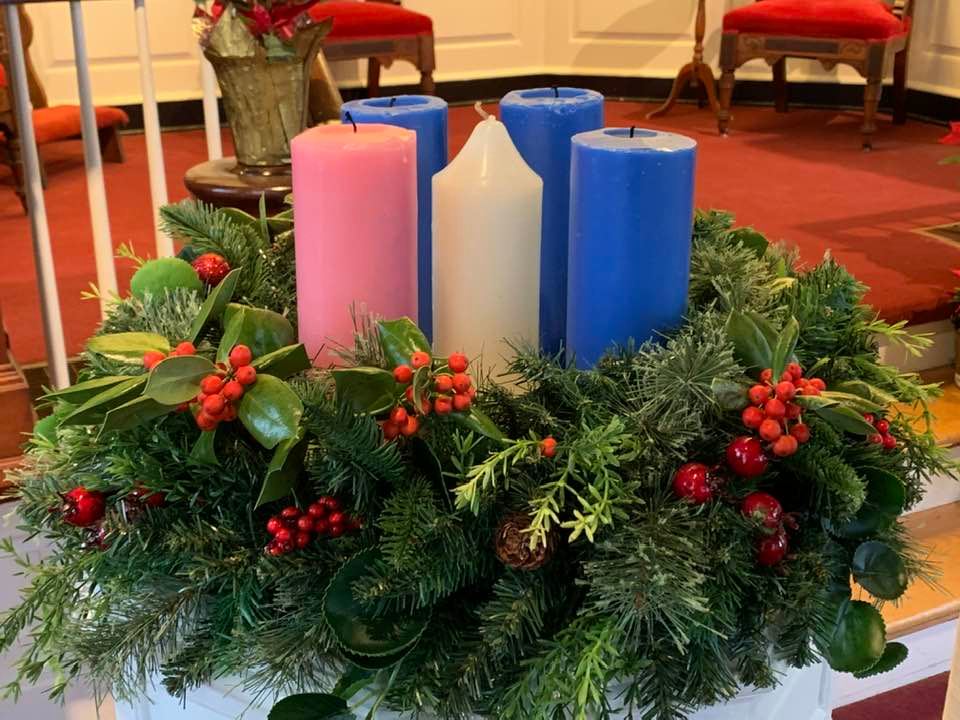
During Advent, we work to create home.
During Advent and always, may we journey and work with the stubborn, unsentimental hope of Jesus’ radical Jewish Mama – a woman so convinced the baby inside her would change everything, she proclaimed that:
The powerful have already been humbled;
The vulnerable have already been lifted up;
The world is turning;
And it is turning toward home.
Thanks be to God. Amen.
[i] Many artists have recorded both songs. The versions by Aaron Neville and Oscar Peterson were the first to appear in my iTunes Library.
[ii] This comes from Vilmarie’s commentary on Luke 1:39-55 in the Sanctified Art Close to Home Sermon Planning Guide for this Sunday.
[iii] I found this image from the Rev. Dr. Margaret Aymer a couple years ago. I can no longer find the source.
[iv] https://www.uua.org/worship/words/quote/healing-act-communion.
[v] The story of Le Chambon is told by Philip Haille in Lest Innocent Blood Be Shed. See also https://en.wikipedia.org/wiki/Le_Chambon-sur-Lignon.

17 December 2021
Walking. Oglebay. North East, MD.
Away in a Manger – Blind Boys of Alabama
God Rest Ye Merry, Gentlemen, Masters In This Hall – Rosemary Beland
Coventry Carol – Bill Carter And The Presbybop Quartet
E Halelu – Ahumana
King Jesus Hath a Garden – Clare College Singers & Orchestra
I Wander as I Wonder – Julie Andrews
Silent Night/Night Of Silence – Gloria
Fischer Prelude On O Jesulein – James Galway; Munich Radio Orchestra, Regensburg Cathedral Choir
Angels We Have Heard on High – Moya Brennan
Oh Holy Night – Bill Miller
Angels We Have Heard on High – Eric Rigler
Soul Cake – Sting
Christmas Day/Christmas Eve Tunes – Katie McMahon
Simple Praise – Joanie Madden
16 December 2021
Walking. Wheeling, West Virginia.
O Holy Night – Aaron Neville
O Little Town of Bethlehem – Celtic Woman
We Need a Little Christmas – Gloria
Angelic Glory – Red Nativity
For Unto Us A Child Is Born – Core Cotton, Jamecia Bennett, James Wright, Carrie Harrington, Pat Lacy & Sounds of Blackness
Uncle Carl – Aaron Lacombe
Away in a Manger – David Briggs, Organ/Stephen Cleobury/Choir of King’s College, Cambridge
God Rest Ye Merry Gentlemen – Moya Brennan
La Murga – Los Lobos
Happy Christmas – Angelique Kidjo
Christmas Must Be Tonight – The Band
My! My! Time Flies! – Enya
Lullaby – david m. bailey
Oh Holy Night – Philadelphia Brass Ensemble
Peace On Earth/Little Drummer Boy – Anthony Rapp & Everett Bradley
It Came upon a Midnight Clear – Bruce Cockburn
15 December 2021
Walking. Gym in the Apartment.
Sitting Bull’s Medicine Song – Kevin Locke
2 Live & Die on the Plains – Frank Waln
Ghost Dance – Robbie Robertson & The Red Road Ensemble
Sitting Bull’s Memorial Song – Lakota Thunder
For My People – Litefoot
Now That the Buffalo’s Gone – Buffy Sainte-Marie
Assinboine: Warrior Death Song (for Sitting Bull) – Native Americans Songs and Dances of the Sioux, Apache, Kiowa, Hopi, Navajo, Cree, Seminole and Others
The Prayer – SupaMan
Aiionwatha Forgives (World) – Joanne Shenandoah
Life Surrounds Me – R. Carlos Nakai
Wovoka – Redbone
Lakota Forever – Brulé
Ghostdance – Bill Miller
Filed under Antiracism, Exercise, Music, playlist
Nine years and three days: remembering Cindy Bolbach
This is a repost to remind myself and to give a heads-up to my loyal reader(s) to mark our calendars now. Next year, at 20:10 in whatever time zones we might be, I will invite us all to lift a glass in memory of Ruling Elder Cynthia (Cindy) Bolbach.
Nine years. And three days. The vagaries of time make it feel like yesterday and like a lifetime ago, all in the same moment.
Ruling Elder Cynthia Bolbach, moderator of the 219th General Assembly (2010) of the Presbyterian Church (U.S.A.) died on 12-12-12 in the afternoon. This post was written on that day at a time before I knew of her death. That explains the tense of the post.
I did something today I have never done before.
I stood in silence for five minutes.
I am not big on pomp and circumstance and formality. A South African friend once observed that I can be a bit “cheeky” to those in authority. For some reason everyone who has heard that assessment has agreed with it. Go figure.
I stood in silence today for five minutes in honor of Cindy Bolbach.
The tradition in the Presbyterian Church (U.S.A.) is to stand when the General Assembly moderator enters the room. Almost every moderator in my memory has encouraged people not to do so. Most of the time most of them meant it. Yet the tradition persists – in honor of the person and even more so in respect of the office. And while it is not my favorite thing, I take part.
Today, without being asked, without being prompted, I chose to stand in silence for five minutes in honor of Cindy Bolbach – moderator of the 219th General Assembly (2010).
I watched her election from the back of the auditorium in Minneapolis. My son Sean and I leaned against the wall.
A period of questions and answers precedes the voting. Commissioners (the folks with the votes) pose questions and the individuals standing (we’re Presbyterian, we don’t run) respond. The questions deal with theology, issues before the church, and issues in the world.
At one point, a question was posed along the lines of: “What would happen to the church, if you were not elected and one of the other candidates were?”
One by one the candidates offered replies praising the others and noting that the church did not depend on their election. Then Cindy Bolbach stepped to the mike. I do not remember her exact words, but the essence was:
There will be utter chaos.
The Assembly erupted in laughter. Sean turned to me and said, “She just won, didn’t she?”
The Assembly still had to vote. But Cindy did win. And I believe her sparkling humor that bristles with wisdom played a key role.
I stood in silence today for five minutes in honor of Cindy Bolbach.
Cindy is a woman of incredible faith, deep love, amazing grace, and an incredible wit. She lives daily her commitment to Christ, to the Church, to the Presbyterian Church (U.S.A.) , to all people, and to God’s world. She mixes simplicity and profound sincerity with a capability to navigate complexity and controversy. I am privileged to know her. The Church (in all its manifestations) is blessed by her presence.
For most of this year, Cindy has struggled against cancer. The struggle cut short her ability to attend events but it never dampened her spirits (at least in public). She wore a fedora to the 220th General Assembly (2012) and she wore it well.
This morning came the news that Cindy has entered hospice care. And I stood for five minutes in her honor.
But in the silence it came to me that another way – a better way – to honor Cindy Bolbach – is to give thanks to God for Cindy – to entrust Cindy to God’s merciful care – to pray for her without ceasing – then to get back about the business of ministry. I am pretty sure that is what she would want. So it is what I have done.
When Cindy returns to the dust, as we all will someday do, I will shed more tears. But I will also proclaim “Alleluia.”
When Cindy returns to the dust, as we all will someday do, there will be utter chaos. But in the chaos there will be love and there will be grace and there will be God. And all will be well for Cindy. And all will be well for us. Alleluia. Alleluia. Alleluia.
Filed under Uncategorized

 Along the Graybeard Trail