
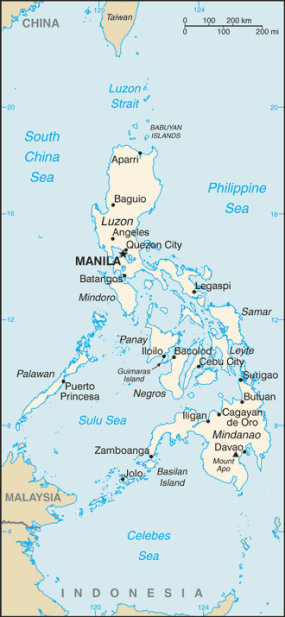
 My colleague Catherine Chang and partners from the United Church of Christ in the Philippines hand delivered a letter for President Duterte of the Philippines on Friday, March 24, 2017. The letter was delivered to a presidential aide.
The joint letter from the Presbyterian Church (U.S.A.) and the United Church of Christ in the Philippines asks President Duterte to appeal to the United Arab Emirates’ authorities to overturn the death penalty for Jennifer Dalquez who is currently awaiting her appeal hearing that will take place on March 27, at the Al-Ain Court of Appeals. You can learn more about Jennifer and sign a petition on her behalf asking His Highness Sheikh Khalifa bin Zayed Al Nahyan of the United Arab Emirates to pardon Jennifer Dalquez and repatriate her to her family in the Phillipines.
Here is Catherine’s reflection on delivering the letter:
Many thanks for your prayers for our earlier morning visit to Malacanang Palace (equivalent to the White House) to hand-deliver a joint UCCP-PCUSA letter for President Duterte, about Jennifer Dalquez.
**The Presidential Spokesperson Ernesto Abella received our small delegation which included 2 UCCP colleagues, Karrie Palaruan and Jason Caperas, and myself. We gave him our letter, and spoke for almost 30 minutes. He assured us that he and his staff will try to facilitate everything possible for an appeal from the death penalty.
***Hoping to find a way to share the joint letter via FB so that you can see it and share it!
***Keep those prayers coming for Jennifer and her family, UAE authorities, and the Philippine government.
Some background
Catherine Chang and her husband Juan Lopez serve as mission co-workers of the Presbyterian Church (U.S.A.). Their ministry helps Presbyterian Church (U.S.A.) partner churches address issues of migration and human trafficking. They are based in Manila, the Philippines. The UN’s International Labor Organization estimates 21 million people around the world are victims of forced labor. Human trafficking is a worldwide problem, including within the United States. Countries in Asia are increasingly vulnerable. Cathy and Juan will work with Asian churches and non-governmental organizations to help coordinate efforts related to ending this scourge. They will also resource the Presbyterian Human Trafficking Roundtable, made up of various programs of the Presbyterian Mission Agency, Presbyterian Women in the Presbyterian Church (U.S.A.), and the Office of the General Assembly, in their work to support US congregations concerned about the issue.
See you along the Trail.
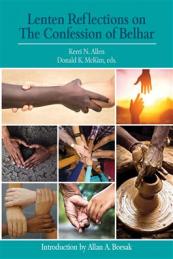 “By faith we connect the action of restoration to God’s work through Jesus. By experience, we note that one cannot restore a right relationship that never existed (that is many experiences of women, people of color, LGBT folks, youth, differently abled, immigrant, poor, differently political, and others). Now that we are beginning to recognize through the Belhar Confession that all is not, and has not been ‘right,’ how will I/you/we commit to thinking differently.
 “The Gospel says we are to care enough about the welfare of others to teach and tell them all that Christ has taught and continues to tell us. The Belhar insists that we be the church by ‘living in a new obedience which can open new possibilities of life for society and the world.’ Together the gospel and Belhar pull off the comfortable covers of quietism and push us to engage one another in the interest of attaining peace and justice together.”
 “… our belongingness to the Lord and to the Lord’s people is the will of God alone, the love of God for us in Christ. To believe this and to live it out in the church’s life requires being born again. Sometimes this means being reborn again and again until we are awakened to the heart and mind of Christ.”
 “…we must declare not uniformity, but the unity of the Spirit through the bond of peace as our primary way of being church and society together.”
 “The church’s essential unity may not be threatened by having multiple structures and names; we remain one because Christ has made us one. But when we live separately–when we do not meet together for worship, or hold one another accountable, or study the Bible together–we are all the lesser, unable to speak or hear truth from one another. It’s hard to show love to someone who isn’t there.”
 “In the spirit of true unity, diversity is a gift. We are reminded to live into the reality of our different talents, different roles, and different abilities. When we celebrate the gifts present among our community, we create a language that allows us to name sustainable ways to continue to work for justice.”
 Along the Graybeard Trail