Category Archives: Human Rights

25 May 2013 Orange Day

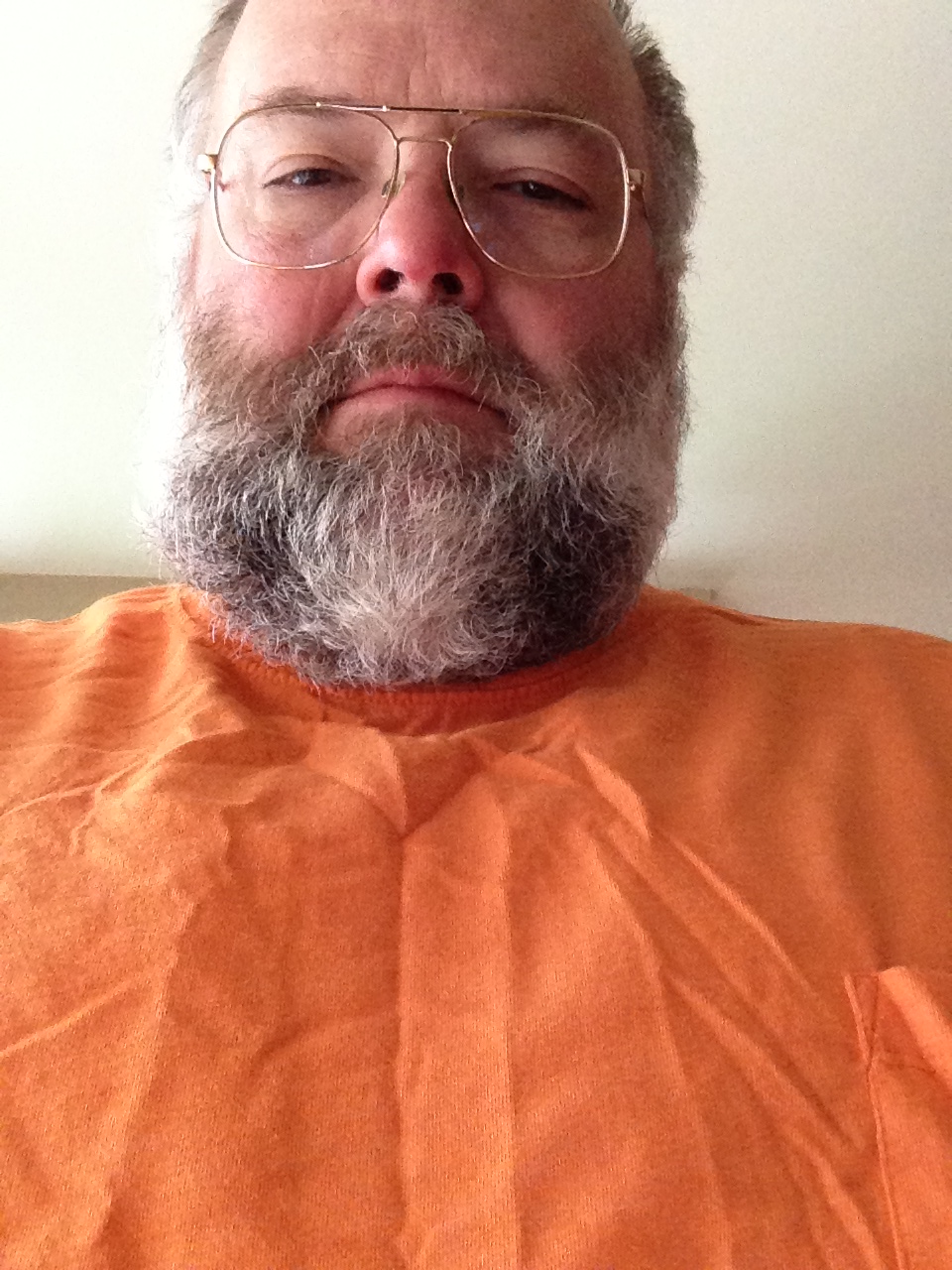
photo (5)As part of an international effort to end violence against women and girls, I wear orange (even if the shirt is a bit wrinkled) today as I have on the 25th of each month for nearly a year. I also tweet personally and professionally. Each month, I find other actions to take. Here’s the information so that you may join me.

The Secretary-General’s UNiTE to End Violence against Women campaign proclaims every 25th of the month as Orange Day! The first in a series of Orange Days was launched on 25 July last year.

Initiated and led by the UNiTE campaign Global Youth Network, the action strives to highlight the issue of violence against women and girls, not only once a year, on 25 November (International Day for the Elimination of Violence against Women), but every month. Orange Day aims to spark worldwide interest and conversation, highlight the fact that violence against women and girls is a violation of human rights and call for its eradication without reservation, equivocation or delay.

This year we’ll be using our Orange Day actions to highlight recommendations from the agreed conclusions of the 57th session of the Commission on the Status of Women(CSW57) and in the framework of ‘safe spaces for women and girls’.  In May, the campaign will focus on ‘Safe Homes for Women and Girls’.  

VIOLENCE AGAINST WOMEN AND GIRLS IN THE HOME 

Many women and girls face violence in the very place they should feel the safest – in their homes. Violence against women and girls in the home takes place in all countries of the world and may manifest itself in different forms depending on the context. It can occur at the hands of intimate partners or family members.

The costs of violence against women and girls in the home are extremely high. They include the terrible suffering of survivors and others within the household, direct costs of services to treat and support women and girls who have faced abuse, as well as the costs of bringing perpetrators to justice. They may also include the cost of lost education, employment and productivity. Witnessing domestic violence can also impact children’s development, both during childhood and later in life.

FAST FACTS

  • The most common form of violence experienced by women globally is physical violence inflicted by an intimate partner, with women beaten, coerced into sex or otherwise abused.
  • Several global surveys suggest that half of all women who die from homicide are killed by their current or former husbands or partners.
  • The United Nations Population Fund (UNFPA) estimates that the annual worldwide number of so-called “honour killing” victims may be as high as 5,000 women.
  • Women aged 15-44 have a greater risk of being a victim of rape and domestic violence than of suffering from cancer, car accidents, war and malaria, according to World Bank data.
  • More than 60 million girls worldwide married before the age of 18, primarily in South Asia (31.1million) and Sub-Saharan Africa (14.1 million).

ORANGE DAY ACTION: WHAT CAN YOU DO?

Many governments made commitments to end violence against women and girls in the home prior to and during the 57th Session of the CSW. Ensure that this momentum is maintained throughout the year, and results in real change.

ACTION 1: Fifty-seven governments made specific commitments to take concrete steps towards ending violence against women as part of the COMMIT initiative. Find out if yours was one of them:  http://saynotoviolence.org/commit

ACTION 2: The Handbook for Legislation on Violence Against Women and the Handbook for National Action Plans for Violence Against Women are resources which respectively illustrate a model framework for legislation on violence against women and provide guidance for policy makers and advocates to form effective plans to end violence against women and girls. Please disseminate these hand books as widely as possible.

ACTION 3: Promote this Orange Day using social media – find below suggested tweets and Facebook messages:

Sample tweets

  • After #CSW57 to #endVAW &girls, this #orangeday UNiTE campaign says: #Safehomes for women & girls! http://owl.li/km1BB
  • Today is the UNiTE campaign’s #orangeday! Wear orange & @SayNO_UNiTE to end #violenceagainstwomen in the home! http://owl.li/km1BB
  • On #orangeday 25 May, support UNiTE campaign & find out how to advocate for #safehomes for women&girls http://owl.li/km1BB
  • This #orangeday advocate for #safehomes for women&girls. Take action. Support UNiTE campaign and wear orange http://owl.li/km1BB
  • Today is UNiTE #orangeday! Find out what commitments govts have made to end #VAW in the home.http://saynotoviolence.org/commit #SayUcommit 

Facebook messages

1. “The 25th of each month is Orange Day – a day to take action to end violence against women and girls. Each month this year the UNiTE campaign will highlight recommendations from the 57th session of the Commission on the Status of Women to ensure that its conclusions become reality. This month we highlight violence against women and girls in the home. Find out what you can do to make homes safe for women and girls.” http://owl.li/kS5BG

2. “Today is Orange Day – a day to take action against violence against women and girls. This month the UNiTE campaign is highlighting violence against women and girls in the home.  The Handbook for Legislation on Violence against Women and the Handbook for National Action Plans for Violence against Women are resources which provide policy makers and advocate with guidance on how to form effective actions plans and create legislation to end violence against women. Share these tools!” http://owl.li/kS6fC

3. “This Orange Day the UNiTE campaign highlights the global issue of violence against women and girls in the home.  57 governments have committed to take specific steps to address violence against women and girls. Find out what they’ve promised to do!”http://saynotoviolence.org/commit

See you along the (hopefully soon safer) Trail

Leave a comment

Filed under Human Rights, Presbyterian Ministry at the United Nations, United Nations

Grateful

The Trail led to Warner Memorial Presbyterian Church in Kensington, Maryland this weekend.

Today the congregation held an intergenerational all-church retreat. I had the privilege to help lead the retreat working with gracious and talented staff members Jan Moody, John Horman, and Kirby Lawrence Hill.

About thirty-five people participated in the retreat. And they participated fully.

We considered the topic of why and how followers of Jesus engage in witness and advocacy in the public arena, that part of life where the decisions that shape and guide our common life.

Red Hands WarnerI am grateful

  • for the welcome I received
  • that thirty-five people were willing to give up the better part of a Saturday
  • that the participants were willing to try what I suggested
  • for the participants’ creativity
  • for how working together spurred greater creativity and deeper insights
  • for acting and writing and directing skills tapped as the participants created presentations for each other
  • for relationships made and deepened
  • that participants made over fifty Red Hands to call for an end to the exploitation of children as solders

I am grateful.

See you along the Trail.

Leave a comment

Filed under Human Rights, Presbyterian Church (U.S.A.), Presbyterian Ministry at the United Nations, Travel

23 March 2013, Republic of Korea

The day began on Jeju Island. There I learned more of the island’s pain.

After breakfast, the Rev. Dr. JC Lee and the Rev. Youn-Hong Kang took me to see more of the island’s history.

IMG_0366We began at the Jeju Museum of War, History and Peace. The museum provides education about the Japanese occupation of Jeju Island. It is located at the site of the Gama Oreum Underground Fortress. Here the Japanese used forced labor of the people of Jeju to construct an elaborate underground fortress to use as a defensive position to protect Japan from invasion by the United States. Japan had previously used Jeju as a staging ground for offensive maneuvers.

The next stop was the Seotal Oreum Massacre Site. The Jeju Weekly describes what happened:

In 1950, after the Korean war broke out, the Korean government issued orders of “preventative detention” of suspected communists and communist sympathizers. Of the 344 people the Moseulpo Police detained, 210 were illegally massacred in two mass killings at the base of Seotal Oreum.

At the site of the killings, Seotal Oreum makes a semi-circle around a small field. Apparently those who did the killings stood on the ridge with the victims gathered in the field.

A number of bunkers that once housed Japanese war planes can be seen from the Massacre Site.

IMG_0418Our final stop brought us to an encampment of protestors against the naval base being built at Gangjeong village. The base is being built for the navy of the Republic of Korea. However, some have expressed the view that the base can accommodate U.S. nuclear-powered submarines and aircraft carriers. Environmentalists raise concerns for the coastline surrounding Gangjeong Village. Natural fresh-water springs bubble up through the surface. Local villagers consider the site and the water sacred. In addition to the environmental issues, questions exist concerning the process by which the local villagers were consulted. Should the base be completed, many of the local residents will have to relocate. It is unclear where the funds for that relocation will come from.

But beyond all that, in 2005 then South Korea’s President Roh Moo-hyun, apologized for the Jeju April 3 incident in which between 20,000 and 30,000 islanders were killed. He designated Jeju as an “Island of World Peace.” Why does an Island of World Peace need a naval base?

I had much to ponder on the drive to the airport and the flight to Gimpo International Airport. I have much to ponder still as I sit in a hotel room in Suwon.

See you along the Trail.

Leave a comment

Filed under Human Rights, Travel

Will you pray?

“Will you pray?”

Rarely does such a request throw me.

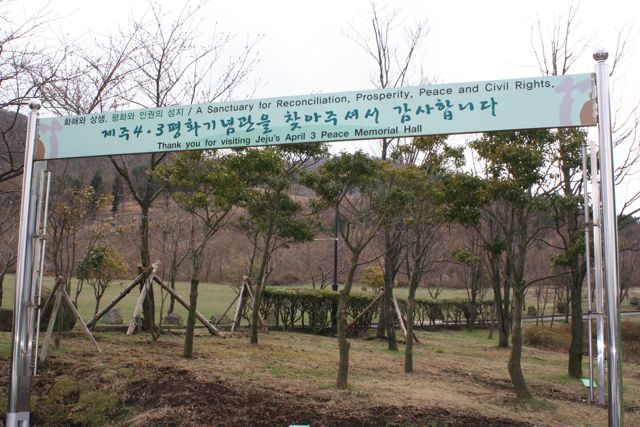
Standing in the Memorial Tablet Shrine at the Jeju April 3 Peace Park, however, words failed to come easily.

Earlier in the day, JC Lee and I had flown to Jeju Island. Two pastors met us and we ate a wonderful pork barbecue. We went to a Presbyterian Church where I made my presentation on the role of the Church in the public arena. After photos and goodbyes, four of us, pastors all, loaded into a car to go to the Jeju April 3 Peace Park.

IMG_0338Several of my hosts had asked me if I knew the history of Jeju. I confessed that I had done enough research in advance to know that the island had, as do many places in the world, a troubled past. I was about to learn how troubled.

A short drive brought us to the park. We toured the Jeju April 3 Peace Memorial Hall. Aided by an English-recorded audio device, I learned much. Mostly what I learned is how much I need to learn.

A pamphlet provided at the hall gives a brief outline (slightly edited by me) of the story:

The Jeju April 3rd incident broke out during the US Military Administration [of the Republic of Korea] and lasted for seven years.

After the independence from Japan in 1945, Korea was in turmoil due to the failure of the policies of the US Military Administration and other social conflicts. Under these circumstances, it happened that the 6 residents were killed on March 1, 1947 by the police. The US Military Administration dispatched the troops of the police and youth corps called “Seochung” to Jeju Province to suppress the Jeju civilians and government workers/ general strike. The dispatched soldiers terrorized and tortured Jeju civilians. Consequently, on April 3, 1948, the armed members of the Jeju branch of the Namro Party raised disturbances to protest the troops’ brutalities.

Additionally, in the May 10 general election that established the division of the Korean peninsula, two of the three electoral districts on Jeju had invalid results due to people refusing to participate in the election.

It was on August 15, 1948, after the establishment of the Republic of Korea, that the Central Government dispatched more troops to quell the disturbance by powerful suppressing action. On November 17, martial law was proclaimed. Many local people were executed for giving assistance to the armed guerrilla band.

When the Korean War broke out in 1950, some people arrested by the police and the prisoners in the mainland were executed. The Jeju April 3 Incident, caused by the shooting incident on March 1, 1947 and the uprising o April 3, 1948 lasted for 7 years until the prohibition of entering Mt. Halla was lifted. The Jeju April 3 Incident resulted in the loss of 25,000~30,000.

The Jeju April 3 Incident, which broke out in the mood of the world Cold War and the division of the Korean Peninsula, produced mass victims caused by the Central Government power. Currently, the truth of the Jeju April 3 Incident is being unveiled in the pursuit of reconciliation and mutual prosperity.

The images in the Jeju April 3 Peace Memorial Hall are haunting. The complex tale is harrowing and heartbreaking. Imprisonment. Torture. Execution. Displacement. Scorched earth. Labels of being “Reds”. Villages destroyed. The United States role through the US Military Administration. So many dimensions.

For years, the story went untold; discussion forbidden; investigation suppressed. That has changed. Activists, scholars, and the government have begun to explore the Jeju April 3 Incident, but much remains to learn.

IMG_0351Following our visit to the Jeju April 3 Peace Memorial Hall, we went to the Memorial Tablet Shrine. Simple black tablets bear the names of persons killed during the Jeju April 3 Incident: more than 14,000 tablets, sorted by village.

As we entered the Shrine, we lit an incense stick. Then one of the pastors asked me: “Will you pray?”

I said yes. And took a very long pause before I began. The prayer went something like this:

We pray for those who died on Jeju Island; we give thanks for their lives; we pray for comfort for those who mourn their deaths. We pray for peace. Peace for the people who live on Jeju Island. Peace for all the people of the Korean Peninsula. Peace for all the peoples of your world. We pray that the day may soon come when we live together as brothers and sisters as you intend. In Jesus’ name. Amen.

My new friends responded: “Amen.” And we entered the sacred place.

I have much to process, much to learn.

See you along the Trail.

3 Comments

Filed under Human Rights, Travel

More on Wounded Knee

Two responses to my post on the fortieth anniversary of the siege of Wounded Knee (one online and one via email) provide new links to share. They add more depth to the story of the siege and of the present reality on Pine Ridge.

Red Cloud Indian School Stories

Pine Ridge Community Storytelling Project

A Photographer Remembers Wounded Knee, 40 Years Later

See you along the Trail.

Leave a comment

Filed under Antiracism, Current Events, Human Rights

We marched to remember

The 57th Session of the Commission on the Status of Women has started. Women from around the world gather in New York to witness and advocate for women’s rights. With other men, I seek to support them. This year’s focus is the elimination and prevention of all forms of violence against women and girls. Here’s a reflection I originally posted on my work blog:

In a broken and fearful world
the Spirit gives us courage
to pray without ceasing,
to witness among all peoples to Christ as Lord and Savior,
to unmask idolatries in Church and culture,
to hear the voices of peoples long silenced,
and to work with others for justice, freedom, and peace.

  • A Brief Statement of Faith, Presbyterian Church (U.S.A.)

march_medium400

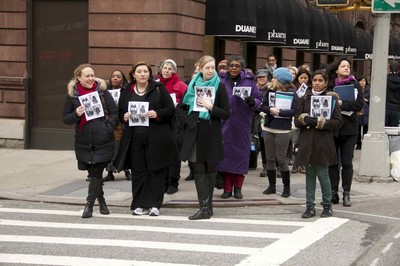
Participants in March 3 Ecumenical Women’s orientation for the 57th Commission on the Status of Women remembered our sisters whose voices are and have been silenced.

In worship, we remembered.

In prayer, we remembered.

In art, we remembered.

As we marched in silence from The Salvation Army International Social Justice Commission to the Church Center for the United Nations, we remembered.

Remembering, may we act.

Photo by Andrew Nam Chul Osborne

Leave a comment

Filed under Human Rights, Presbyterian Ministry at the United Nations, United Nations

Tragedy, resistance, and hope

Forty years ago today, the American Indian Movement arrived in Wounded Knee on the Pine Ridge Reservation in South Dakota. Concerns focused on corruption in the tribal government and the killing of Raymond Yellow Thunder. The location profound symbolic value.

On December 29, 1890 a band of Ghost Dancers under Big Foot, a Lakota Sioux chief, was surrounded by the 7th Cavalry near Wounded Knee Creek.  The demand came for the Lakota to surrender their weapons. A shot cut through the air – it remains unclear from which side. More shots – many. many shots – followed. When the shooting stopped, Big Foot and many of his people, perhaps 150, perhaps as many as 300,  lay dead. Reports indicate that nearly half the dead were women and children. This battle, the Wounded Knee massacre, ended the Ghost Dance movement and marked the end of the war of the United States against the Plains Indians.

The events that began on February 27, 1973 led to a 71-day standoff – the siege of Wounded Knee.

The anniversary brings a time to remember both the events of the past and the current situation faced by the Oglala Lakota. Nicholas Kristoff writes:

Unemployment on Pine Ridge is estimated at around 70 percent, and virtually the only jobs are those working for the government or for the Oglala Sioux tribe itself.

There are, of course, some reservations around the country that have struck it rich with gambling or other ventures. But here in the prairies, those riches are only rumors.

Half the population over 40 on Pine Ridge has diabetes, and tuberculosis runs at eight times the national rate. As many as two-thirds of adults may be alcoholics, one-quarter of children are born with fetal alcohol spectrum disorders, and the life expectancy is somewhere around the high 40s — shorter than the average for sub-Saharan Africa. Less than 10 percent of children graduate from high school.

It is also a time to ponder signs of hope – a campaign to address youth suicide, an effort to make use of renewable energy, and Red Cloud School to name but three. National Geographic has a number of stories as well.

Past, present, and future. Tragedy, resistance, and hope. Remember, learn, and act.

See you along the Trail.

5 Comments

Filed under Antiracism, Current Events, Human Rights

Lent 8: evil

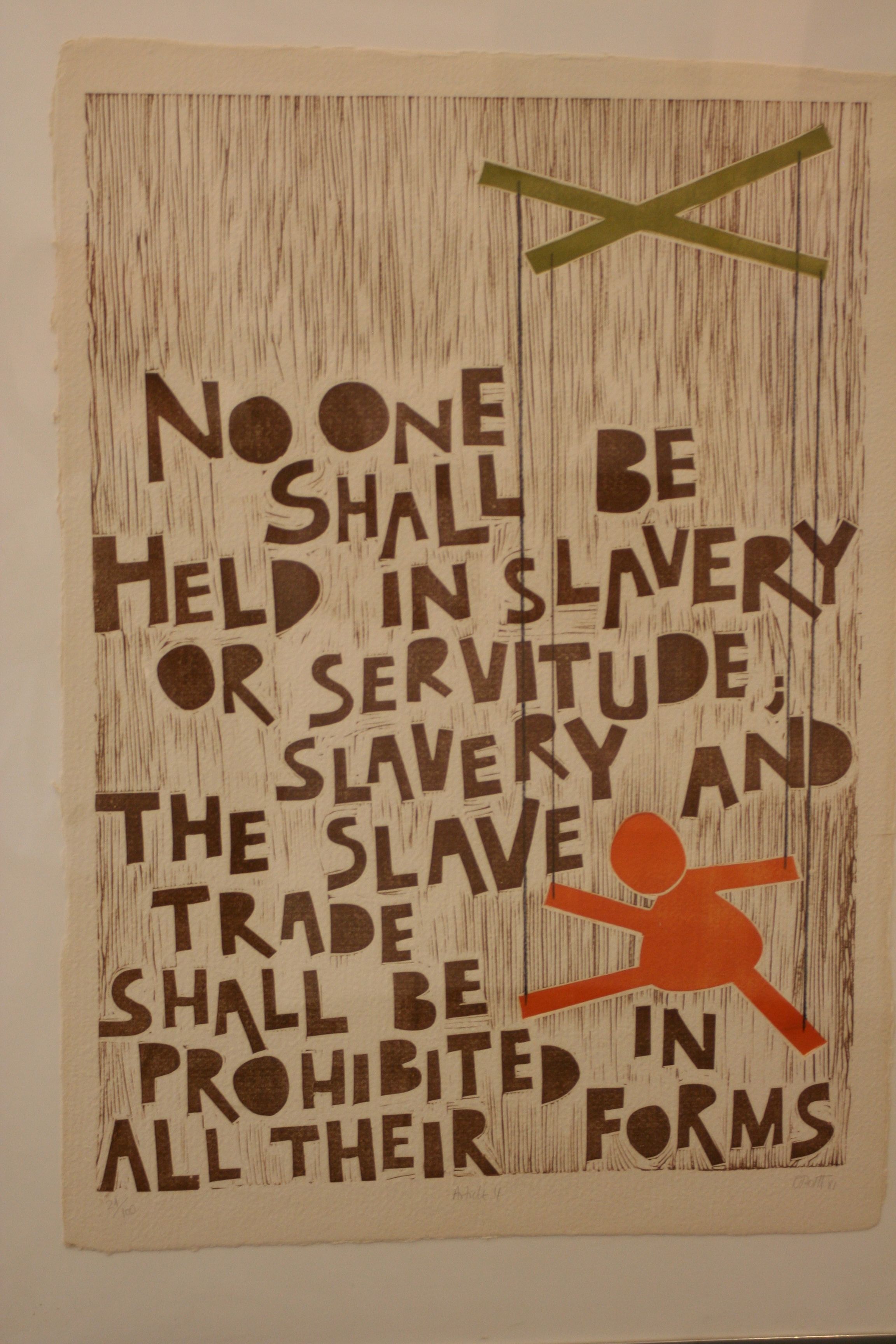
F20 Evil UN Tour 9 October 2011


One of a series of posters focusing on the
Universal Declaration of Human Rights
United Nations

Manhattan, NY
9 October 2011

Leave a comment

Filed under Human Rights, Lent, Photo, United Nations

Dr. Ralph J. Bunche of the UN

This originally appeared on Swords into Plowshares, the blog of the Presbyterian Ministry at the United Nations and the Presbyterian Peacemaking Program.

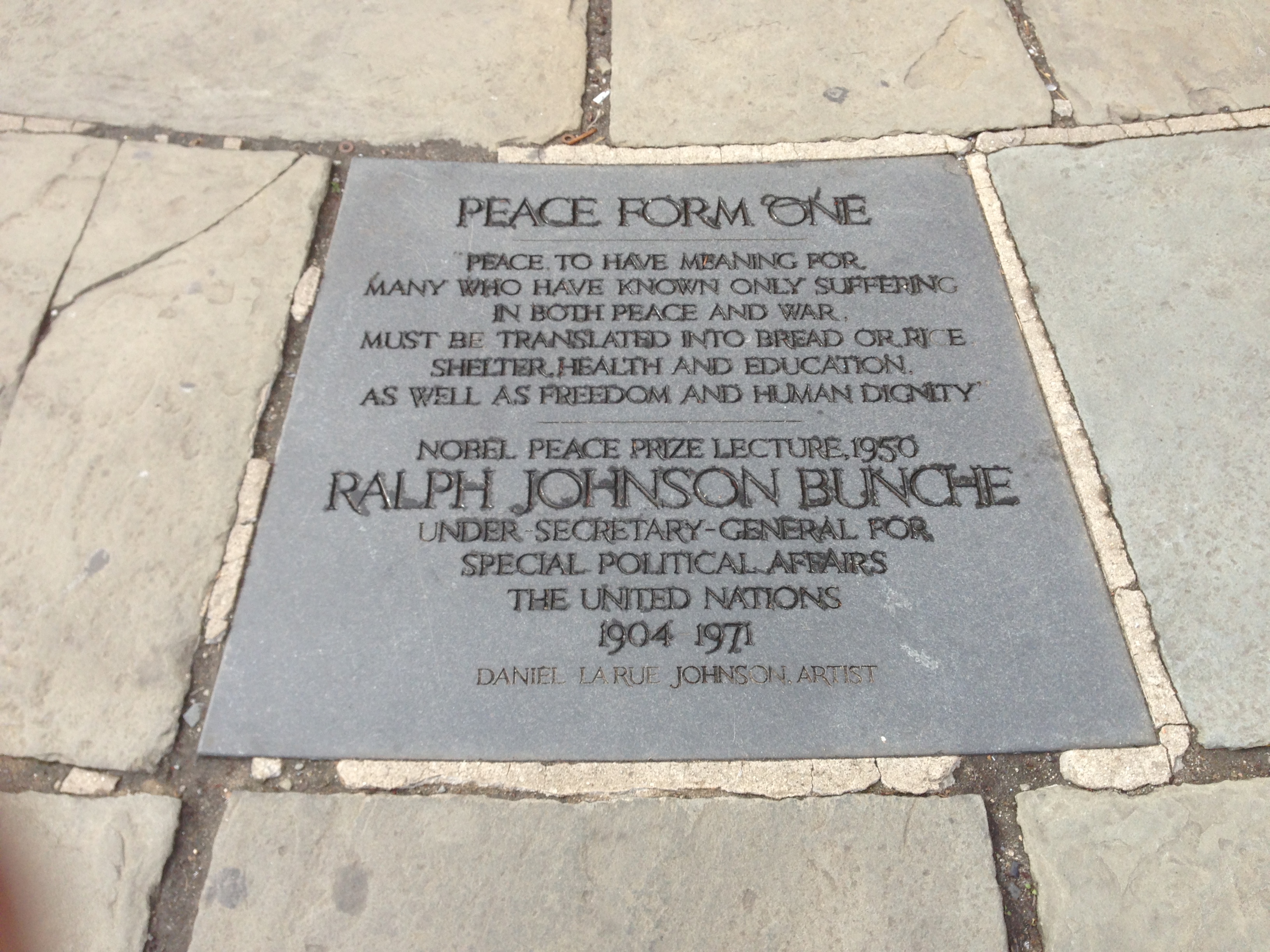
photo (8)I passed through Ralph Bunche Park at 43rd Street and First Avenue on Sunday. And it wondered me why the story of Dr. Ralph J. Bunche‘s life is not told more often.

A political scientist, academic, writer, and diplomat, Bunche took part in planning for the creation of the United Nations. He was an adviser to the U.S. delegation for the “Charter Conference” of the United Nations held in 1945. He took part in drafting the UN Charter. Along with Eleanor Roosevelt, Bunche played a key role in the creation and adoption of the Universal Declaration of Human Rights.

In 1947, Bunche served as the United Nations Special Committee on Palestine. He became the Principal Secretary of the UN Palestine Commission. He served as the Personal Representative of Secretary-General with Count Folke Bernadotte, the United Nations Mediator on Palestine. Following Bernadotte’s assassination in September 1948, Bunche became the Acting Mediator. He chaired the UN mediation efforts that led to the successful negotiation of the four armistice agreements that helped end the conflict.

For his work, Bunche became the first African-American and person of color to receive the Nobel Peace Prize. He continued to served the UN for over twenty years. His work included helping to end colonialism.

Bunche was an active and vocal supporter of the U.S. civil rights movement. He participated in the 1963 March on Washington and in the Selma to Montgomery, Alabama march, which contributed to the passage of the landmark Voting Rights Act of 1965 and federal enforcement of voting rights.

Dr. Ralph J. Bunche is one of so many people to honor – so many stories to remember – during Black History Month and always.

See you along the Trail.

3 Comments

Filed under Antiracism, Human Rights, New York, Presbyterian Ministry at the United Nations, United Nations

Can we seek another way?

An execution always raises questions of morality.

Brutal, horrific crimes that violate our sisters and brothers do so as well.

But when the state kills – on behalf of we the people who are the state – is it a matter of justice? Or revenge? Is it an act of retribution? And is that the best we can do? Do executions make us safer? Do they convey the message that violence is the most appropriate answer to violence? Do they demean us all and fuel a cycle of violence?

The pending execution of Warren Lee Hill, Jr., currently scheduled for February 19 in Georgia, raises all these questions and more.

Hill was serving time for the murder of his girl friend when he was convicted of killing another inmate and sentenced to death. There is no question of his guilt.

The question in this case, beyond those in any execution, revolve around Hill’s mental capacity. His IQ is reported to be 70. This raises the question of his mental capacity and his awareness to understand his acts.

The U.S. Supreme Court addressed the issue of capacity in the 2002 decision Atkins. v. VirginiaThe American Psychological Association summarizes that decision as follows:

The Supreme Court, in a 6-3 decision, ruled that executions of mentally retarded criminals are “cruel and unusual punishments” prohibited by the Eighth Amendment. The Court cited the growing number of states prohibiting the execution of persons with mental retardation as a reflection of society’s view that offenders considered to have mental retardation are categorically less culpable than the average criminal. The Court also reasoned that it was “not persuaded that the execution of mentally retarded criminals will measurably advance the deterrent or the retributive purpose of the death penalty.”

However, Georgia has a high standard of proof for proving mental retardation: the standard of proving mental incapacitation beyond a reasonable doubt. Georgia does not believe that standard has been met in Hill’s case.

His attorney and those concerned for Hill are not seeking a pardon. They ask that he be granted clemency and incarcerated for life. The U.S. Supreme Court could prevent Hill’s execution in the next few days.

I grieve for Myra Wright and Joseph Handspike who were killed by Warren Lee Hill, Jr. and for their family and friends.  There can be no defense for Hill’s crimes.

But that is not all the story. What does it say about our society – about us – that we resort to execution in the case of an individual with the mental capacity and awareness of Hill? Can we not find another way?

See you along the Trail.

1 Comment

Filed under Capital Punishment, Current Events, Death Penalty, Human Rights