
I watched The Apology tonight on PBS. It is a harrowing story of sexual violence and of official denial and the refusal of people to acknowledge and address past wrongs. It is a story endurance and perserverance in the face of such violence–physical, social, and psychological.
The documentary “follows three former “comfort women” who were among the 200,000 girls and young women kidnapped and forced into military sexual slavery by the Imperial Japanese Army during World War II. Seventy years after their imprisonment, the survivors give their first-hand accounts of the truth for the record, seeking apology and the hope that this horrific chapter of history not be forgotten.”
I stand in awe of the grandmothers who tell their stories. Their courage and grace amazes me. I grieve for their experiences and for all the women who did not survive this violation. I am grateful for their willingness to share their stories and to filmaker Tiffany Hsiung and those who have captured and preserved their stories.
Grandma Cao, one of the women featured in the documentary, died on October 22.
Tiffany Hsiung has written a reflection on Grandma Cao, the grandmothers, and the realities of telling stories of sexual abuse and violence. The contemporary parallels are clear, painful, and instructive.
Here are some quotes:
It has been almost a decade since I first met Grandma Cao, and some other survivors of World War II. History might refer to them as “comfort women,” a euphemism given by the Japanese Imperial Army. But to me, they are “the grandmothers” and what started out as a journey to uncover these atrocities, soon turned into an exploration of one’s perseverance.
The grandmothers I interviewed told me that back in the old days — and even today — people will say things like, “Well, if it really happened then why didn’t you say something sooner?” Or, “The only reason you are saying this is because you want money and attention.” Sadly, this rhetoric is still often heard today as a defense when a woman publicly discloses her experience with sexual violence.
For many survivors, the decision to speak out is a daunting one. The thought of negative repercussions can be worse than burying it deep inside of you forever.
For victims of sexual violence, the biggest fear about speaking out is not being believed and, thereby, being re-victimized. Society has perpetuated a culture of shame that has resulted in decades, or even lifetimes, of silence for survivors of sexual violence. Something has to change.
Watch The Apology. Read Tiffany Hsiung’s article. Believe survivors. Break the culture of shame. Challenge rape culture. “Something has to change.”
See you along the Trail.
 Of despair. Of hope. Of redemption.
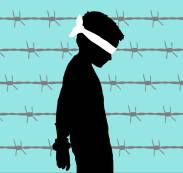 The briefing marks 50 years since Israeli forces occupied the West Bank, including East Jerusalem, and the Gaza Strip. Children under 18 years old currently represent 46 percent of the 4.68 million Palestinians living in the Occupied Palestinian Territory. This current generation has grown up in the shadow of failed negotiations and with futures stifled by systemic discrimination, persistent settlement expansion, blockade, and repeated military offensives.
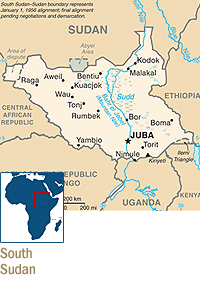 As more people face famine today than any time in modern history, the World Council of Churches (WCC) together with the All Africa Conference of Churches (AACC) and a range of faith-based partners and networks invite a Global Day of Prayer to End Famine on 21 May 2017, in response to the hunger crisis.
 #REDdress #MMIW #MMNAWG #gonebutnotforgotten
 The UN Secretary-General’s
 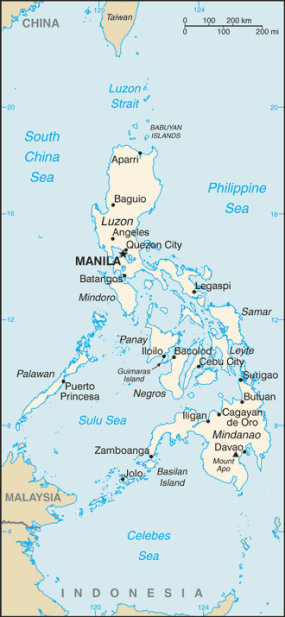 My colleague Catherine Chang and partners from the United Church of Christ in the Philippines hand delivered a letter for President Duterte of the Philippines on Friday, March 24, 2017. The letter was delivered to a presidential aide.

 Along the Graybeard Trail