Monthly Archives: May 2012

Refusal

I like to eat. I do it well. I like it too much and do it to well according to most doctors. Perhaps that is why the idea of a hunger strike carries such a fascination for me. Putting one’s body and life on the line by refusing to eat is an incredible nonviolent witness that has been used by many people through the years.

During a recent trip to Belfast, I recalled the example of Bobby Sands MP and the nine others who died in Northern Ireland on hunger strike in 1981. As expected, I saw murals of Sands and the Republicans. What I had not expected to find among the murals was this expression of solidarity:
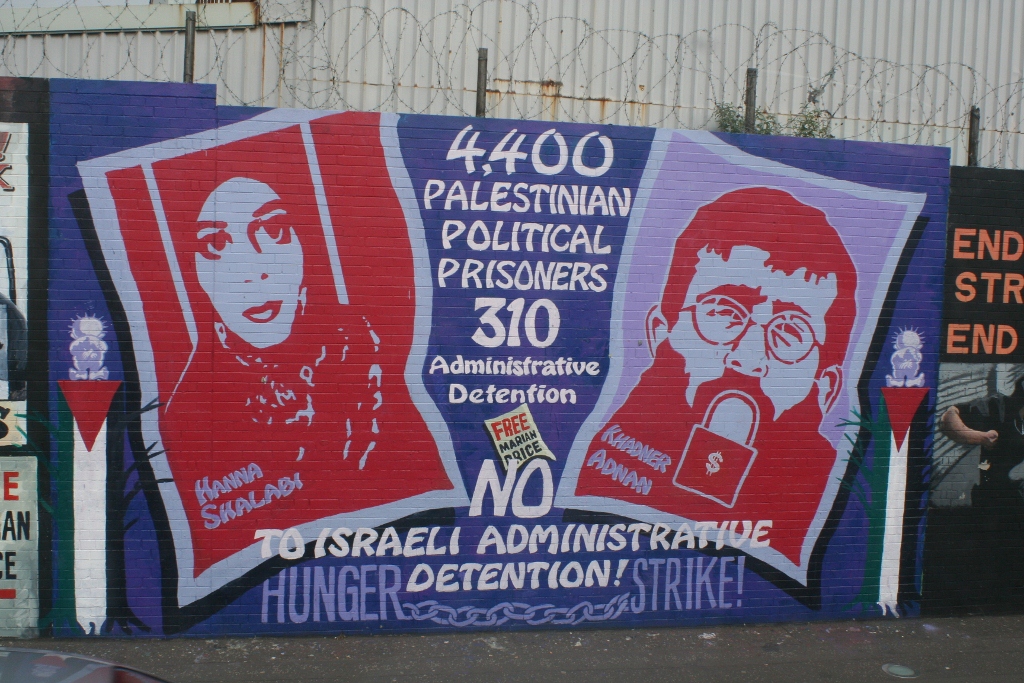
This image stayed with me all day as I thought and wrote about the Palestinians on hunger strike today.

Amnesty International has issued a call for urgent action that asks people around the world to contact Israeli authorities on behalf of Bilal Diab and Thaer Halahla, two Palestinian men who are at risk of death as they engage in the nonviolent action of a hunger strike. Both are being held without charge or trial by Israel.

They are not alone. Palestinians detained in Israeli prisons are staging a mass hunger strike to protest prison conditions and the practice of administrative detention. According to prison officials, at least 1,600 of the 4,600 Palestinians held by Israel are refusing food. Palestinians say about 2,500 strikers are striking.

The hunger strike calls for an end to administrative detention (a procedure that allows the Israeli military to hold prisoners indefinitely on secret information without charging them or allowing them to stand trial). Additional demands are:

  1. An end to the policy of solitary confinement and isolation which has been used to deprive Palestinian prisoners of their rights for more than a decade.
  2. To allow the families of prisoners from the Gaza Strip to visit prisoners. This right has been denied to all families for more than 6 years.
  3. An improvement in the living conditions of prisoners and an end to the ‘Shalit’ law, which outlaws newspapers, learning materials and many TV channels.
  4. An end to the policies of humiliation which are suffered by prisoners and their families such as strip searches, nightly raids, and collective punishment.

General Assemblies of the Presbyterian Church (U.S.A.) are among those who have called for an end to the use of administrative detention and who have urged the use of nonviolence as the way to pursue peace.

I pray for those who place their lives on the line through their refusal. I pray for those who are held in prisons. I pray for those who imprison others. I pray for those who manage prisons. I pray that human rights are honored, justice is done, and peace rolls down for Palestinians and Israelis alike. 

See you along the Trail.

1 Comment

Filed under Current Events, Human Rights, Ireland

The People Have Spoken

On my way to work today, Tommy Sands‘ song “The People Have Spoken” came on the iPod. The whole song is well worth a read or a listen – click on the title on the left. It appears on his CD, Let the Circle Be Wide.

Two images spoke with particular power today. One line comes from the second verse:

Well I say the sun shines on all or on no one

And the whole final verse:

And don’t sing the songs of the wrongs we have suffered
Till first we can hear of the wrongs we have done
And together we’ll write a new song for tomorrow
It’s then, only then, that our day will come

Sands, a native of the County Down in Northern Ireland, has performed with his family of birth, his children Moya and Fionan, Pete Seeger, Vedran Smailovic, and a choir of Protestant and Catholic children among many others. Tricia and I had the privilege to see him in a solo concert in Cleveland more than ten years ago.

His deep commitment to peace shines through his music. He has played a key role in the peace process for Northern Ireland:

Ten years ago [this would be about 1990], Sands started an event called “The Music of Healing.” Musicians from both factions in Northern Ireland – Catholic and Protestant – met to play music together, to test and prove the bonding power of their shared music. Later, the musicians brought leaders from their parties with them; they would open these discussion sessions with music, “to create an atmosphere of neighborliness and humanity.” The discussions were often heated, but never dissolved. According to Sands, the Citizen’s Assembly which, in 1996, began to hold its “consensus sessions,” grew out of these musical exchanges. Led by Peter Emerson, a key thinker in the group, the Citizen’s Assembly looked for new ways of solving conflict and new ways of decision making – moving from “majoritarianism” to a concensus approach – a true democracy where instead of 51% of the people being happy, everyone is. Each voice – even minority voices – are heard, considered, and made part of the final decision. Instead of the up/down referendum, they used the “preferendum,” where representatives rank alternatives. Ex-prisoners from both the IRA and the UVF (Ulster Volunteer Force) acted as referees or facilitators in fashioning solutions that took all points of view into account. Sands said it was his own son, Fionan, who came up with the idea that each party in the talks should be represented by one man and one woman. It was this Citizen’s Assembly which was instrumental in laying the groundwork for the Good Friday Peace Accords, which remain a source of hope for lasting peace in Ireland despite continuing problems.

He has taken his search for peace on the road – working with Palestinian and Israeli peace activists.

Confronting the evil humans can do, the awful wounds we can inflict on each other, Tommy Sands remains a person of hope and peace. He sings:

The people have spoken, a new day is dawning
The people have spoken, and new day has come

May the day dawn soon.

See you along the Trail.

1 Comment

Filed under Music

Connecticut abolishes death penalty!

The movement grows – although I am a bit late in commenting.

On 25 April 2012, Connecticut became the 17th state to abolish the death penalty. Governor Dannel P. Malloy made a profound statement as he signed the legislation. It reflects his personal experience which changed his views on the death penalty. He cites the reality that as good as a system of justice is, it is imperfect as well as the “unworkability” of the law that results in appeal after appeal which brings “sordid attention that rips open never-quite-healed wounds.” He closes with the observation that family members of murder victims led the campaign to abolish the death penalty. The statement is worth reading in its entirety:

“This afternoon I signed legislation that will, effective today, replace the death penalty with life in prison without the possibility of release as the highest form of legal punishment in Connecticut.  Although it is an historic moment – Connecticut joins 16 other states and the rest of the industrialized world by taking this action – it is a moment for sober reflection, not celebration.

“Many of us who have advocated for this position over the years have said there is a moral component to our opposition to the death penalty.  For me, that is certainly the case.  But that does not mean – nor should it mean – that we question the morality of those who favor capital punishment.  I certainly don’t.  I know many people whom I deeply respect, including friends and family, that believe the death penalty is just.  In fact, the issue knows no boundaries: not political party, not gender, age, race, or any other demographic.  It is, at once, one of the most compelling and vexing issues of our time.
“My position on the appropriateness of the death penalty in our criminal justice system evolved over a long period of time.  As a young man, I was a death penalty supporter.  Then I spent years as a prosecutor and pursued dangerous felons in court, including murderers.  In the trenches of a criminal courtroom, I learned firsthand that our system of justice is very imperfect.  While it’s a good system designed with the highest ideals of our democratic society in mind, like most of human experience, it is subject to the fallibility of those who participate in it.  I saw people who were poorly served by their counsel.  I saw people wrongly accused or mistakenly identified.  I saw discrimination.  In bearing witness to those things, I came to believe that doing away with the death penalty was the only way to ensure it would not be unfairly imposed.
“Another factor that led me to today is the ‘unworkability’ of Connecticut’s death penalty law.  In the last 52 years, only 2 people have been put to death in Connecticut – and both of them volunteered for it.  Instead, the people of this state pay for appeal after appeal, and then watch time and again as defendants are marched in front of the cameras, giving them a platform of public attention they don’t deserve.  It is sordid attention that rips open never-quite-healed wounds.  The 11 men currently on death row in Connecticut are far more likely to die of old age than they are to be put to death.
“As in past years, the campaign to abolish the death penalty in Connecticut has been led by dozens of family members of murder victims, and some of them were present as I signed this legislation today.   In the words of one such survivor: ‘Now is the time to start the process of healing, a process that could have been started decades earlier with the finality of a life sentence. We cannot afford to put on hold the lives of these secondary victims.  We need to allow them to find a way as early as possible to begin to live again.’  Perhaps that is the most compelling message of all.
“As our state moves beyond this divisive debate, I hope we can all redouble our efforts and common work to improve the fairness and integrity of our criminal justice system, and to minimize its fallibility.”

Work remains to do. Thirty-three states retain the death penalty. Executions are scheduled for May 16 in Texas and Arizona.

But for now, I give thanks for the legislators in Connecticut and for Governor Malloy. May his hope come true.

See you along the Trail.

Leave a comment

Filed under Capital Punishment, Death Penalty

Solemnising

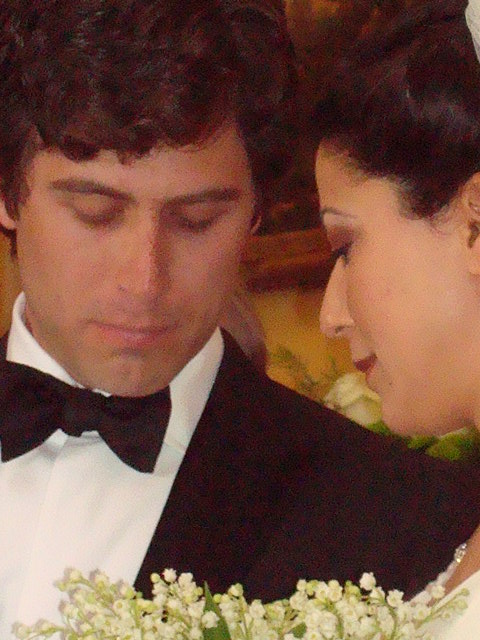
Roja and Joel invited me.

The Presbytery of New York City vouched for me.

The Presbyterian Church of Ireland processed the paperwork for me.

The Republic of Ireland granted permission to me.

Thus it came to pass, on 28 April 2012, the immense pleasure of solemnising the wedding of Joel and Roja came to me.

And our mutual friend Joe photographed Roja and Joel …

… and me.

See you along the Trail.

1 Comment

Filed under Friends, Ireland, Photo

Strawberry Fields. Forever.

Tricia chose to spend a couple of days in New York before returning to Cleveland – in part to take advantage of the Tuesday air fares. We spent the day seeing some of the city and hanging with friends.

The day began with a walk-by of the apartment where our son will live when he soon moves to New York. Then we walked to Central Park where, as an acoustic guitar gently played, we viewed Strawberry Fields. We journeyed through the park to the Central Park Zoo which proved a challenge to find, which seemed odd considering how big it is. After the zoo, we made our way to the 9/11 Memorial Area. We had no tickets, so we simply walked by the outside.

Headed back uptown, we stopped for dinner at Vnyl in Hell’s Kitchen. Then on to Max Caffe where a number of good folks joined us for conversation, food and drink, and the simple joy of being together.

A day to remember, to learn, to mourn, and to give thanks. A good day.

See you along the Trail.

1 Comment

Filed under Family, Friends

Before the wedding

The Trail has recently taken Tricia and me on a quick trip to Dublin, other parts of Ireland, Belfast, and some of the region around that city. Perhaps quick is not the right word to use, the trip did last most of ten days. But many places remain unseen, calling for a return visit.

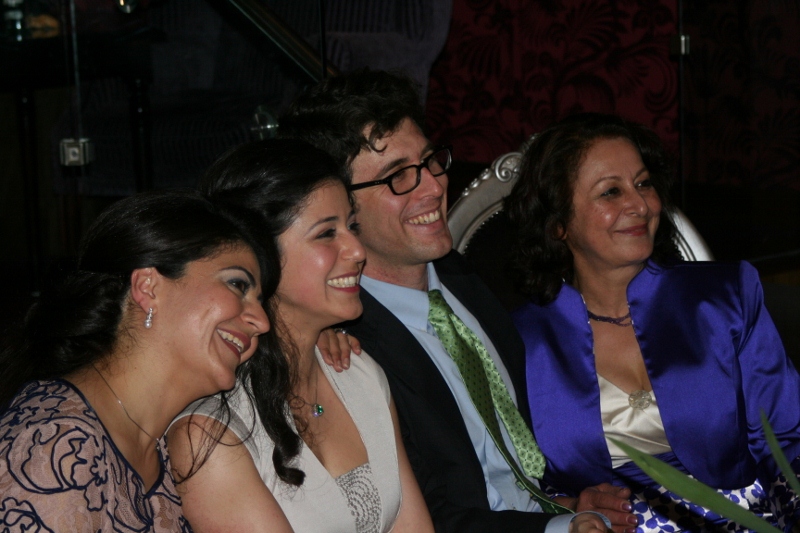
The wedding of two friends led to this trip. I have already posted about that joy-filled event: a reflection on a party before the wedding and some notes on the sermon. Here’s one more. Others may follow. This picture of my friends with her mother and sister has received many positive comments on Facebook:

See you along the Trail.

Leave a comment

Filed under Friends, Ireland, Photo

The Shannon and the sea

Ahead lies the Shannon,
behind lies the sea;
ahead lies the Shannon,
beyond lies the sea;
now we cross the Shannon,
tomorrow, the sea.

30 April 2012
07:30 hours train from Heuston Station to Galway


Leave a comment

Filed under Ireland, Poem

Patrick

Did he find what
he sought when
all those years ago,
he left home behind
and journeyed across the
sea?

Does his spirit
somehow linger
waiting to greet the
son of the
daughter of the
son
who returned
to his native land,
journeying
in hours, not days,
by air, not  sea,
to celebrate the present
and seek something of the
past?

26 April 2012
DL 92


Leave a comment

Filed under Family, Ireland, Poem, Travel

Gone

A gaze,
a jerk,
a word;
broken,
the mood
is gone.

26 April 2012
 DL 92

Leave a comment

Filed under Travel

Something to ponder

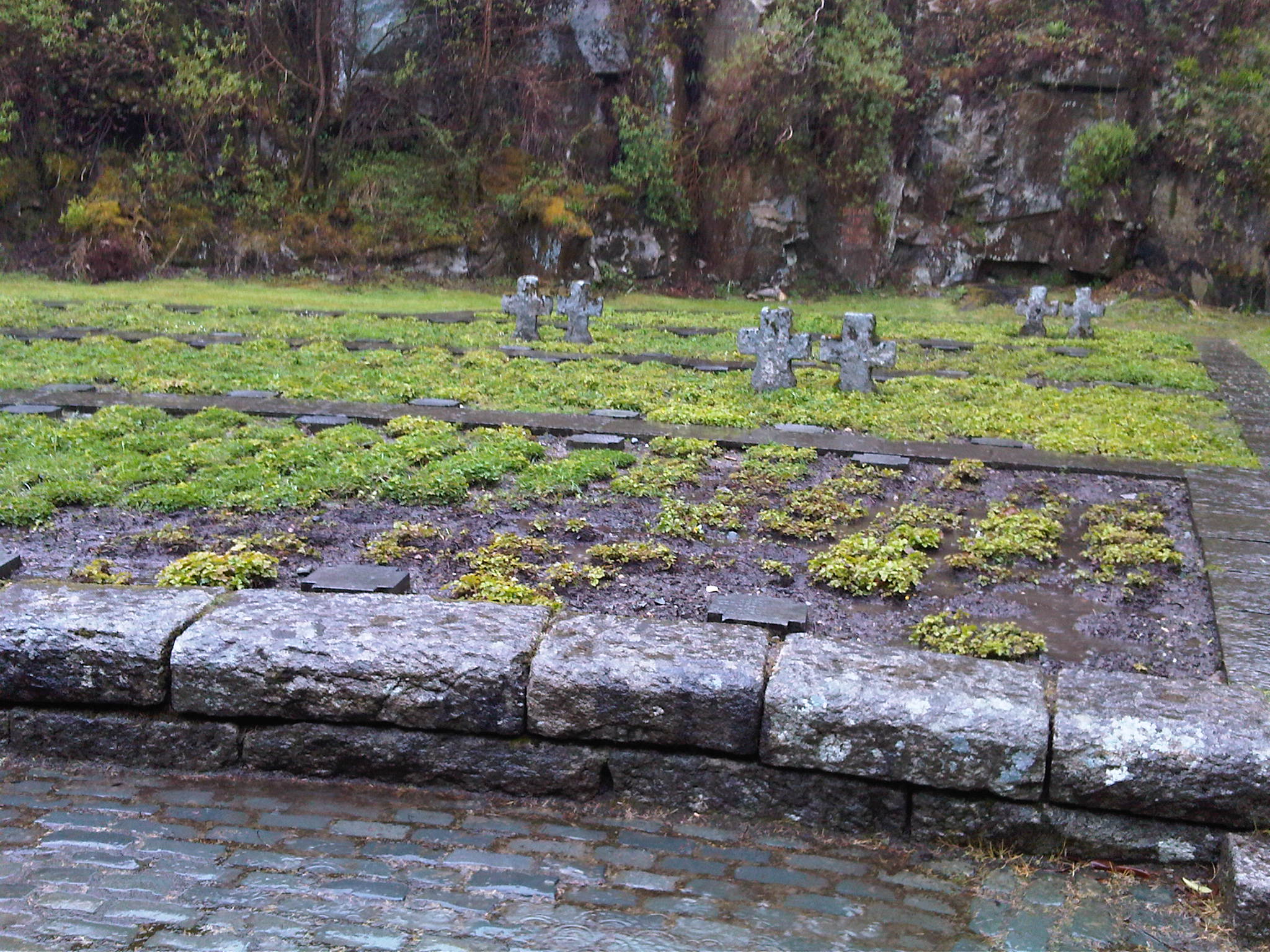
A large Celtic cross stands on the edge of old quarry near the Glencree Centre for Peace and Reconciliation in County Wicklow, Ireland. The cross itself comes as no surprise, such crosses are found across Ireland. What makes this cross worth a comment is what lies below.

Below the  cross, at the foot of the rock wall, is the German Military Cemetery. Here lie the remains of fifty-three German air and naval service men killed during the Second World War. Some fell into Ireland from the sky when their planes went down. The sea deposited others on the Irish coast.

Forty-six German civilians rest with them – detainees being shipped from England to Canada upon a ship torpedoed by a German U-boat. Six soldiers from the First World War are also buried there. They died while prisoners in a British prisoner of war camp in Ireland. One person has an individual memorial – Hermann Gortz, who served as a spy in Ireland and committed suicide after the war to avoid deportation that he feared would put him in Soviet hands.

Smaller crosses and gravestones fill the cemetery itself. A “Hall of Honour” provides a place for reflection and prayer.

The cemetery’s stark simplicity  combines with its beauty to provide much to ponder about the human cost of war and the common humanity of the men and women who serve in the military of every nation. As John McCutcheon puts it in his song, “Christmas in the Trenches“:

the ones who call the shots won’t be among the dead and lame
And on each end of the rifle we’re the same.

See you along the Trail.

Leave a comment

Filed under Ireland, Travel