
“… before we arrive at Holy Week, we spend time in the wilderness with Jesus. We reflect on the violence that surrounds too many places in our nation and the world. We sit with the Belhar Confession, and we can contemplate Belhar’s origins from South Africa during the violent rule of apartheid. In the midst of the violence struggle for dignity and justice, the church took a stand to say that love conquers all.”
Joseph Kinnard
Lenten Reflections on the Confession of Belhar
Where human dignity is violated,
where violence reigns,
where systems perpetuate injustice,
may we proclaim love;
difficult as it is,
may we, may I,
proclaim love.
may I, may we,
live love.
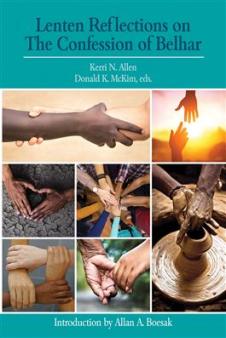
This Lenten season I am using a new resource to explore the Belhar Confession: Lenten Reflections on the Confession of Belhar, edited by Kerri N. Allen and Donald K. McKim. The Presbyterian Church (U.S.A.), in which I serve as a teaching elder (pastor), added the Confession of Belhar to our Book of Confessions in 2016. This confession came from the Dutch Reformed Mission Church during its historic struggle against apartheid in South Africa.
See you along the Trail.
 “We are blessed saints by God. Bound in God’s grace, we live within God’s mercy. In God’s mercy, we need to build up instead of tear down. We show God’s mercy to each other through forgiveness. Lent reminds us of the important role forgiveness plays in unity. To forgive others is crucial in situations of conflict, as is accepting forgiveness offered to us. Mercy and forgiveness are essential.”
 “After his resurrection, Jesus commissioned the creation of a family originating not from a common human ancestor, but a divine calling. This family transcends national borders, cultures, and languages. Jesus called for disciples to be made of all nations–indeed, as Belhar says, the ‘entire human family.’ That does not mean that we reject or erase our differences, for a family made from all nations will necessarily have variety. We can, however, reject the lie that such variety cancels out unity. The vision, after all, has always been that this family would be different.”
 “Belhar constrains us to say out loud to God and the faithful how we have been complicit through our unwillingness to speak and act, even as we witness injustice in the public square.”
 Along the Graybeard Trail