Category Archives: United Nations

Orange Your Neighbourhood – End Violence against Women and Girls Now

banner_en_medium400

adapted from an email sent by UN Women’s Civil Society Section and originally published on Swords into Plowshares

November 25 is the International Day to End Violence against Women and the start of the 16 Days of Activism against Gender-Based Violence Campaign! As you may know, this year’s UN celebrations will take place under the theme “Orange Your Neighbourhood – End Violence against Women and Girls Now“. The initiative led by the Secretary-General’s UNiTE campaign focuses on local actions towards ending violence against women and girls, while using orange as the uniting colour of all advocacy efforts.

As part of  the online campaign for the 16 Days, UN Women’s Civil Society invites everyone to join in the effort and orange their social media accounts. It’s quite simple – you can show your support and orange your Twitter and Facebook profile pictures by adding an orange Twibbon filter.

Could consider adding the Twibbon filter to your organization’s and/or personal profile picture any time between 25 November and 10 December to raise awareness on ending violence against women and girls. We can join the conversation on social media through the hashtags #orangeurhood and #16days, and are welcome to use any of the suggested messages and images available in UN Women’s social media package.

Learn more about the PC(USA)’s initiative to end violence against women and girls.

Presbyterians against Domestic Violence provides a number of liturgical and resources to address domestic violence.

Presbyterian Women offers suggestions for actions to end violence against women and girls year round.

See you along the Trail

Leave a comment

Filed under Current Events, Human Rights, Presbyterian Church (U.S.A.), Presbyterian Ministry at the United Nations, United Nations

Equality, Dignity and the Link Between Gender-Based Violence and Sanitation

From the United Nations:

toiletday2014“Equality, Dignity and the Link Between Gender-Based Violence and Sanitation” is the theme for this year’s World Toilet Day, which seeks to put a spotlight on the threat of sexual violence that women and girls face due to the loss of privacy as well as the inequalities that are present in usability. Toilets generally remain inadequate for populations with special needs, such as the disabled and elderly, and women and girls requiring facilities to manage menstrual hygiene.

See you along the Trail.

Leave a comment

Filed under Current Events, Human Rights, United Nations

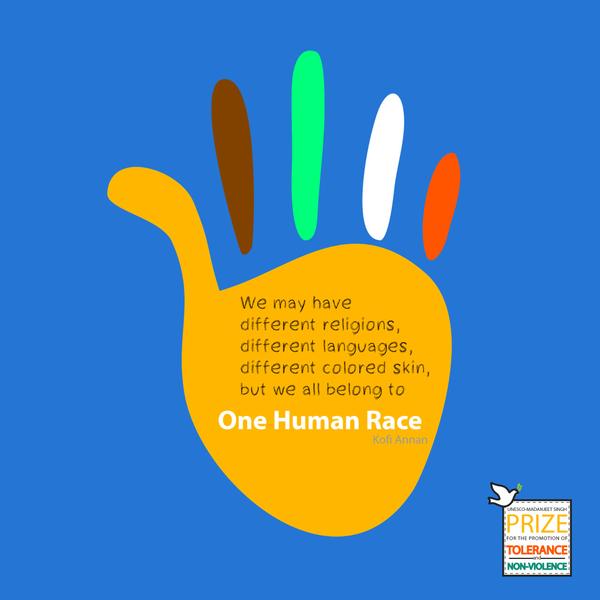
Beyond tolerance

ToleranceThe United Nations has designated today as the International Day for Tolerance.

This action followed on the United Nations Year for Tolerance, 1995, proclaimed by the UN General Assembly in 1993 at the initiative of UNESCO , as outlined in the Declaration of Principles on Tolerance and Follow-up Plan of Action for the Year.

UN Secretary-General Ban Ki-moon calls “all people and governments to actively combat fear, hatred and extremism with dialogue, understanding and mutual respect.”

Tolerance is good.

Tolerance is important.

Dialogue, understanding and mutual respect are good and important.

But they are all starting points as we seek to honor and welcome one another as God’s children, live together as the human family, learn from one another, dismantle privilege and systems of oppression, build liveable communities of co-equality, and care for all creation, including the human creature.

May this day be a time to renew our efforts.

See you along the Trail.

1 Comment

Filed under Antiracism, Current Events, United Nations

Wars Leave Devastating Impact on Environment

Here is an EthicsDaily.com article “Wars Leave Devastating Impact on Environment” co-written with Grace Ji-Sun Kim.

Check EthicsDaily.com for more articles, videos and news.

November 6 is the International Day for Preventing the Exploitation of the Environment in War and Armed Conflict.

Ancient words from Deuteronomy remind us of the relationship between conflict and the environment created by God.”If you besiege a town for a long time, making war against it in order to take it, you must not destroy its trees by wielding an ax against them. Although you may take food from them, you must not cut them down. Are trees in the field human beings that they should come under siege from you?” (Deuteronomy 20:19)Conflict claims human lives, maims human bodies and scars human souls – combatant and non-combatant alike. Conflict also exacts a cost on God’s creation.The United Nations General Assembly echoed these words when it declared Nov. 6 the International Day for Preventing the Exploitation of the Environment in War and Armed Conflict.

The United Nations Environment Program (UNEP) report, “From Conflict to Peacebuilding: The Role of Natural Resources and the Environment,” observes, “Environmental factors are rarely, if ever, the sole cause of violent conflict. Ethnicity, adverse economic conditions, low levels of international trade and conflict in neighboring countries are all significantly correlated as well.”

“The exploitation of natural resources and related environmental stresses can be implicated in all phases of the conflict cycle, from contributing to the outbreak and perpetuation of violence to undermining prospects for peace,” the report added.

War impacts the environment, particularly when parties in a conflict have deliberately targeted natural resources. For example:

  • During World War I, the British sabotaged Romania’s oilfields to deny them to the Central Powers.
  • From 1962 to 1971, the United States sprayed some 20 million gallons of herbicides, Agent Orange foremost among them, on rural areas of South Vietnam in an effort to deny cover and food to the Viet Cong and North Vietnamese forces.
  • As they retreated from Kuwait in 1991, Iraqi forces blew up oil wells and set fire to oilfields.

Conflict disrupts land use, water supply, air quality and ecosystems. Conflict creates refugees whose struggle for survival may lead to depletion of resources or other stresses on ecosystems. Environmental impacts may remain long after conflict ends.

People in Japan, the United States and various Pacific islands continue to suffer the effects of the development, testing and use of nuclear weapons.

The International Campaign to Ban Landmines reminds us that “some 60 countries around the world are contaminated by landmines and thousands of people continue living with this daily threat of losing their life or limb.”

In the past, conflicts occurred between nation states. Today, conflict more often takes place within a nation state, although it may involve people from beyond national borders.

The UNEP report said, “Civil wars such as those in Liberia, Angola and the Democratic Republic of Congo have centered on ‘high value’ resources like timber, diamonds, gold, minerals and oil.”

The environment suffers as military exercises use fuel. The production of weapons consumes natural and financial resources that could have been used to promote human welfare and environmental protection.

International law offers one way to protect the environment in times of conflict.

However, the UNEP report concluded that “the existing international legal framework contains many provisions that either directly or indirectly protect the environment and govern the use of natural resources during armed conflict. In practice, however, these provisions have not always been effectively implemented or enforced.”

Strengthening and expanding international law in relation to environmental protection in conflict is crucial.

Klaus Toepfer, executive director of UNEP from 1998 to 2006, called for “safeguards to protect the environment” in which “using the environment as a weapon” would be “denounced as an international crime against human-kind, against nature.”

Environmental remediation provides directions for responses after conflict.

Remediation may involve rapid responses, as occurred in extinguishing the fires and cleaning the spills in Kuwait.

It may involve long-term environmental sustainability plans such as reforestation and paying careful attention to environmental concerns in post-conflict situations.

International law may reduce the environmental impacts of conflict and preparations for conflict. Environmental remediation may help in a conflict’s aftermath.

Conflict prevention remains the most effective way to protect the environment. This includes demilitarization.

Diplomatic negotiation, people power, addressing poverty, strengthening human rights and the rule of law, building democratic institutions, controlling small arms, teaching nonviolence and other strategies may help prevent intrastate conflict.

Recognizing that the human family shares one planet and has no other place to live should inspire environmentalists to become peacemakers and peacemakers to become environmentalists.

Christians are called to environmental peacemaking work. God has made all that exists; God has made us.

All people are God’s children; all people are our brothers and sisters. The earth, and all that is therein, belong to God.

God entrusts this earth to us for a time, to exercise care on behalf of the created order, our sisters and brothers, generations as yet unborn, and God.

Addressing the environmental impact of conflict is a way we live our faith.

Grace Ji-Sun Kim is a visiting researcher at Georgetown University and the author of six books and numerous articles. Jamie Yen Tan provided research assistance on this project.

Leave a comment

Filed under Current Events, Presbyterian Ministry at the United Nations, United Nations

It’s United Nations Day

It’s United Nations Day! Why not celebrate by learning more about the Presbyterian Ministry at the UN!

See you along the Trail.

Leave a comment

Filed under Presbyterian Ministry at the United Nations, United Nations

World Teachers’ Day

banner_1407252028

On World Teachers’ Day, I give thanks for the many teachers who have touched my life.  I give thanks for my many friends who teach. I give thanks for the teachers in my family.

For whom do you give thanks?

A quality education offers hope and the promise of a better standard of living. However, there can be no quality education without competent and motivated teachers. On World Teachers’ Day, the UN highlights the importance of supportive environments, quality training and rights for teachers, and celebrates the crucial role teachers play in shaping our future. Events are held around the world to highlight the importance of education and to offer advice and encouragement for students who wish to begin a teaching career. The United Nations Educational, Scientific and Cultural Organization proclaimed this Day in 1994.

See you along the Trail.

Leave a comment

Filed under Current Events, Friends, United Nations

International Day of Non-Violence

Posting a bit late, from the United Nations:

The principle of non-violence—also known as non-violent resistance—rejects the use of physical violence in order to achieve social or political change. This form of social struggle has been adopted all over the world in campaigns for social justice. The International Day of Non-Violence, celebrated on the anniversary of Mahatma Gandhi’s birth, reaffirms the universal relevance of the principle of non-violence. Every year events take place to encourage States to work together to build a world of tolerance and lasting peace. The UN General Assembly proclaimed this Day in its 2007 resolution A/RES/61/271.

May we make every day a day of nonviolence.

See you along the Trail.

Leave a comment

Filed under United Nations

Get in the swim … or the walk

congoswim_flyer_8.5_x_11_jpeg_medium350Last summer, I took part in the CongoSwim, I did not swim. I walked. On a warm, sunny Louisville day, I walked 22,000 steps. 1,000 steps for each mile across Lake Tahoe where the organizers swam.
Participants and donors made it possible for five women and youth-led groups in the DR Congo to receive grants. The Who We Support page contains information about the work the groups are doing for lasting peace and a future free of violence against women and children.
A CongoSwim will take place again this summer. I will take part. I will walk again. I have not determined how far or where or when, but I will walk.
I invite you to show your support this summer by doing at least one of the following:
  1. Register a summer activity – CongoSwim has expanded beyond swimming and participants are even dedicating their summer-long fitness goals and BBQs with friends
  2. Click DONATE to make a tax-deductible donation
  3. Encourage a child to participate by sharing the FOR KIDS page
  4. Join the August 15 Lake Tahoe Relay (youngest swimmer is 8 and oldest is over 70!)
  5. Sign-up for the August 23 CongoSwim Lake Merritt Walk
  6. Like CongoSwim on Facebook

Get in the swim … or the walk … or support the effort in some other way.

See you along the Trail.

Leave a comment

Filed under Current Events, Exercise, Human Rights, United Nations

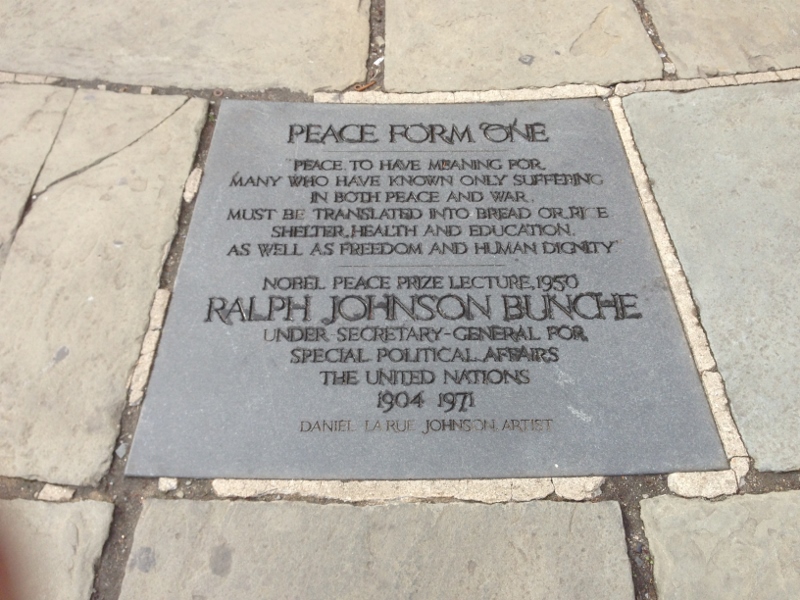
Serve – 3 June 2014

Ralph Bunche Memorial (800x600)

16 February 2014
Ralph Bunche Park
Manhattan, New York

Leave a comment

Filed under New York, Photo, Presbyterian Church (U.S.A.), Presbyterian Ministry at the United Nations, United Nations

Purpose – 30 May 2014

Purpose 03 11 13 Young Adult Worship CSW (800x533)

11 March 2013
Young Adult Worship
Commission on the Status of Women
Tillman Chapel, Church Center for the United Nations
Manhattan, New York

Leave a comment

Filed under New York, Presbyterian Church (U.S.A.), Presbyterian Ministry at the United Nations, United Nations, Worship