
Staff and friends of the Presbyterian Church (U.S.A.) gathered this morning at the Presbyterian Center for a chapel service in response to racism and white supremacy in Charlottesville and other places. (An archived live stream of the service is available.)
My colleague and friend, José Luis Casal, director of World Mission, helped celebrate communion.
During the Words of Institution, José Luis observed that, “The bodies of all who have been victims of injustice, the victims of rejection, the victims of violence…are the body of Jesus Christ.”
He reminded us that to come to the table and to partake of the bread and the cup is to commit ourselves personally to stand on the side of love with Jesus and to work against racism, white supremacy, every form of systemic oppression, violence and all that harms any of God’s precious children.
Silently, I shouted “Amen” as loudly as I could.
And I wondered—when the Presbyterian Center or any church or worshipping community gathers to celebrate communion, isn’t that organization making a similar statement? The act of gathering at Christ’s table is, for the community as well, a radical act of commitment to Jesus and to justice, to love and to grace.
May it be so. Amen.
See you along the Trail.
Thanks to my friend and colleague Marissa Galván who posted some of José Luis’s word and inspired me to write this post. The image appeared on the cover of the worship bulletin this morning. View the bulletin for the service.


 A wide array of Christian faith leaders from across the United States have issued a
 #REDdress #MMIW #MMNAWG #gonebutnotforgotten
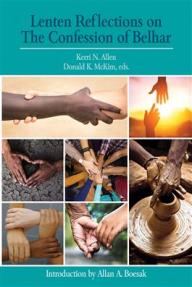 “Brokenness, disunity, and hatred are evident all over the planet. The world needs the witness Belhar calls the church to live out in the world. The church’s primary responsibility is to love God so fully that God’s saving presence shines through her like light in the midst of darkness. The church then becomes a beacon of hope, a lighthouse on the shore of a storm-tossed sea. By confessing, internalizing, and living out the principles of Belhar in her own experience, the church positions herself to become what Henri Nouwen calls, ‘a wounded healer.'”
 “… Belhar claims the one God, revealed in Jesus Christ and present through the Holy Spirit, will be present and active when human lives are demeaned, threatened by violence, hemmed in, and held down by law, tradition, and institutional racism.”
 Along the Graybeard Trail