Tag Archives: Grace Ji-Sun Kim

New Book: Embracing the Other

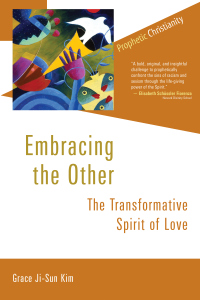
My friend Grace Ji-Sun Kim has a new book, Embracing the Other. I look forward to reading her reflections on how the Holy Spirit inspires and sustains us to work toward healing, reconciliation, and justice among all people, regardless of race or gender.

gracejisunkim's avatarGrace Ji-Sun Kim

Kim_Embracing the Other_cov_9780802872999Embracing the Other: The Transformative Spirit of Love will be released this Fall 2015 by Eerdmans.

 It is book for the Prophetic Christianity Series.  Co-editors Peter Goodwin Heltzel, Bruce Ellis Benson, Malinda Elizabeth Berry.

View original post 632 more words

Leave a comment

Filed under Antiracism, Books, Friends

Racial Prejudice, Racism Intertwined with Baseball

Racial Prejudice, Racism Intertwined with Baseball” was cowritten with the Rev. Dr. Grace Ji-Sun Kim for EthicsDaily.com. Check out more blogs, videos and interviews on EthicsDaily.com.

A mid-August game at Citi Field between the Pirates and the Mets involved good friends and good baseball. It also involved, in our section, a racial moment.

Two young men brought a flag of the Republic of Korea to the game, standing quietly to display the flag each time Pirates’ rookie Jung-ho Kang came to bat.

For much of the game their simple action to honor Kang – who was born in Gwangju and played in the Korean Baseball Organization – went without comment.

When Kang came to bat in the 10th inning, the young men stood again with the flag. This time a number of people in the crowd responded by chanting, “U.S.A.!”

Kang got a hit, but the inning ended with a strikeout and Kang being tagged out in a rundown between first and second.

The chants of “U.S.A.!” began again. It was a moment to mock the Korean fans and the Korean player.

Then a young man took the flag and tossed it away from its owners. Clearly most of those in attendance did not agree, as other fans quickly returned the flag, but the ugly moment of racism remains.

The chanting and the actions represented an effort to support the Mets in a close game. To an extent, beer may have fueled them. But they were rooted in racism.

Racial prejudice and racism have intertwined with baseball, as they have with all of U.S. culture.

Major League Baseball (MLB) excluded black players until Jackie Robinson andLarry Doby broke the pattern of segregation.

Their great courage, with the support of some players and individuals in management, allowed them to endure the hatred of individuals and discriminatory policies, such as not being able to stay at the same hotels and eat at the same restaurants as their teammates.

Henry Aaron endured hate mail and death threats as he chased and broke the home run record.

Roberto Clemente faced prejudice and discrimination while he established himself as one of the first baseball stars from Puerto Rico.

At his career’s beginning, sportswriters who spoke no Spanish mocked Clemente as he struggled to learn English, his second language.

In some ways, baseball in the U.S. has challenged prejudices and stereotypes, and seen some elements of racism dismantled.

And while baseball may be a national pastime in the U.S., it has become an international game.

We still speak about the MLB championship as the World Series even though baseball leagues exist in Cuba, Japan, the Republic of Korea, Taiwan, the Dominican Republic, Venezuela and elsewhere.

Between 1992 and 2008, teams competed five times in baseball during theSummer Olympics. Cuba won three times; the Republic of Korea once. The U.S. took the fifth gold medal in 2000.

Three World Baseball Classics have been held. Japan has won two; the Dominican Republic one; the U.S. has failed to medal.

International players fill the rosters of MLB teams. The Mets current active roster, for example, includes players from Cuba, Panama, Venezuela and the Dominican Republic.

Yet when two young men seek to honor a player from the Republic of Korea, they are met with taunting and disrespect of their flag.

The words and actions of a few remind us of how far we have come and of how far we have to go to overcome prejudice and dismantle racism.

Asian Americans from all countries are often viewed as the perpetual foreigner, no matter how many generations a family has lived in the U.S.

African Americans, Latinas and Latinos and indigenous peoples experience similar realities within the dominant culture.

Too often we value people by their looks or backgrounds, creating structures that identify some as belonging and inside and others as foreign and outside. This contributes to moments such as the incident at the baseball game.

Jesus calls us to accept everyone as equal and as members of the family of God.

John’s Gospel tells the story of Jesus meeting a Samaritan woman at a well (John 4).

The customs and structures of the time said Jews and Samaritans should have no dealings with one another.

However, Jesus engages her and asks for a drink of water. Their conversation ends with the Samaritan woman returning to the city to tell her neighbors of her encounter.

In this meeting at the well, and in his other actions and teachings, Jesus reminds us that we are made for relationship; we are made for each other. Jesus calls us to see people not as “foreigners” but as our neighbors.

We are all God’s children in our places of worship, neighborhoods, at sporting events and wherever we find ourselves.

Support your team, loudly and passionately, to be sure. But do so in ways that do not demean, subordinate or disrespect others.

Celebrate our human differences that enrich our lives and our society. Treat all people with dignity and respect. And do so in all places, including at sporting events.

Leave a comment

Filed under Antiracism, Baseball, New York, Pittsburgh Pirates

Kenneth Bae is Released

Great news! Delighted to share this from my friend Grace Ji-Sun Kim.

gracejisunkim's avatarGrace Ji-Sun Kim

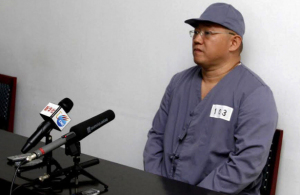
kenneth_bae_ap_imgSo excited and happy that Kenneth Bae is on his way home. He will be reunited with his sister, Terri Chung, his mother, family and friends in Seattle tonight.

We praise God for his release.

View original post 899 more words

1 Comment

Filed under Current Events

Wars Leave Devastating Impact on Environment

Here is an EthicsDaily.com article “Wars Leave Devastating Impact on Environment” co-written with Grace Ji-Sun Kim.

Check EthicsDaily.com for more articles, videos and news.

November 6 is the International Day for Preventing the Exploitation of the Environment in War and Armed Conflict.

Ancient words from Deuteronomy remind us of the relationship between conflict and the environment created by God.”If you besiege a town for a long time, making war against it in order to take it, you must not destroy its trees by wielding an ax against them. Although you may take food from them, you must not cut them down. Are trees in the field human beings that they should come under siege from you?” (Deuteronomy 20:19)Conflict claims human lives, maims human bodies and scars human souls – combatant and non-combatant alike. Conflict also exacts a cost on God’s creation.The United Nations General Assembly echoed these words when it declared Nov. 6 the International Day for Preventing the Exploitation of the Environment in War and Armed Conflict.

The United Nations Environment Program (UNEP) report, “From Conflict to Peacebuilding: The Role of Natural Resources and the Environment,” observes, “Environmental factors are rarely, if ever, the sole cause of violent conflict. Ethnicity, adverse economic conditions, low levels of international trade and conflict in neighboring countries are all significantly correlated as well.”

“The exploitation of natural resources and related environmental stresses can be implicated in all phases of the conflict cycle, from contributing to the outbreak and perpetuation of violence to undermining prospects for peace,” the report added.

War impacts the environment, particularly when parties in a conflict have deliberately targeted natural resources. For example:

  • During World War I, the British sabotaged Romania’s oilfields to deny them to the Central Powers.
  • From 1962 to 1971, the United States sprayed some 20 million gallons of herbicides, Agent Orange foremost among them, on rural areas of South Vietnam in an effort to deny cover and food to the Viet Cong and North Vietnamese forces.
  • As they retreated from Kuwait in 1991, Iraqi forces blew up oil wells and set fire to oilfields.

Conflict disrupts land use, water supply, air quality and ecosystems. Conflict creates refugees whose struggle for survival may lead to depletion of resources or other stresses on ecosystems. Environmental impacts may remain long after conflict ends.

People in Japan, the United States and various Pacific islands continue to suffer the effects of the development, testing and use of nuclear weapons.

The International Campaign to Ban Landmines reminds us that “some 60 countries around the world are contaminated by landmines and thousands of people continue living with this daily threat of losing their life or limb.”

In the past, conflicts occurred between nation states. Today, conflict more often takes place within a nation state, although it may involve people from beyond national borders.

The UNEP report said, “Civil wars such as those in Liberia, Angola and the Democratic Republic of Congo have centered on ‘high value’ resources like timber, diamonds, gold, minerals and oil.”

The environment suffers as military exercises use fuel. The production of weapons consumes natural and financial resources that could have been used to promote human welfare and environmental protection.

International law offers one way to protect the environment in times of conflict.

However, the UNEP report concluded that “the existing international legal framework contains many provisions that either directly or indirectly protect the environment and govern the use of natural resources during armed conflict. In practice, however, these provisions have not always been effectively implemented or enforced.”

Strengthening and expanding international law in relation to environmental protection in conflict is crucial.

Klaus Toepfer, executive director of UNEP from 1998 to 2006, called for “safeguards to protect the environment” in which “using the environment as a weapon” would be “denounced as an international crime against human-kind, against nature.”

Environmental remediation provides directions for responses after conflict.

Remediation may involve rapid responses, as occurred in extinguishing the fires and cleaning the spills in Kuwait.

It may involve long-term environmental sustainability plans such as reforestation and paying careful attention to environmental concerns in post-conflict situations.

International law may reduce the environmental impacts of conflict and preparations for conflict. Environmental remediation may help in a conflict’s aftermath.

Conflict prevention remains the most effective way to protect the environment. This includes demilitarization.

Diplomatic negotiation, people power, addressing poverty, strengthening human rights and the rule of law, building democratic institutions, controlling small arms, teaching nonviolence and other strategies may help prevent intrastate conflict.

Recognizing that the human family shares one planet and has no other place to live should inspire environmentalists to become peacemakers and peacemakers to become environmentalists.

Christians are called to environmental peacemaking work. God has made all that exists; God has made us.

All people are God’s children; all people are our brothers and sisters. The earth, and all that is therein, belong to God.

God entrusts this earth to us for a time, to exercise care on behalf of the created order, our sisters and brothers, generations as yet unborn, and God.

Addressing the environmental impact of conflict is a way we live our faith.

Grace Ji-Sun Kim is a visiting researcher at Georgetown University and the author of six books and numerous articles. Jamie Yen Tan provided research assistance on this project.

Leave a comment

Filed under Current Events, Presbyterian Ministry at the United Nations, United Nations

No Honor In Racism Rally and Twitterstorm Nov 2nd

Here’s a simple action on the issue of mascotism:
Not Your Mascots Inc
Hoopa, CA

Oct 31, 2014 — A Combined group of grassroots efforts will be rallying to TCF Stadium in Minneapolis on Sunday Nov.2, in a collaborative effort to speak out against the use of the culturally offensive mascot and name of The Washington Football team when they play the Minnesota Vikings. Among many of the groups representing are Not your Mascots Inc and The National Coalition Against Racism in Sports and Media.

Not Your Mascots Inc has feet on the ground during both marches, and is spearheading the social media Twitterstorm in support of the protestors attending the rally. Those who are unable to attend the rally in person are asked to show support through social media using both #NotYourMascot and #NoHonorInRacism hashtags. Twitterstorm will follow directly after Thunderclap message is sent, at 9:00 am CST as both marches converge onto University Ave and proceed to the Tribal Nations Plaza at TCF Stadium. There will be one-click tweets available for the supporting Twitterstorm at http://www.notyourmascots.org/2014/10/31/nohonorinracismnotyourmascot-tweets/

What is Thunderclap?
Thunderclap is the first crowd-speaking platform that helps people be heard by saying something together.

How does it work?
If we reach our supporter goal, Thunderclap will blast out a timed Twitter, Facebook, or Tumblr post from all our supporters, creating a wave of attention.

Is it safe?
Absolutely! It is a one click setup, and only one message will be sent on your behalf.

Please join the following Social Media Thunderclap via Twitter, Facebook or Tumblr below:

We are a People, Not Your Mascots!
https://www.thunderclap.it/projects/18004-we-are-a-people-notyourmascots

About The National Coalition Against Racism in Sports and Media (www.coalitionagainstracism.org) @NCARSM
https://twitter.com/NCARSM

The National Coalition Against Racism in Sports and Media exists to fight the powerful influence of major media who choose to promulgate messages of oppression. The impetus which formed the NCARSM was the clear case of media coupling imagery with widely held misconceptions of American Indians in the form of sports team identities resulting in racial, cultural, and spiritual stereotyping. The NCARSM was originally formed in October 1989 during the Chief Illiniwek controversy at the University of Illinois. The NCARSM has been reconstituted in June, 2014 in the Twin Cities.

NCARSM, while best known for its front-line demonstrations outside sports stadiums across America has been responsible for an educational effort which has made the issue of racial stereotyping a household discussion. The NCARSM takes a long term view of the struggle against hatred and disrespect. We are in a fight against all cases of racism, and against long ingrained willful and self serving ignorance. We strive towards the elimination of the misrepresentation and abuses of all people in sports and media.

About Not Your Mascots Inc (www.notyourmascots.org) @NotYourMascots
https://twitter.com/NotYourMascots

Not Your Mascots Inc is a 501(c)3 non-profit organization that is dedicated to addressing the misappropriation of Indigenous identity and imagery through the acceptance of mascots, stereotypes and racist behaviors as well as the harmful effect that they have on indigenous children and communities. The focus of Not Your Mascots is to address these issues through the utilization of education, social media, as well as community and media outreach.

Not Your Mascots is dedicated to using their educational and advocacy efforts to provide comprehensive solutions towards the eradication of harmful native mascots, stereotypes and cultural misappropriation. They are fully committed to promoting and establishing a common understanding of what it is to truly honor and respect Indigenous people and their culture. Through their efforts, Not Your Mascots hopes to stress the need for cooperation and unity between educational institutions, the media, like-minded organizations and the general public in helping to create a future in which we can all respect and view each other as human beings.

We Are A PEOPLE – Not Your MASCOTS!

Posted by TV

Leave a comment

Filed under Antiracism, Current Events, Football

Mascotism and the Redskins

I worked on the issue of stereotyping, caricatures, and mascots when I lived in Cleveland. Work remains to do.

gracejisunkim's avatarGrace Ji-Sun Kim

NFL Washington Redskins vs Dallas CowboysThis is my latest Huffington Post called, “Mascotism and the Redskins” co-written with Rev. Jesse Jackson.

Hope we can all work towards building “a Beloved Community where everyone is honored, welcomed, and respected.”

View original post 964 more words

1 Comment

Filed under Antiracism, Current Events, Friends, Uncategorized

BRC and Friends Interview on “Theological Reflections on Gangnam Style”

Check it out. My friend Bruce interviews my friend Grace about Theological Reflections on Gangnam Style, a book Grace wrote with Joseph Cheah.

gracejisunkim's avatarGrace Ji-Sun Kim

Tweet-Steeple-Cover-300x400We have some really talented Presbyterian Ministers.  The Rev. Bruce Reyes Chow is such a person.

He is the author of Social Media in the Church and has his google plus hangouts.  On October 21, 2014, he interviewed Dr. Joseph Cheah and myself on our new co-written book, Theological Reflection on Gangnam Style.

View original post 16 more words

Leave a comment

Filed under Friends

Product placement: Grace Ji-Sun Kim

Check out the product placement in this photo of the Rev. Dr. Jesse Jackson from the October 2014 issue of Ebony magazine. Professor Starks is carry Colonialism, Han, and the Transformative Spirit by my friend the Rev. Dr. Grace Ji-Sun Kim.

Jesse Jackson, Grace's bookSee you along the Trail.

1 Comment

Filed under Books, Friends

Reflections Along the Journey: Theological Narratives of Korean American Clergywomen

Grace Ji-Sun Kim and a number of my friends have an exciting project in the works. You can help support this book!

gracejisunkim's avatarGrace Ji-Sun Kim

book_imageWe are doing a Pubslush Campaign to raise funds to help publish a new book, Reflections Along the Journey: Theological Narratives of Korean American Clergywomen
(Judson Press).

Please help spread the word and please support our publication.  Please go to the original site to donate.  Thank you!!


View original post 354 more words

1 Comment

Filed under Books, Friends

Why I like New York 40: places to show friends

There is always something new to show friends who come to New York. Today, Grace Ji-Sun Kim and I went to Bryant Park. It was her first visit to the park. Great fun to see places in the city through first time visitors.

photo (78) (800x578)


See you along the Trail.

Leave a comment

Filed under Friends, New York, Photo