
International Day for the Remembrance of the Slave Trade and its Abolition.
Sacco and Vanzetti Execution.
Change Gonna Come – Otis Redding
This Little Light of Mine – Fannie Lou Hamer
Freedom – Charles Mingus
Freedom Highway – Rhiannon Giddons
Freedom Road – The Blind Boys of Alabama
Freedom – Richie Havens
Woke up This Morning with My Mind Stayed on Freedom – Congregation of Brown Chapel
Go Down, Moses – Paul Robeson
Get off the Track! – Anne Enslow & Ridley Enslow (feat. Jacqueline Schwab & Linda Russell)
Slavery Days – Burning Spear
Slave Driver – Our Native Daughters
Steal Aawy – The Princely Players
There Is a Balm in Gilead – The Florida A&M University Concert Choir
Free at Last – Kim & Reggie Harris
Oh Freedom – Mary D Williams
Freedom Now – Sweet Honey in the Rock
The Ballad of Sacco & Vanzetti – Joan Baez
Sacco’s Letter to His Son – Magpie
Tag Archives: enslavement
23 August 2025
Filed under Death Penalty, Human Rights, Music, New Mexico, playlist, United Nations
Making the Fourth of July a day for us all
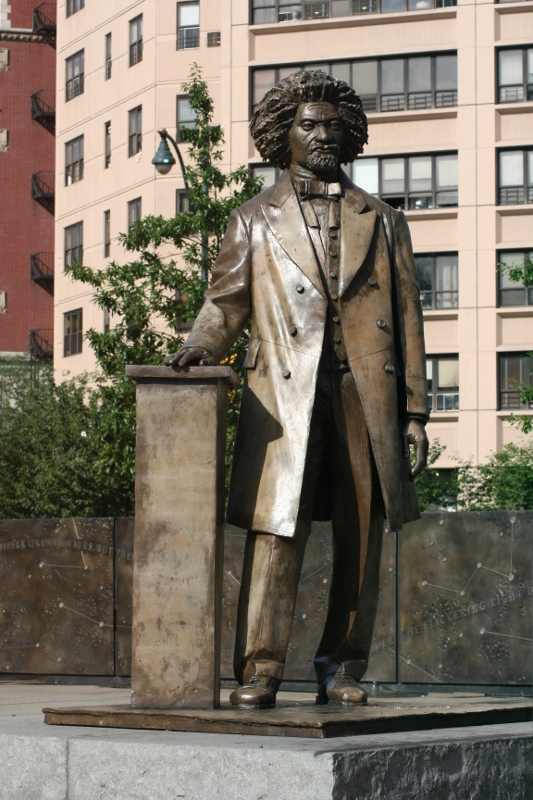 Whose holiday is the Fourth of July?
We like to think of this day as a day of celebration for all the citizens of the United States of America. But as Frederick Douglass proclaimed over 150 years ago, for many people – people living in this country – the Fourth of July serves as a painful reminder and a mockery.
When he spoke, the issue was slavery. Millions lived in the chains of chattel slavery. Those chains have fallen, thanks in large part, to Frederick Douglass and other African-Americans who resisted enslavement.
But many still do not enjoy fully the vision of freedom. Racism persists. A number of states greeted the recent Supreme Court decision on the Voting Rights Act by moving ahead with Voter ID laws, some of which have been rejected under the voting rights act. Immigrants face challenges as they seek to make a new life. Supreme Court decisions have made it possible for our LGBTQ brothers and sisters to marry – in certain states. An economic gulf looms between the rich and many people who struggle to find ends, let alone to make them meet. Men, women, and children are trafficked for labor and for sex. Slavery has morphed; it has not disappeared. For many, the promises of freedom and the United States remain unrealized. For all of us, the words of Frederick Douglass ring true.
Frederick Douglass was born in a slave cabin in Maryland. The date and year remain unknown even to Douglass. The condition of enslavement resulted in such a lack of knowledge for many. Douglass endured the violation and horrors of slavery. And he resisted. His first attempt to escape failed. Then he tried again and, in early September 1838, disguised as a sailor, he escaped to freedom – precarious freedom, but freedom none the less.
During a visit to the African Burial Ground National Monument in Manhattan, Tricia and I opted to take a tour that focused on slavery, resistance, and abolition efforts in New York. We learned that Douglass made his first stop in New York City. He did not stay because of the city’s support for slavery. In New York, Douglass married Anna Murray. They went to New Bedford, Massachusetts to live.
Douglass became a leader in the abolitionist movement. A talented speaker, he would spend about six months each year travelling and speaking. Douglass attended the Seneca Falls Convention and became a supporter of women’s rights including the right to vote. This connection led Anna and Frederick to move their family to Rochester, New York, perhaps to be near Susan B. Anthony.
On July 5, 1852, in Rochester, Douglass spoke at an event commemorating the signing of the Declaration of Independence: the Fourth of July, U.S. Independence Day. Perhaps they anticipated his words and tone. Most likely they did not. Douglass reminded his audience that, “This Fourth of July is yours, not mine. You may rejoice, I must mourn.” He went on to note:
What, to the American slave, is your 4th of July? I answer; a day that reveals to him, more than all other days in the year, the gross injustice and cruelty to which he is the constant victim. To him, your celebration is a sham; your boasted liberty, an unholy license; your national greatness, swelling vanity; your sound of rejoicing are empty and heartless; your denunciation of tyrants brass fronted impudence; your shout of liberty and equality, hollow mockery; your prayers and hymns, your sermons and thanks-givings, with all your religious parade and solemnity, are to him, mere bombast, fraud, deception, impiety, and hypocrisy — a thin veil to cover up crimes which would disgrace a nation of savages. There is not a nation on the earth guilty of practices more shocking and bloody than are the people of the United States, at this very hour.
Douglass did not end there, however. He observed that, despite his experience and the painful realities, “I do not despair of this country.” He closed with a poem of hope written by William Lloyd Garrison that begins:
God speed the year of jubilee
The wide world o’er!
The poem ends with an affirmation remaining engaged in the struggle for liberty, freedom, and justice – of working to make the promise of the Fourth of July real for all.
Frederick Douglass devoted himself to that struggle.
May I do the same.
See you along the Trail.
Filed under Antiracism, Current Events, Human Rights, National Park, Photo
Holy ground
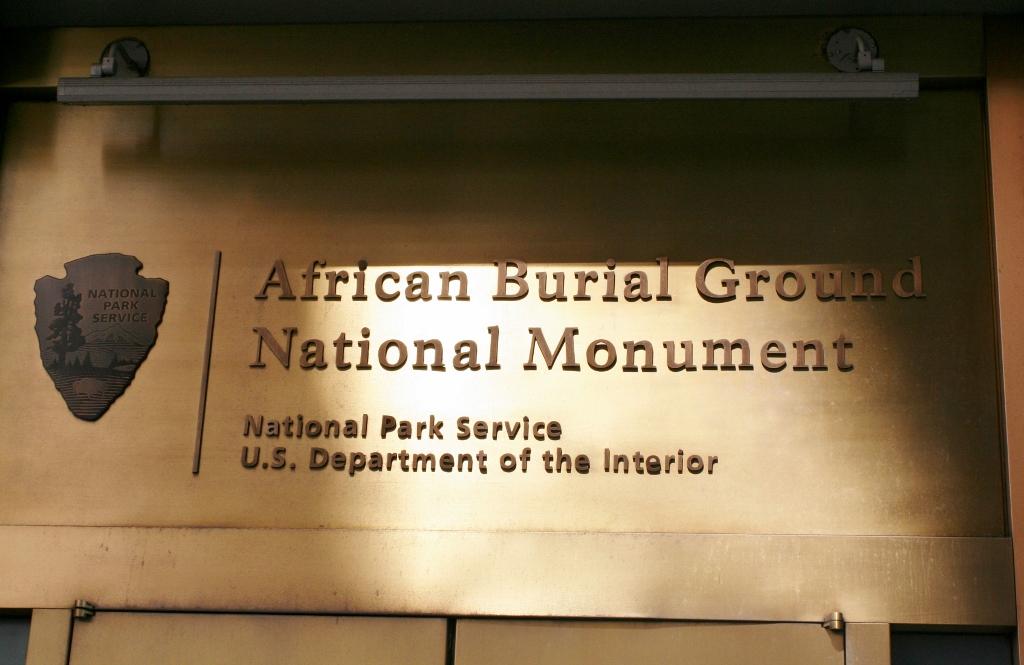 I stood today on holy ground. Of course all ground is holy for God creates all ground and entrusts it to our care. Still some ground bears special meaning because of what happened there.
My quest to visit National Parks took Tricia and me to the African Burial Ground in Manhattan today. It is a well done park that tells a significant story.
New York’s African Burial Ground is the nation’s earliest known African and African American cemetery. Enslaved Africans played a key role in building Manhattan as they played key roles in building this entire country. The Nation notes that:
In 1703, 42 percent of New York’s households had slaves, much more than Philadelphia and Boston combined. Among the colonies’ cities, only Charleston, South Carolina, had more.
From the late 1600s until 1794, both free and enslaved Africans were buried in a 6.6-acre burial ground in Lower Manhattan, outside the boundaries of the settlement of New Amsterdam, later known as New York. The National Park Service notes that “an estimated 15,000 men, women and children were buried here.
Africans resisted enslavement in countless ways: from rebellions to running away to educating children and more. The care they showed their loved ones was another form of resistance. Faced with the brutal dehumanization of enslavement, honoring those who died (or were killed) served to affirm the humanity and dignity of the individual and the community.
Lost to history due to landfill and development, the grounds were rediscovered in 1991 as a consequence of the planned construction of a Federal office building. The African-American community in New York led a campaign to have the remains honored and remembered. Their efforts, after some controversy and hard work, succeeded. The remains were taken to Howard University for analysis.
After the scientists finished their work, the remains were placed in new coffins and taken back to New York for reburial. The New York Historical Society reports:
The ceremonial journey stopped in five cities along the way, so that people in Washington D.C., Philadelphia, Baltimore, Wilmington, and Newark could pay their respects. Then the remains arrived by boat in New York City, at the same spot where slave ships had docked two centuries earlier. After days of rituals that included horse-drawn hearses, drummers in African kente cloth, singing, dancing, and prayers, the remains were returned to the earth in lower Manhattan.
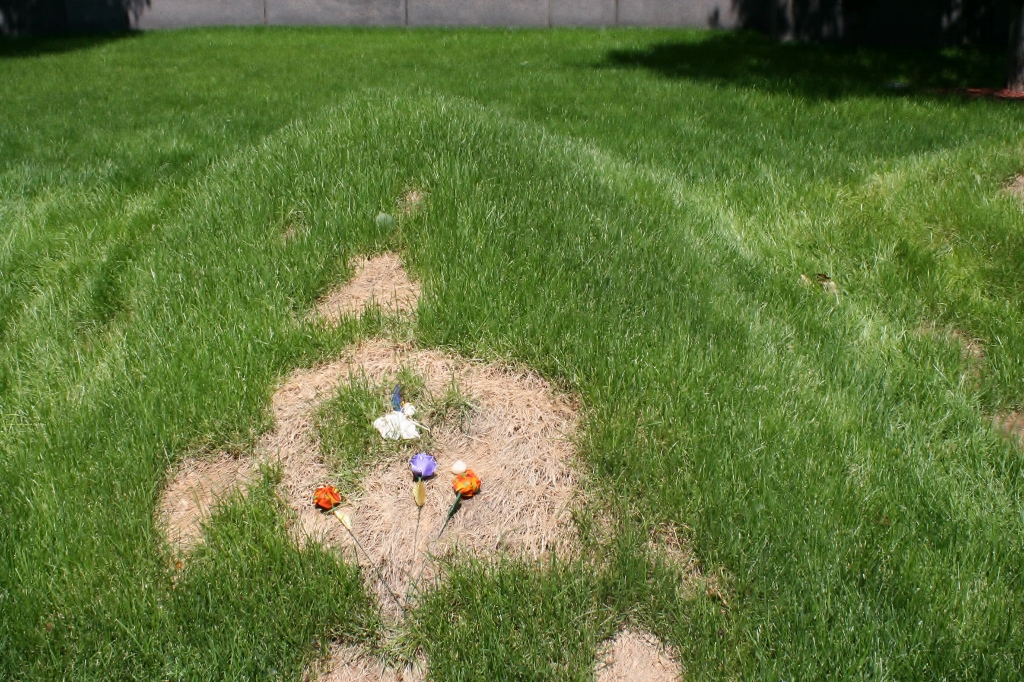 The community’s efforts resulted in the designation of the African Burial Ground as New York City Historic District, a National Historic Landmark and, on February 27, 2006, a National Monument.
Today, the African Burial Ground National Monument includes a visitor center with four exhibit areas, a theater where a 20-minute video tells the story of the burial ground, and a bookstore. A short walk away stand the graves and a memorial.
Holy ground.
See you along the Trail.
Filed under Antiracism, Human Rights, National Park, New York
 Along the Graybeard Trail