
Photos by Paul Jeffrey, ACT
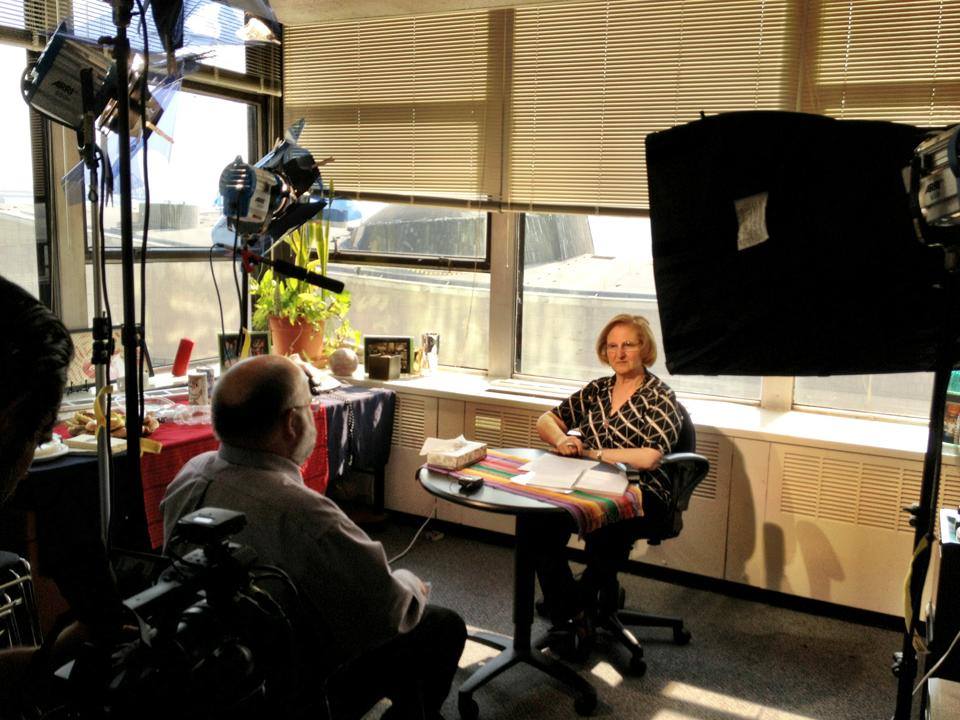
Dr. Mary Mikhael of the National Evangelical Synod of Syria and Lebanon reflects on the crisis in Syria.
Watch other videos.
Find ideas for action.
See you along the Trail.
Photos by Paul Jeffrey, ACT
Dr. Mary Mikhael of the National Evangelical Synod of Syria and Lebanon reflects on the crisis in Syria.
Watch other videos.
Find ideas for action.
See you along the Trail.
Filed under Current Events, Presbyterian Church (U.S.A.)
 Concerned about the crisis in Syria? Want to learn more? Want to respond?
In a series of video clips, Dr. Mary Mikhael of the National Evangelical Synod of Syria and Lebanon helps provide insight and understanding of the situation in Syria.
There are several ways to help the people of Syria. Here are some responses through the Presbyterian Church (U.S.A.)
Additional resources from the Presbyterian Church (U.S.A.) related to Syria are also available.
Since the outbreak of armed conflict in Syria, Dr. Mary Mikhael has been interpreting the consequences of this tragedy for the Syrian and Lebanese people, particularly the Christian communities, on behalf of the National Evangelical Synod of Syria and Lebanon. From 1994 to 2011, Dr. Mikhael was president of the Near East School of Theology (NEST), Beirut, Lebanon, the first woman seminary president in the Middle East. She served on the NEST faculty from 1984 until her retirement. She received her Masters degree from the Presbyterian School of Christian Education in Richmond, Virginia, and her EdD from Columbia University and Union Theological Seminary. A Presbyterian born in Syria to Greek Orthodox parents, Dr. Mikhael is active in ecumenical and interfaith initiatives. She is a noted authority on the church in the Middle East and the role of women in the church.
On September 10, 2013 the Office of Public Witness arranged a day of visits for Dr. Mikhael on Capitol Hill in Washington, DC. On September 12 and 13, 2013 the Presbyterian Ministry at the United Nations arranged visits for her in the UN community. Public events for Dr. Mikhael to speak to Presbyterians were held in both Washington and New York.
The videos are excerpts from a conversation Mary and I had at the office of the Presbyterian Ministry at the United Nations on September 11, 2013 with David Barnhart (who took the photo of the interview) and Scott Lansing doing the video work.
Share the links widely.
See you along the Trail.
At times, we participate in profound moments unaware. Only in retrospect do we realize the significance of what we are a part.
Other times, we know – at least partly. We may not know all the details and nuances, but we recognize that matters of deep import surround us and we play our tiny part.
 This past week, I had the privilege to accompany Dr. Mary Mikhael as she made an amazing witness for peace and justice in Syria. Mary is from the National Evangelical Synod of Syria and Lebanon. Until 2011, she served as the president of the Near East School of Theology in Beirut. After her retirement,the church has named her their interpreter and communicator in this time of tragedy and crisis for the people of Syria.
In that role, she traveled to the United States for the month of September. She spent last week in New York where I had the privilege to accompany her as she told the story of her church and her people, as she witnessed to her faith, as she advocated for peace and justice.
Mary went to Washington, DC on Tuesday. The Presbyterian Office of Public Witness arranged for her to speak at their Second Tuesday Briefing and to meet with aides of five elected officials and a State Department official.
Wednesday saw her in New York with the Presbyterian Ministry at the United Nations. We did extensive video work with my friend and colleague David Barnhart and my new friend Scott Lansing. The video links will be shared when they are posted. That afternoon, Mary spoke to a public event attended by church members, UN agency staff members, and representatives of nongovernmental organizations.
On Thursday, Mary met with staff members of two Permanent Missions to the UN – missions that sit on the Security Council. She also met with representatives of the Inter-Agency Task Force for the Syrian Crisis Core Group made up of UN agencies working in Syria.
As we rode uptown toward the place where Mary was staying, her relief was obvious. She had witnessed well and she was tired.
Then the phone of my colleague Ryan Smith buzzed. An offer arrived for Mary to meet with a representative of the Office of the Special Representative of the Secretary-General on Sexual Violence in Conflict on Friday.
“Would you do one more meeting?” Ryan asked.
No hesitation. Mary replied, “How can I say no?”
Ryan and I looked at each other. “You can say no because you are tired and this is one extra meeting and you had other plans.”
“How can I say no?” Mary repeated.
We conceded. “You can’t.”
“But can it be early in the day?” Mary asked.
Ryan confirmed the meeting and on Friday morning, it took place.
Mary and I then went uptown and for a moment said farewell. We will meet again, I am sure.
I give thanks for the time we shared.
And I gave thanks for Dr. Mary Mikhael.
And I gave thanks for her witness, her courage, her grace, and her faith as she told stories of horror and proclaimed hope.
And I give thanks for the small role I played in these profound moments.
See you along the Trail.
Today … and everyday …
pray for the peace of Syria
work for the peace of Syria (contact U.S leaders by email and by phone)
fast, if you are able, for the peace of Syria
Today … and everyday …
pray, work, and fast (if you are able) for the
peace of Syria and the
peace of the world.
See you along the Trail
Filed under Current Events
I continue to weep – but I act. I will find and support campaigns and issues to address gun violence. For example, here is one petition I have signed.
Here is one step that I will take on my own. I will send the following simple message to elected officials on the federal, state, and local levels:
Dear ,
It is a typical day in the United States. That means that, on average, some 31 people will die in homicides where firearms are used. In addition, on average, firearms will be used in some 51 suicides.
I find this appalling and unacceptable. I hope you do too.
How are you working to change this situation?Sincerely
When I receive a response – whatever response I receive – I will reply:
Dear ,
Thank you for your response. I am glad that you are doing name what ever was included in the response.
That does not seem to be working.
What else will you do?Sincerely
It’s a start. I will do more.
See you along the Trail.
Filed under Current Events
Democracy is as much about what happens between elections as it is about what happens during them.
Sergio Vieira de Mello
I have finished Chasing the Flame, Samantha Power’s biography of Sergio Vieiria de Mello. Actually I finished it some time ago. Among the quotes that stay with me, is this reflection on democracy.
We – the United States – has come through an election cycle. We voted on the federal, state, and local level. We made choices on a president, senators, congress people, governors, mayors, city council people, judges and more. In some places, people made decisions on ballot issues such as marriage equality and the death penalty.
Candidates and PACS raised and spent tons – obscene tons in some ways – of money. Candidates said words profound and words disturbing. Fundraising appeals filled our email in-boxes. Robo-calls annoyed us. People went door-to-door and made phone calls and stuffed mail and entered data and planted posters and more on behalf of the candidate of their choice.
All important. All critical. All needed. And yet, only a part of democracy.
The votes are counted. Our work begins. Here are some ways that I know we can work:
We advocate for our concerns and about decisions that impact our sisters and brothers with those who have been elected.
We take part in community organizations and community organizing.
We support campaigns that address issues of concern to us and to our sisters and brothers.
We make phone calls, send emails and letters, visit.
We engage in the public policy making process when those policies are made by governments and when they are made by corporations.
We use our money through gifts and purchases to express our values. Or perhaps, we ponder what values our use of money expresses and whether we need to reshape how we give and spend.
What are some others? How do you practice democracy between elections?
See you along the Trail.
Filed under Current Events, United Nations
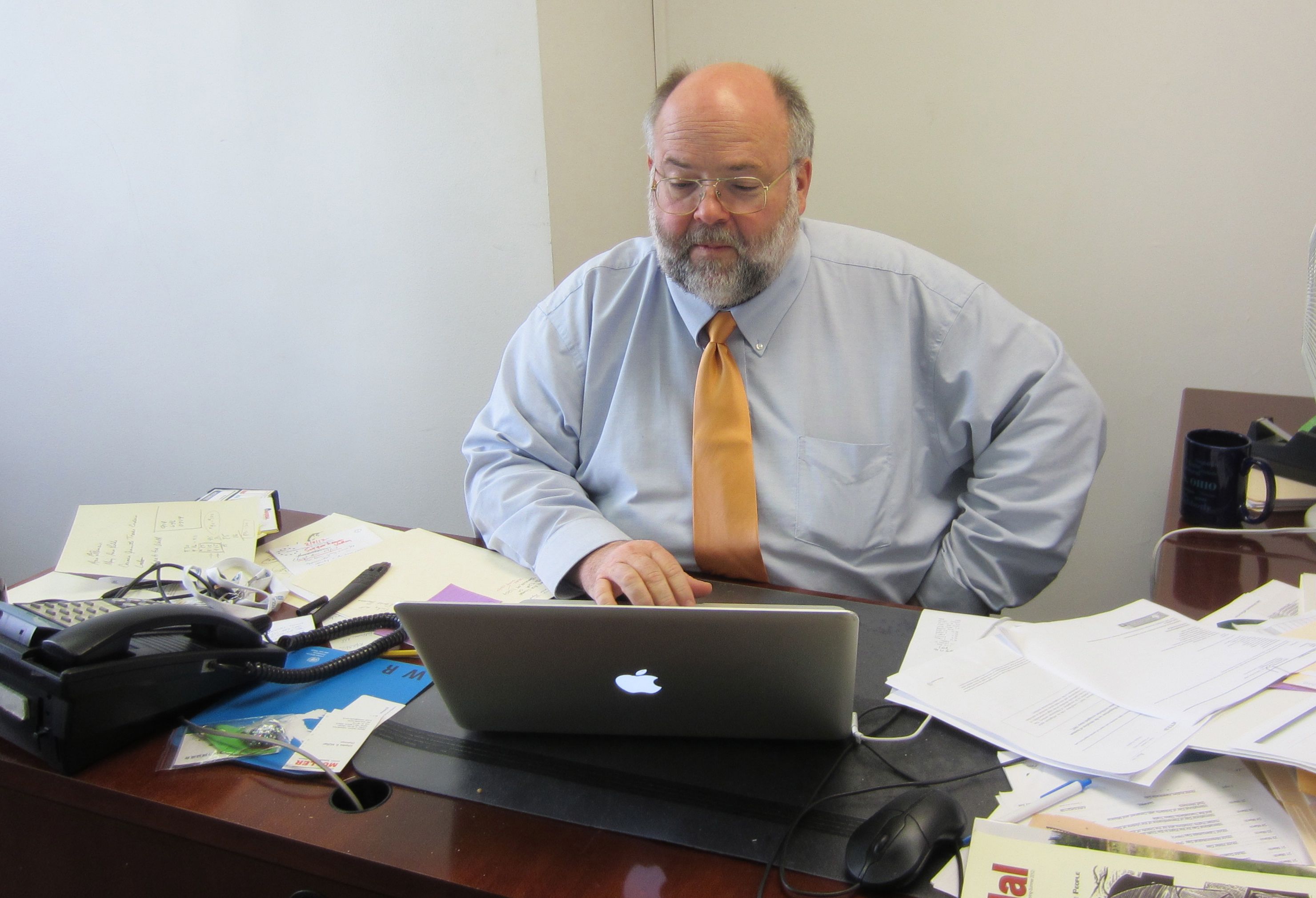 Today – and the 25th of every month – my tie is orange. I wear it to state my commitment to ending violence against women and girls. It reminds me to take actions toward that goal as well.
The 25th of every month is an Orange Day to end violence against women and girls. 25 October is the fourth Orange Day.
On the 25th of each month, join the UN Secretary-General’s UNiTE to End Violence against Women campaign and orange your day! Check out the Facebook album to see how others took action last month. Here are some things you can do on Orange Day.
Pray
Advocate
Act
Tweet
Post on Facebook
Imagine
Of course working to end violence against women and girls is not a task for one day a month. Orange Days provide a reminder that, in Christ, we are called and freed to love one another and to pursue justice for all – each day and every day.
Amnesty International invites people to send appeals to the Governor of Mississippi on behalf of Michael Brawner who is scheduled to be executed on next Tuesday. Here are details on how to contact the Governor:
PLEASE SEND APPEALS BEFORE 12 JUNE 2012 TO:
Governor of Mississippi
Governor Phil Bryant
PO Box 139
Jackson, MS 39205
Fax: 1 601 359 3741
Salutation: Dear Governor
And here is why Amnesty calls for this action (slightly adapted):
Michael Brawner is due to be executed in Mississippi on 12 June for a quadruple murder in 2001. His pre-trial representation was mostly conducted by a “law clerk” who had failed his state bar exam, and only became a practicing lawyer on the first day of the trial.
On 25 April 2001, 24-year-old Michael Brawner shot dead Barbara Brawner, from whom he had been divorced the previous month, her parents, Jane and Carl Craft, and his four-year-old daughter, Candice Paige Brawner, at the Craft home in rural northern Mississippi. He was arrested the following day at his fiancée’s apartment.
The trial judge appointed a lawyer for the indigent Michael Brawner, and appointed a “law clerk” to assist. This individual was a law school graduate who had failed his state bar exam. He managed to pass the exam in early 2002, and was admitted to the practice of law on 8 April 2002, the first day of the Brawner trial. The judge appointed him as co-counsel on the defense, and noted that he was “in court today for the first time as a lawyer”. According to Brawner’s current lawyers, it was the clerk who had handled the bulk of the pre-trial defense work. For example, he, not the lawyer,discussed with Michael Brawner the prosecution’s offer of a life-without-parole sentence in return for a guilty plea, which Brawner rejected, and advised Brawner on whether he should plead not guilty by reason of insanity (which was the plea eventually submitted). The only defense witness presented at the guilt phase was the defendant, with no expert evidence to support the insanity plea. After a three-day guilt phase, the jury deliberated for half an hour before finding Brawner guilty of four counts of capital murder.
The lead lawyer delegated the preparation of mitigating evidence to the clerk, but the latter’s time sheets indicate that he did no investigation to this end. Towards the end of the guilt phase of the trial, the lead lawyer asked the defendant (outside the jury’s presence): “Mr Brawner, do you wish me to try and get you ‘life’ or ‘life without parole’, if you are, in fact, found guilty of any of these counts by the jury? In other words, it’s what the lawyers call ‘put on a mitigation case’…”
The lawyer said that a psychologist was available to present mitigating evidence. However, she had been retained only to evaluate whether Brawner was competent to stand trial and sane at the time of the crime. In an affidavit in 2011 she said that she had never met or spoken to the lead lawyer, only to the clerk, and that the lawyer’s suggestion that she had been ready and willing to present mitigation was “simply not true”.
Michael Brawner responded that he did not want mitigation, saying, “I don’t feel that I deserve life to live”. This was surely not an informed decision if his lawyer was unaware of the range of mitigation evidence available and unable to advise him fully of his options. Evidence that could have been introduced at the sentencing included details of a childhood of severe abuse, parental alcohol and drug abuse, and a diagnosis of post-traumatic stress disorder.
Please write immediately:
- Explaining that you are not seeking to excuse these murders or to downplay the suffering caused;
- Expressing concern that Michael Brawner was in effect represented before his trial by a law clerk, not a lawyer;
- Noting that his jury did not hear mitigating evidence of his severe childhood abuse and mental health problems;
- Opposing the execution of Michael Brawner and calling on the governor to grant him clemency.
SEND APPEALS BEFORE 12 JUNE 2012 TO:
Governor of Mississippi
Governor Phil Bryant
PO Box 139
Jackson, MS 39205
Fax: 1 601 359 3741
Salutation: Dear Governor
Please check with the AIUSA Urgent Action Office if sending appeals after the above date.
Filed under Capital Punishment, Current Events, Death Penalty
 Along the Graybeard Trail