A prayer for Sudan

I usually keep my work and personal blogs separate.
But the situation in Sudan weighs on me. So I offer a prayer – a prayer I wrote for a call to prayer issued by the Presbyterian Church (U.S.A.):
Come Holy Spirit, come to the people of Sudan.
Come Holy Spirit, break the hold of violence.
Come Holy Spirit, draw the people together.
Come Holy Spirit, lead the people in paths of peace.
Come Holy Spirit, guide the people to establish justice.
Come Holy Spirit, come to the people of Sudan.
 
By God’s grace, may it be so. Amen.

Leave a comment

Filed under Current Events

Of Americans ugly and otherwise

It always wonders me – wonders me deeply – when I hear people use the term Ugly American. I know that it has come to refer to people from the United States who travel abroad, who refuse to build relationships with the people in the area where they are living, who refuse to learn about the people and culture and history and country, who judge everything by the standards of the United States, who are culturally insensitive, who are certain they know what is best for the people even without listening to the people, who insert and implement solutions based in United States and developed world values and standards, who are often loud, and who are generally obnoxious.

But still, the term Ugly American grates on me – not because the reality to which it points rings false – I have known people like that. I have been that person. Often. Far too often.

My problem relates to the term’s origin.

As I understand it, the term Ugly American  comes from a novel by William Lederer and Eugene Burdick. Published in 1958 (and first read by me at an unknown time) and set in Southeast Asia, The Ugly American contrasts U.S. approaches to opposing Communist influence.

Most of the folks from the United States in the novel fit the contemporary usage of the term Ugly American. Loud, boorish, certain they have all the answers, unwilling to learn from the people, relying on U.S. technology, their work benefits U.S. contractors and companies and the elites of the country. They build no relationships with the people and accomplish little.

A smaller group proves somewhat more effective because they meet and relate to the people. They listen to the people and try to implement projects and programs based on what they learn. They make use of technology appropriate to the situation and the needs and assets of the people. The members of the first group distrust them immensely and limit their effectiveness.

Then there is the title character. Homer Atkins is ugly. That is made clear. His appearance is ugly. In particular, his hands are described as ugly. His rough clothes and unrefined manners contrast with the pressed clothes and polished mien of the diplomats.

Atkins is an engineer. He spends his time with the people. He learns from the people – both in terms of what they need and in terms of what they suggest as solutions. He is the one who reveals and practices cultural sensitivity and proficiency. His efforts, rooted in the people, benefit the people.

I realize that I swim upstream against years of linguistic usage. But the way we have twisted the meaning – losing the context from whence it came – sometimes seems and feels like an example of the very phenomenon the term seeks to describe.

So whenever I hear Ugly American used with its contemporary meaning, I cringe. I recognize the reality to which Ugly American as we use it today points – in myself and in so many others, and I grieve and cringe again. Then I remember all the women and men who live in real life as Homer Atkins did in fiction, and I give thanks.

Some day I will tell you about Madame Defarge. 

See you along the Trail.

Leave a comment

Filed under Books

Clipping the wings of those who feast on violence

Create a human sculpture that shows what violence is.

That was our assignment. The Nonviolent Peaceforce was leading a introductory training event to their theory and practice for a number of representatives of nongovernmental organizations in the United Nations community.

They divided the participants into two groups and gave each group five minutes to imagine and design a human sculpture showing what violence is. The instructions noted that we should be able to hold the positions in the sculpture for three minutes so the other group could ponder what we had created.

Our group caucused and planned quickly and decided to go with the theme of the utter devastation that violence wreaks – taking a brutal, deadly toll on all who are involved.

Roles were assigned – several people were to be dead with various twists: two died locked in an embrace of death; others died with their “weapons” (fingers made into a pistol) still firmly held and pointed at each other.

One tableau of two involved a person in the act of finishing off someone who was not yet dead.

One person knelt in prayer – grieving the dead – invoking intervention.

And the final person assumed a position of flight – as a carrion bird poised about the carnage –
representing those who feast on the violence that consumes others.

For some reason, it took my group about point two seconds to cast me as the carrion bird.

We created the sculpture and our colleagues in the other group were asked to observe us, study us, and determine what was happening.

The first observation centered on my “menacing grin.” From that point they did a pretty good job of analyzing our “art.” They did think I was a drone plane – but they got most everything else pretty close to right.

The trainers then invited the other group to make three changes in our statue that would transform the situation.

Their first step was to have me put down my arms – “clipping my wings.” They then moved to the section where one of our members was engaged in violence against another and separated them. Finally, they removed the “guns” from the situation.

We then talked together. That’s when I pointed out that I was not a drone – but a carrion bird (c’mon, have you ever seen a drone with a grin of any sort let alone a menacing one?). Upon learning that, one of the other group members said, “So we clipped the wings of those who feast on violence.” And there was a moment of silence as those words sunk in.

Therein lies essential peacemaking work: figuring out who feasts on – who profits from – violence. Armament makers? Arms traders? Transnationals? Those who obtain the resources in the conflict area? No doubt it is different people and groups in different situations. But always there is someone – there are someones. Who are they? How can we restrict or cut off their profits, and thereby diminish violence. Those are questions I will continue to ponder.

See you along the Trail.

Leave a comment

Filed under Human Rights

Joke

I made a joke.
A tired, stale joke.

Slowly, reluctantly
almost in spite of yourself,
you laughed.

And life seemed good.

17 June 2011
Shire on the Hudson

Leave a comment

Filed under Poem

Watch, pray and weep

We watch,
we pray,
we weep.

As blood flows,
society implodes,
agony unfolds,
and the pile of corpses grows.

We watch,
we pray,
we weep.

We call the international community
to move
to intervene.

We watch,
we pray,
we weep.

We give to humanitarian causes
who raise the alarm
and count the bodies.

We watch,
we pray,
we weep.

It is not enough
never is it enough,
but it is all we have,

So though our
heart breaks,
our spirits recoil,
our stomachs retch,
we turn not away.

We watch,
pray,
and weep.

16 June 2011
Shire on the Hudson
As reports of violence in Sudan mount

Leave a comment

Filed under Poem

Centennial Worship – Upcoming Concert

Here’s the post by my friend Bob Brashear, pastor of West-Park Presbyterian Church, on Sunday’s worship service.

Here’s a real easy way to buy tickets for the June 19 Bridge to Restoration Concert. It’s the one I am attending – I will be looking for you.

And here’s information about the other concerts in the series – I look forward to your reviews.

See you at the concert!

See you along the Trail.

Leave a comment

Filed under Music

Not alone

Not alone, we stand together,
for alone one could not stand.
Not alone, we stand together,
soul to soul and hand in hand.
Not alone,  we stand together,
aching hearts, but spirits strong.
Not alone, we stand together,
watching, waiting, working,
when others turn away;
seeing, hearing, feeling,
what others would avoid.
Not alone, we stand together,
facing suffering, sharing pain,
seeking justice, pursuing peace.
Not alone, we stand together,
wounded,
surely wounded,
sorely wounded,
still we stand.
Not alone, we stand together,
armed with faith
and armed with laughter,
hope and weeping,
dreams and love.
Not alone we stand together,
for alone we could not stand.

26 July 2001
Colorado National Monument, Fruita, CO and Orem, UT
with thanks to Diana Cheifetz

Leave a comment

Filed under Poem

Circles are eternal

West-Park Presbyterian Church (86th and Amsterdam) celebrated its 100th birthday today – on Pentecost.

A group from Medina Presbyterian Church in Ohio is visiting New York this week. They have a number of activities scheduled, including a visit to the Presbyterian Ministry at the United Nations, work at Jan Hus Presbyterian Church, Covenant House, and Old Bergen Church.

They requested suggestions for places to worship today – I provided several from the amazing diversity that is the Presbytery of New York City – among them West-Park.

I arrived at West-Park around 10:30. I was talking with Andre Solomon-Glover (he’s doing a concert next Sunday – do you have your tickets yet?) when a group came in.

“Excuse me,” I said to Andre.

Walking up the aisle, I said, “I’ll bet you folks are from Cleveland. Well, actually I bet you folks are from Medina.”

Smiles and laughter followed as did a wonderful worship service – celebrating the congregation – celebrating Pentecost – celebrating the different gifts that God gives to each of us – a diversity that may challenge us at times, but certainly blesses us and enriches us.

Pastor Bob Brashear reminded the congregation of its rich history – all the people who had been through the building, whose spirits remain present nurturing the congregation into the future. He reminded us of the congregation’s multi-faceted witness to social justice in the name of Jesus in the past – a witness that continues in the present – a witness that will continue into the future.

The lectionary reading from Numbers told of Eldad and Medad. Bob told us that this story teaches that all of us – with all of our gifts – are needed for ministry. We cannot engage in ministry alone – we need each other. It brought to mind a poem (of sorts) from almost ten years ago – not my best, but not my worst.

We gathered around the communion table in a circle with the reminder that circles are eternal – and that those people with whom we go into a circle remain with us always – so now, in that mystery we know as the Communion of Saints, we who gathered for worship today, from New York and Medina and points between and beyond, are a part of the West-Park Presbyterian family and story – and West-Park is forever a part of us.

Thanks be to God!

See you along the Trail.

Leave a comment

Filed under Presbyterian Ministry at the United Nations, Worship

Trust your gizzard

Checked out Legends of the Guardians: The Owls of Ga’Hoole tonight. I am in something of a Geoffrey Rush phase.

It’s an intriguing movie made in Australia and featuring a whole slew of ANZACs. Entertaining story – well done animation – great to hear the voices and figure out who they are.

But the emphasis on the gizzard is a bit too much – it appears interchangeable with grit (True Gizzard) and heart (Bravegizzard) and I can even hear Alec Guinness in the background: “May the gizzard be with you.”

See you (and your gizzard) along the Trail.

Leave a comment

Filed under Movie

The things that keep me up nights

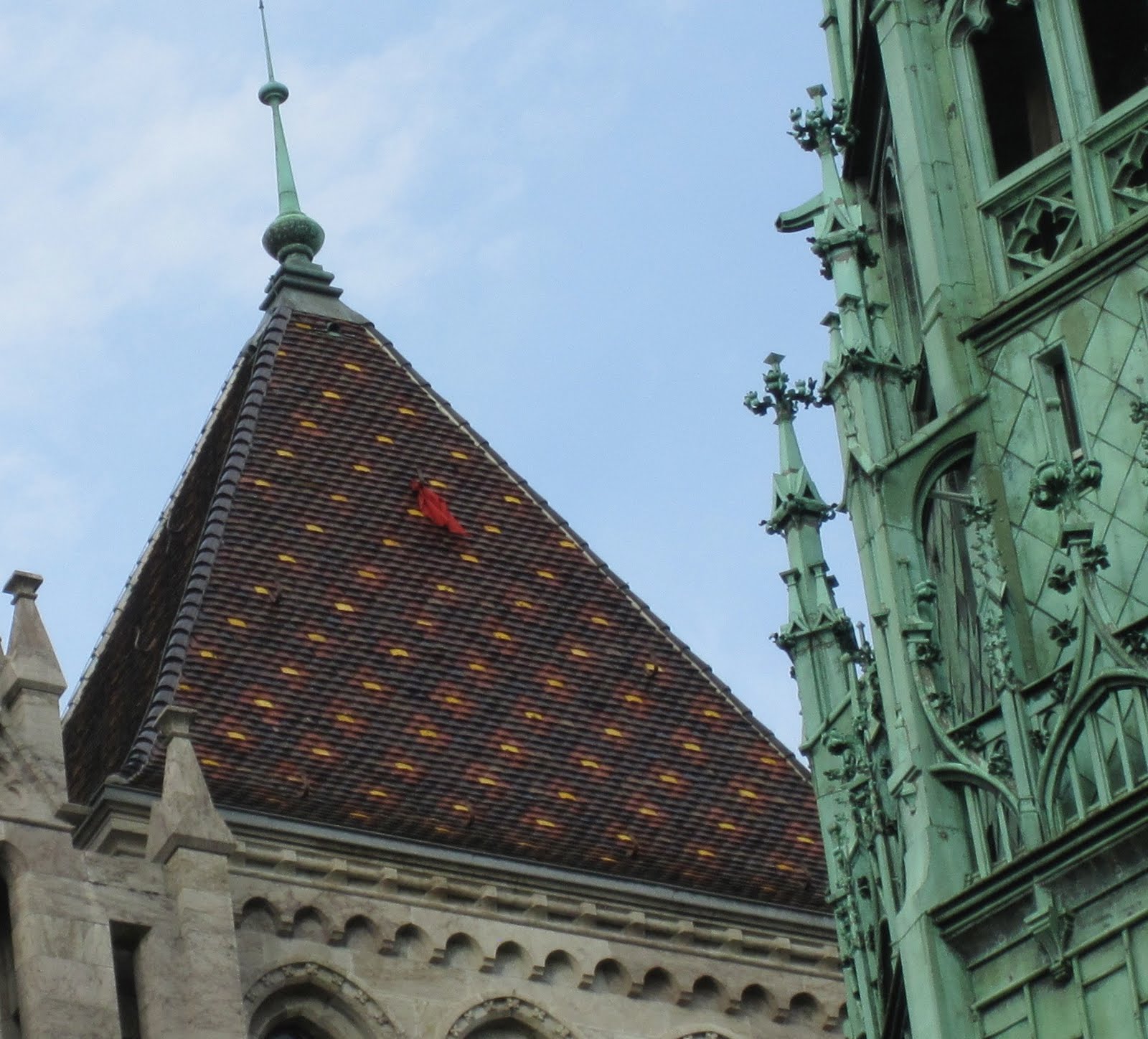
This picture is from Geneva.
Ever since I took it I have been wondering, losing sleep to wonder:
Who changes the red handkerchief when it gets dirty?
Thoughts?


See you along the Trail.

Leave a comment

Filed under Travel