
 “The church is not gilded sanctuaries, stained glass windows, padded pews, cushy carpets, table, and font. The church is people from every nation, culture, and ethnicity who (1) call on and believe in God through Christ; (2) are consequently filled with God’s Spirit and led by God’s word to light candles in the shadows of life; (3) live among and act in unity with people who’ve been abandoned, pushed to the margins of society, and disenfranchised; and (4) advocate for justice on the steps of the courthouse or the statehouse, serving the present age in ways that reconcile disparate peoples and groups.”
Mark Lomax
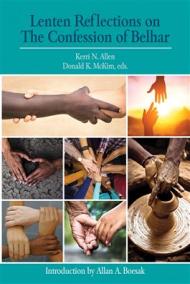
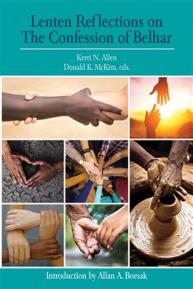
Lenten Reflections on the Confession of Belhar
This Lenten season I am using a new resource to explore the Belhar Confession: Lenten Reflections on the Confession of Belhar, edited by Kerri N. Allen and Donald K. McKim. The Presbyterian Church (U.S.A.), in which I serve as a teaching elder (pastor), added the Confession of Belhar to our Book of Confessions in 2016. This confession came from the Dutch Reformed Mission Church during its historic struggle against apartheid in South Africa.
See you along the Trail.


 “If we do nothing, singing along with the strains of subjugation, we are complicit with the sins of an unchristian ideology and doctrine. Worse yet, we compose new refrains that reinforce the symphony of domination by pretending that all is well.” With what voice is Christ’s church called to sing?
 “We’re called to witness against the powerful and privileged by living as Christ wanted us to live–by sitting with those whom no one wants to sit with, by opening ourselves up to the hurt and pain that are caused by those who control and harm others. We must do this to make the church reflect the diversity of the world around us. We must work to dismantle that ability to control and harm others.”
 After church on April 2, some friends and I went to Chinatown for lunch and dessert and most importantly for conversation!
 “It is not difficult to know where the Lord stands. The witness of Scripture is clear, consistent, and compelling. Psalm 82 says what Torah, prophets, Gospels, and epistles say: The Lord stands with the weak and the orphan, the lowly and the destitute, the week and the needy. Those are not the only ones the Lord stands with, but they are the ones most likely to be ignored and exploited, the ones least likely to possess the power to withstand mistreatment and manipulation. It is not difficult to know where the Lord stands, but it is often difficult to know where the church stands.”
 On Sunday, April 2, I had the privilege to preach a
