Category Archives: Human Rights

If the women around the world were paid for their work . . .

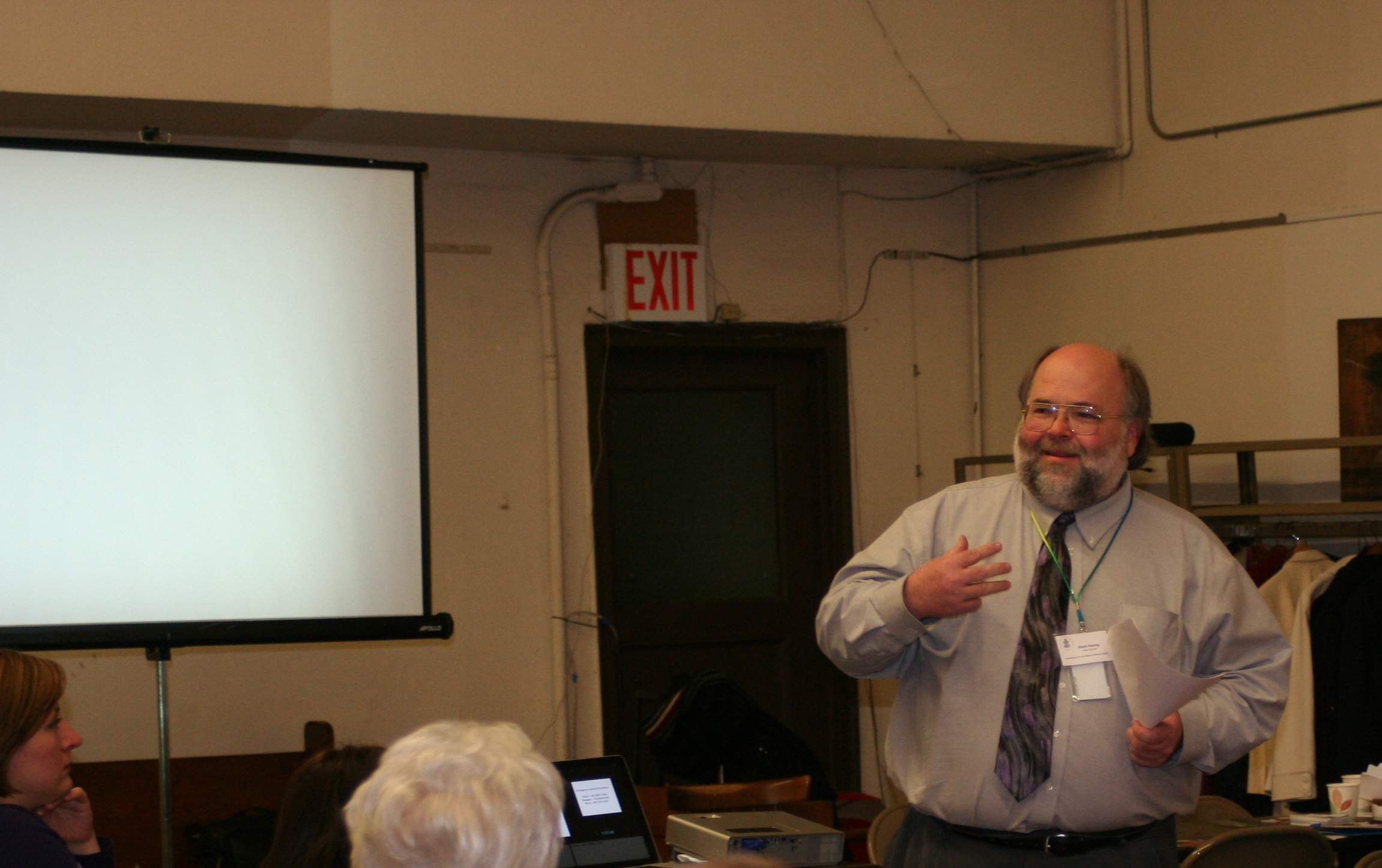
My life revolves around the Commission on the Status of Women for the next two weeks. The Commission meets to recommend policies that seek to increase equality between women and men and enhance women’s rights. Nongovernmental organizations come to the meeting of the Commission to advocate for positions and ideas from their particular perspective. The Presbyterian Ministry at the United Nations hosts the Presbyterian participants – more than 40 people this year! We work in partnership with Ecumenical Women. Yesterday, Ecumenical Women held an orientation for about 180 women and men from the various member organizations.

I caught a few quotes worth sharing:

It’s some times easier to stay at home than to enter the struggle. Easier, but not better.

  • Ana Chã, Brazil

You know what, I am that statistic. When we talk about statistics, we are talking about people.

  • Michelle Deshong, Australia

I wish I could find that teacher who told me I would never amount to anything and tell him where I am speaking.

  • Michelle Deshong, Australia

If women around the world were paid for the work they do, they would be millionaires

  • I didn’t catch the name of the person

Grace Bickers, a Columbia University student who volunteers with us, took the picture at the orientation.

Leave a comment

Filed under Human Rights, Presbyterian Ministry at the United Nations

Commission on the Status of Women


 Between 2,000 and 4,000 women. And a few men.

Those will be my companions for the next two weeks.

Within that group, my circle will likely focus on 40 or so Presbyterians and some of our ecumenical partners..

The 56th Session of the Commission on the Status of Women (“CSW” or “the Commission”) begins on Monday, February 27.

For Presbyterian participants things started last night with an orientation at the Church of the Covenant.

The CSW is a functional commission of the United Nations Economic and Social Council (ECOSOC). It is the principal global policy-making body dedicated exclusively to gender equality and advancement of women. Comprised of representatives of 45 UN Member States, the Commission gathers every year at United Nations Headquarters in New York to evaluate progress on gender equality, identify challenges, set global standards and formulate concrete policies to promote gender equality and women’s empowerment worldwide.

There are a number of places to follow the CSW including Swords into Plowshares where I blog for my work with the Presbyterian Ministry at the United Nations.

Watch the plenary sessions of the Commission on UN Webcast.

Other sources of information include:

This morning we will take part in an orientation with our partners in Ecumenical Women.

Thanks to Grace Bickers who volunteers at the Presbyterian Ministry at the United Nations for the picture.

2 Comments

Filed under Human Rights, Presbyterian Ministry at the United Nations

Khader Adnan, Bobby Sands, Hunger Strike

Check out this music video: Khader Adnan, Bobby Sands. Thanks to Sami Awad and Dottie Villesvik for calling it to my attention.

It addresses a situation – an event – a moment – a witness that weighs on me, in large part because I am so late : Khader Adnan has entered the 64th day of a hunger strike. Doctors say he is at immediate risk of death.

His hunger strike began in mid-December when he was arrested by Israeli forces at his West Bank home. The BBC notes that: “The 33-year-old baker is being held under what Israeli law calls administrative detention, meaning he can be held without trial or charges indefinitely if he is deemed to be a security threat. Israel says he is a security threat. Its high court of justice has scheduled a petitions hearing regarding the case for Thursday.” Reports are that he is member of Islamic Jihad, which Israel and others name as a terrorist group.

Khader Adnan’s situation and response call to mind the 1981 hunger strike in Northern Ireland. Bobby Sands started first and died after 66 days. Nine others followed.

The parallels haunt me. I struggle to understand and express my thoughts and feelings. This song does so far better than I am able to do at the moment:

Khader Adnan grew up near Jenin City
You could say he was a product of his time

Because you can’t break a man who won’t be broken
Like in Belfast not many years ago

See you along the Trail.


1 Comment

Filed under Human Rights

Off Tucson’s list, onto mine

Those who ban books have done so again. This time in Arizona.

Reports indicate that the Tuscon United School District claims the books were “confiscated” not “banned.”

Apparently these were the books:

Again, the report by Robert Cintli Rodriguez in the Guardian indicates that the action affected more than seven books.

The effort to control what students – or anyone – reads, offends me. As my friend Joann Haejong Lee puts it, “This is outrageous!”

A number of responses seem in order.

One that I believe is particularly important to read these books. I own two of the books. I have read Rethinking Columbus (and used parts of it in antiracism trainings) and parts of three others.

They all appear on my reading list now.

It also seems like a good night to listen to Los Lobos as I fall asleep.

See you along the Trail.

Leave a comment

Filed under Human Rights

I signed. Will you?

The international movement to end the death penalty grows. I signed a petition this morning from the World Coalition against the Death Penalty.

Amnesty International notes that in 2010 (the last year for which they have published records):

23 countries carried out executions and 67 imposed death sentences in 2010. Methods of execution in 2010 included beheading, electrocution, hanging, lethal injection and shooting.

Amnesty’s report “Death Sentences and Executions 2010” notes:

REPORTED EXECUTIONS IN 2010
Bahrain (1), Bangladesh (9+), Belarus (2), Botswana (1), China (1000s), Egypt (4), Equatorial Guinea (4), Iran
(252+), Iraq (1+), Japan (2), Libya (18+), Malaysia (1+), North Korea (60+), the Palestinian Authority (5),
Saudi Arabia (27+), Singapore (+), Somalia (8+), Sudan (6+), Syria (17+), Taiwan (4), United States of
America (46), Viet Nam (+), Yemen (53+).

The petition from the World Coalition against the Death Penalty states:

139 nations have already abolished the death penalty. In December 2012, the United Nations’ General Assembly will vote on a resolution calling for a worldwide halt to its use.

We, the undersigned, in recognition of the five million people who signed the moratorium petition that was handed to the United Nations’ General Assembly in 2007, promoted by the Community of Sant’Egidio in collaboration with Amnesty International and other organizations all over the world, renew the call for a worldwide moratorium on sentences and executions with a view to abolishing the death penalty worldwide in the belief that this penalty is inhumane:

* Whatever the method of execution, there is no humane way to kill
* Whatever the country, death row is inhumane
* Whatever the length, awaiting death dehumanizes people sentenced to death

We welcome the strong progress already made towards a global end to capital punishment and acknowledge that 139 nations have abolished the death penalty in law or practice.

For the 4th vote of the United Nations General Assembly on a moratorium on the use of the death penalty, to be held in December 2012, we, the undersigned, call on all countries to support the resolution and all those which retain the death penalty to establish a moratorium on its use, with a view to abolishing this inhumane practice altogether!

I signed. Will you?

See you along the Trail.

2 Comments

Filed under Capital Punishment, Death Penalty, Human Rights

Nine years of resistance

Today’s letter in the Amnesty International’s Write for Rights Global Write-a-thon went to President Calderón of Mexico on behalf of Inés Fernández and Valentina Rosendo.

For more than nine years, these two courageous women have taken on the military and authorities to demand justice after soldiers raped them in 2002. Inés Fernández and Valentina Rosendo are Indigenous Me’phaa (Tlapaneca) women. Amnesty International notes that:

Indigenous women in Mexico who are raped rarely file a complaint due to cultural, economic and social barriers. Inés Fernández and Valentina Rosendo have shown courage in reporting their ordeals and have followed up their cases in national and international courts. The women and their families have faced threats as their battle for justice continues.

Guided by Amnesty International’s sample letter, I urge President Calderón to ensure a swift, full and impartial investigation into the rape Inés Fernández Ortega and Valentina Rosendo Cantú. This investigation should take place in civilian courts as should all cases of human rights violations by military personnel.

Sign up to participate in the Write-a-thon.

Find resources for the Write-a-thon, including sample letters to adapt.

Learn about the Universal Declaration of Human Rights and the international human rights framework.

See you along the Trail.

Leave a comment

Filed under Human Rights

Freedom of expression and association for student leaders

Today’s letter in the Amnesty International’s Write for Rights Global Write-a-thon focused on two student leaders in Iran: Majid Tavakkoli and Behareh Hedayat. Amnesty reports that they have been imprisoned simply for exercising their rights to freedom of expression and association. Amnesty notes:

Majid Tavakkoli was arrested and reportedly beaten, after speaking at a university rally in Tehran to mark National Student Day in December 2009.  Behareh Hedayat was arrested later that same month after a video recording of a speech she gave was widely circulated on the internet.

The letter asked for the immediate and unconditional release of Majid Tavakkoli and Behareh Hedayat. It further asked that they should receive access to adequate medical care, including assessment and treatment by an independent specialist outside of prison if necessary. Finally it reminded the Head of Iran’s judiciary of the country’s obligations under the International Covenant on Civil and Political Rights.

Sign up to participate in the Write-a-thon.

Find resources for the Write-a-thon, including sample letters to adapt.

Learn about the Universal Declaration of Human Rights and the international human rights framework.

See you along the Trail.

1 Comment

Filed under Human Rights

Freedom of expression in Paupua province

English: Former U.S. First Lady Eleanor Roosev...

Image via Wikipedia

Today’s letter in the Amnesty International’s Write for Rights Global Write-a-thon addressed the situation of Filep Karma, who was arrested in December 2004 for his participation in a peaceful flag-raising ceremony in Papua province of Indonesia. Karma is serving a 15-year sentence on charges of treason.  Amnesty International considers him to be prisoner of conscience and is calling for his immediate and unconditional release.

My letter asked Amir Syamsuddin, Indonesia’s Minister of Justice and Human Rights to release Filep Karma and to make a public commitment that there will be no further arrests of individuals purely for the peaceful exercise of their right to freedom of expression, assembly, or association.  It included a request that the Minister ensures that laws concerning “rebellion” (Articles 106 and 110 of the Criminal Code) are not used against people who have engaged only in peaceful activities. The request was rooted in the right to freedom of expression includes the right to peacefully advocate referenda, independence, or other political solutions.

Sign up to participate in the Write-a-thon.

Find resources for the Write-a-thon, including sample letters to adapt.

Learn about the Universal Declaration of Human Rights and the international human rights framework.

See you along the Trail.

2 Comments

Filed under Human Rights

On behalf of teachers

Today’s letter in the Amnesty International’s Write for Rights Global Write-a-thon  focused on teachers which comes close to my heart since my family contains a number of teachers over the generations.

Jalila al-Salman and Mahdi ‘Issa Mahdi Abu Dheeb, leaders of the Bahrain Teachers Association, appear to have been imprisoned because of the association’s calls for strikes during the protests earlier this year.

Amnesty International reports that authorities first arrested Jalila al-Salman on 29 March 2011, and reportedly ill-treated her in detention.   Mahdi Abu Dheeb was arrested on 6 April and reportedly suffered torture and solitary confinement.  Although civilians, the two teachers were tried before a military court, in breach of their right to a fair trial.  In September, Jalila al-Salman was sentenced to three years in prison, and Mahdi Abu Dheeb was sentenced to ten years.  Their appeal is to be heard by the High Criminal Court in December.

The request to the King asks for an investigation into the case and the allegations of torture and ill-treatment.  It asks that any who are found responsible for ill-treatment be held accountable. It further asks that if the investigation shows that Jalila al-Salman and Mahdi Abu Dheeb were arrested because of their leadership of the Bahrain Teachers Association and their peaceful exercise of the rights to freedom of expression, association and assembly,  should be immediately and unconditionally released, and all charges against them should be dropped.  The King is asked to ensure that their appeal hearing meets international standards and that any evidence obtained through torture or duress not be used against them.  The King is also asked to uarantee that they receive appropriate medical care and are protected from ill-treatment.

Sign up to participate in the Write-a-thon.

Find resources for the Write-a-thon, including sample letters to adapt.

Learn about the Universal Declaration of Human Rights and the international human rights framework.

See you along the Trail.

2 Comments

Filed under Human Rights

For a Nobel Peace Prize recipient

Today’s letter in the Amnesty International’s Write for Rights Global Write-a-thon focused on Liu Xiaobo, 2010 Nobel Peace Prize recipient, who was given an 11-year prison sentence in December 2009 for calling for political and legal reform in China. The letter went to Premier Wen Jiabao of the People’s Republic of China.

Amnesty International notes that Liu Xiaobo’s imprisonment is a clear attempt to prevent him from carrying out his peaceful and legitimate human rights activities. Amnesty further notes that the detention, restriction, and harassment of peaceful human rights activists has increased in recent years, running counter to promises made by officials in China’s National Human Rights Action Plan 2009-2010.

My letter, guided by Amnesty, asked the Premier to release Liu Xiaobo immediately and unconditionally and to lift the surveillance and severe restrictions currently placed on his wife Liu Xia.  It called the Premier to see that Liu Xiaobo has access to his family and lawyers. It further addressed the systemic issue of the use of broad and vaguely defined charges to arbitrarily detain and prosecute activists, journalists and internet users.

Sign up to participate in the Write-a-thon.

Find resources for the Write-a-thon, including sample letters to adapt.

Learn about the Universal Declaration of Human Rights and the international human rights framework.

See you along the Trail.

3 Comments

Filed under Human Rights